Engineering the Ultimate Defense Against The 757’s Coastal Elements
As a coastal roofing engineer and the founder of Aquashield Roofing Corporation, I have spent my career analyzing why roofs fail in Virginia's Tidewater region. Living and working across the Seven Cities of Hampton Roads—from the Southside corridors to the Peninsula—means dealing with an environment that is aggressively hostile to building materials. We aren’t just fighting rain; we are battling Atlantic salt-fog oxidation, high-velocity wind vortexes, and the relentless pressure of Nor'easters that sweep across our coastal plains.
In this region, a "standard" roof installation is a recipe for premature failure. To survive here, you need an engineered system designed specifically for the unique atmospheric pressures of the 757. At Aquashield, we don’t follow "industry averages"; we adhere to strict engineering protocols that ensure your home or commercial facility remains watertight regardless of what the Atlantic throws at it. Our approach is rooted in physics and material science, ensuring that every shingle, seam, and flashing component is optimized for maximum wind uplift resistance and moisture shedding.
When you invest in a new roof on the Peninsula or Southside, you are investing in your property's primary defense system. We specialize in GAF Timberline HDZ replacements, but we don’t just "install" them—we engineer them into the structure using high-wind fastening patterns that exceed standard building codes to meet hurricane-force requirements.
Technical Specifications for High-Wind Residential Systems: * GAF Timberline HDZ Shingles: Utilizing LayerLock technology for a wider nailing zone and superior grip, providing an immediate wind resistance advantage during installation. * 6-Nail High-Wind Fastening Pattern: While many contractors stick to the minimum 4 nails per shingle, we mandate a strict 6-nail pattern on every single course. This significantly increases the pull-out strength of each shingle. * ASTM D3161 Class F Certification: Our fastening protocol is designed specifically to meet and exceed ASTM D3161 Class F standards, ensuring your roof can withstand wind speeds up to 130 MPH without failure. * Hurricane Warranty Compliance: By adhering to these rigorous installation specs, we provide the necessary engineering foundation for a true 130-MPH hurricane warranty, giving homeowners peace of mind during peak storm seasons in Hampton Roads. * Salt-Fog Mitigation: We utilize high-grade underlayments and drip edges designed to resist the corrosive effects of Atlantic salt spray, which typically accelerates the oxidation of inferior metals and adhesives.
The Zero-Shortcut Protocol: Full Tear-Offs & Decking Integrity
One of the most dangerous trends in coastal roofing is the "overlay" or "nail-over." Some contractors will suggest installing new shingles over old ones to save time and money. As an engineer, I can tell you that this is a catastrophic mistake in the 757. Nailing over existing shingles traps moisture between layers, creates unnecessary weight on your trusses, and—most importantly—hides structural rot caused by years of salt-fog penetration and heavy rainfall.
At Aquashield Roofing Corporation, we have a non-negotiable rule: 100% complete old roof tear-offs down to the clean wood decking. We do not believe in shortcuts because you cannot engineer a fortress on top of a crumbling foundation. When we strip a roof, we aren't just removing shingles; we are performing a forensic audit of your home’s structural integrity.
The goal is to expose every square inch of the roof deck to ensure that there is no compromised wood beneath. In our region, moisture often seeps through old flashing and sits on the decking, leading to delamination or fungal decay in the plywood. If we find damaged boards, they are replaced immediately with high-quality CDX plywood before a single new shingle is laid.
Our Decking & Tear-Off Standards: * Total Stripping Requirement: Every layer of old asphalt and felt must be removed entirely. We leave no remnants behind to ensure the new underlayment bonds perfectly to the wood. * CDX Plywood Inspection: We conduct a rigorous inspection for "soft spots," rot, or sagging. Any compromised decking is cut out and replaced with structural-grade CDX plywood to restore the roof's load-bearing capacity. * Fastener Audit: During tear-off, we inspect existing nail patterns to ensure that previous failures weren’t caused by improper fastening—allowing us to correct those vulnerabilities in the new build. * Debris Management: Given the density of the Southside and Peninsula corridors, we employ strict containment protocols to ensure your landscaping is protected from old shingle debris during the tear-off process. * Moisture Barrier Integration: Once the deck is cleaned and verified, we install a high-performance synthetic underlayment that acts as a secondary water shield against wind-driven rain common in Nor'easters.
Commercial TPO Systems & Low-Slope Engineering
Not every roof has a steep pitch. In fact, many of our clients across the Seven Cities have low-slope applications—ranging from residential sunrooms and porches to large-scale commercial facilities. These areas are particularly vulnerable because they don’t shed water as efficiently as pitched roofs, making them prone to "ponding" during Virginia's heavy rainfall events.
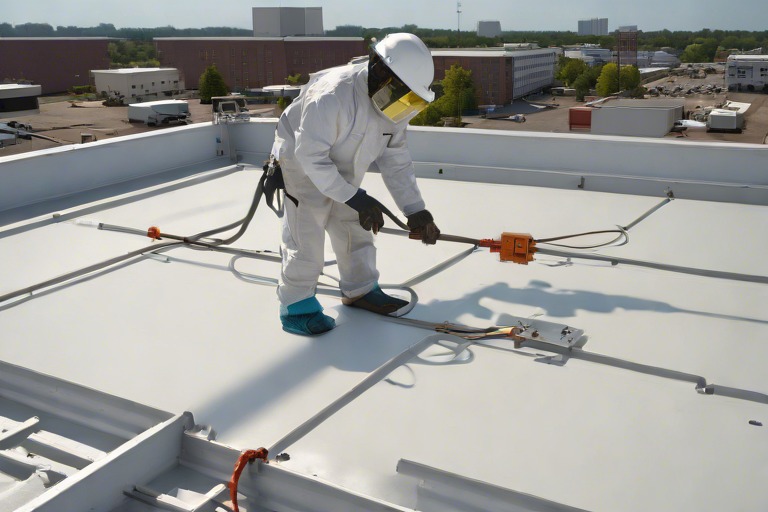
For these applications, we utilize 60-mil single-ply TPO (Thermoplastic Polyolefin) membranes. Unlike traditional rolled roofing or bitumen, which can crack under the extreme thermal expansion and contraction of our coastal climate, TPO is highly reflective and chemically stable. However, the membrane itself is only as good as its seams. A hand-welded seam is subject to human error; a robotic weld is not.
To ensure an airtight, watertight seal, we employ professional-grade robotic heat welders that operate at exactly 1,000°F. This process fuses the two sheets of TPO into a single, monolithic piece of plastic. The result is a seam that is actually stronger than the membrane itself—a critical requirement when dealing with high-velocity wind vortexes that try to peel membranes off from the edges inward.
Commercial & Low-Slope Technical Specifications: * 60-Mil TPO Membrane: We use a heavy-duty 60-mil thickness (rather than thinner 45-mil options) to provide superior puncture resistance and long-term durability against UV degradation. * Robotic Heat Welding: All seams are fused using robotic welders at 1,000°F, eliminating the "cold spots" or gaps often found in manual heat welding. * Reflective Cool Roof Technology: The white TPO surface reflects a massive percentage of solar radiation, significantly reducing cooling costs for commercial buildings and sunrooms during humid Virginia summers. * Precision Drainage Engineering: We ensure that low-slope systems are properly tapered or drained to prevent ponding water, which is the primary cause of membrane failure in Hampton Roads. * Perimeter Securement: Using reinforced termination bars and high-strength adhesives, we secure the edges against wind uplift, ensuring the TPO doesn't lift during a severe storm event.
24/7 Emergency Repairs & Precision Waterproofing
Roof leaks are rarely "simple." In coastal engineering, most leaks occur at transition points—where different materials meet or where pipes penetrate the roofline. When a Nor'easter hits and your ceiling starts leaking in the middle of the night, you don’t need a handyman; you need an engineer who understands how to stop water migration permanently.
Aquashield provides 24/7 emergency leak repairs across the Seven Cities area, but we do not believe in "caulk-and-walk" fixes. Silicone and flashing cement are temporary bandages that fail quickly under Atlantic salt-fog oxidation. Instead, we use permanent, industrial-grade materials designed to last for decades.
One of our primary focuses is the plumbing vent. Most contractors install rubber boot collars that crack within five years due to UV exposure. We replace these with lifetime solid lead plumbing pipe boot collars. Lead doesn't crack and it doesn't degrade; once installed correctly, it provides a permanent seal against the elements. Similarly, we address chimney leaks by rebuilding reglet step flashing from the ground up—ensuring that water is mechanically diverted away from the structure rather than relying on sealant.
Our Precision Repair Standards: * Solid Lead Pipe Boot Collars: We eliminate rubber boots in favor of lead collars to prevent UV-induced cracking and ensure a lifetime seal around plumbing vents. * Chimney Reglet Step Flashing Rebuilds: Instead of applying caulk, we rebuild the flashing system using precision reglets that integrate directly into the masonry for an engineered water diversion path. * Soldered Copper Dead Valley Liners: In "dead valleys" where two roof slopes meet and create a water trap, we install custom-fabricated copper liners. These are soldered—not glued—to ensure there is not a single open seam for water to penetrate. * Salt-Fog Oxidation Treatment: We treat all exposed metal flashings with corrosion-resistant coatings or utilize high-grade stainless steel/copper to prevent the rapid oxidation common in Hampton Roads and Peninsula corridors. * Rapid Response Diagnostics: Our emergency team uses thermal imaging and moisture probes to find the source of a leak, not just where it is dripping from inside the house, ensuring we fix the root cause on the first visit.