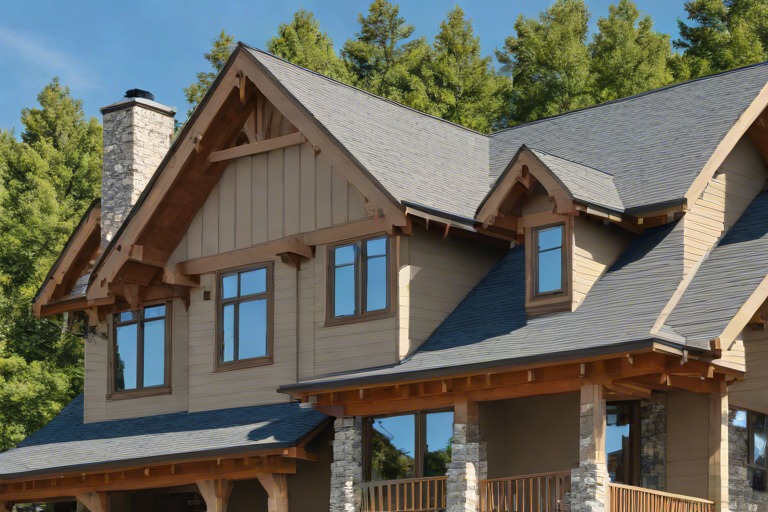
Engineering High-Velocity Wind Resilience for Williamsburg and Stonehouse Residences
As the founder of Aquashield Roofing Corporation and a coastal roofing engineer, I have spent my career analyzing how Atlantic weather patterns dismantle inferior roof installations. In the Stonehouse area and throughout Upper James City County, we aren't just dealing with "rain"; we are contending with high-velocity wind vortexes and an aggressive atmospheric cocktail of salt-fog oxidation that accelerates the degradation of standard roofing components. For homeowners in the Stonehouse Golf community and along the Route 30 corridor, a roof cannot simply be "installed"—it must be engineered to withstand the specific aerodynamic pressures of our region.
The primary failure point for most residential roofs during Nor'easters is not the shingle material itself, but the fastening system. Most contractors follow standard manufacturer guidelines that are designed for inland climates. At Aquashield, we implement a rigorous coastal engineering standard centered on GAF Timberline HDZ shingles, specifically configured to meet ASTM D3161 Class F requirements. This ensures your home is protected against wind speeds up to 130 MPH without the risk of shingle blow-off or uplift failure.
To achieve this level of structural integrity, we move beyond standard nailing patterns and employ a high-wind fastening protocol:
- GAF Timberline HDZ Integration: We utilize these shingles for their LayerLock technology, which provides an exceptional wind-resistance baseline, but the material is only as good as its attachment to the deck.
- 6-Nail High-Wind Fastening: While standard installations often use four nails per shingle, our engineering specification requires a minimum of six fasteners per shingle. This increases the pull-out resistance and ensures that even under extreme pressure differentials during a hurricane or severe storm, the shingles remain anchored to the substrate.
- ASTM D3161 Class F Compliance: By adhering to this specific fastening density, we provide our clients with 130-MPH wind warranties. This is not a marketing promise; it is an engineering certification based on rigorous testing of fastener withdrawal and shingle adhesion under extreme load.
- Coastal Underlayment Barrier: To combat the Atlantic salt-fog oxidation that can permeate through shingles, we install high-performance synthetic underlayments that act as a secondary moisture barrier, preventing water from reaching the decking during wind-driven rain events common in Upper James City County.
The Absolute Mandate: 100% Tear-Offs and Structural Deck Verification
In my professional capacity as an engineer, I have seen countless "roof overs" where a second layer of shingles was nailed directly over old, decaying materials to save time and money. In the Williamsburg climate—where heavy rainfall is frequent and humidity levels remain high—this practice is catastrophic. Nailing over existing shingles traps moisture between layers, creates excessive weight on the rafters, and hides critical structural failures from view.
At Aquashield Roofing Corporation, we maintain a strict professional rule: 100% complete old roof tear-offs down to clean wood decking. There are no exceptions. We do not "recover" roofs because you cannot engineer a safe system upon an unknown foundation. The only way to ensure the longevity of your investment is to inspect every square inch of the roof deck before a single new shingle is laid.
Our structural verification process includes:
- CDX Plywood Inspection: We meticulously examine the existing decking for signs of delamination, soft spots, or fungal decay. If we find compromised CDX plywood—which often occurs around chimneys and valleys due to long-term leaks—we replace it immediately with new, high-grade structural sheathing.
- Zero Tolerance for Nail-Overs: We never nail over old rotted shingles. Doing so creates "air pockets" that allow wind vortexes to get underneath the shingle tabs more easily, significantly increasing the risk of uplift during a storm event in the Route 30 corridor.
- Deck Leveling and Squaring: During the tear-off process, we identify any sagging or dipping in the roof plane caused by aging rafters. Correcting these issues at the deck level ensures that your GAF Timberline HDZ shingles lay flat, preventing water pooling and reducing wind turbulence across the surface of the roof.
- Debris Mitigation: We utilize industrial-grade containment systems to ensure that during a full tear-off in residential areas like the Stonehouse Golf community, your landscaping and property remain pristine while we strip the home down to its skeletal structure for inspection.
Commercial Low-Slope Engineering: 60-Mil TPO Robotic Welding Systems
Low-slope roofing—found on commercial facilities throughout Upper James City County as well as residential sunrooms and porches in Stonehouse—requires a completely different engineering approach than pitched roofs. The primary enemy of the flat roof is "ponding water" during heavy rainfall events, which can lead to rapid membrane degradation if seams are not perfectly sealed.
For these applications, Aquashield specializes in 60-mil single-ply TPO (Thermoplastic Polyolefin) replacements. Unlike EPDM or modified bitumen that rely on adhesives and tapes—which eventually fail due to the thermal expansion and contraction cycles of Virginia's climate—TPO allows us to create a monolithic surface through heat welding.
Our commercial flat roofing specifications are designed for maximum durability:
- 60-Mil Membrane Thickness: We utilize 60-mil TPO as our standard, providing superior puncture resistance and long-term UV stability compared to thinner membranes. This is critical for roofs exposed to the intense sun of the Route 30 corridor.
- Robotic 1,000°F Heat-Welded Seams: We do not rely on manual hand-welding alone. Our process utilizes robotic heat welding technology that maintains a precise temperature of 1,000°F to fuse the seams together. This creates a molecular bond where the seam becomes as strong—or stronger—than the membrane itself, eliminating the risk of leakages at the joints.
- Reflective Cool-Roof Technology: The white TPO surface reflects solar radiation, significantly reducing cooling costs for commercial facilities and preventing the "heat soak" that can damage interior ceilings in residential sunrooms.
- Integrated Drainage Engineering: We ensure all low-slope systems are engineered with proper crickets and tapered insulation to eliminate standing water, directing flow efficiently toward scuppers or internal drains to prevent hydrostatic pressure from compromising the membrane.
24/7 Emergency Response: Precision Waterproofing and Surgical Repairs
When a Nor'easter hits Williamsburg, roof leaks rarely happen in convenient windows. They occur at midnight during peak precipitation when wind-driven rain is forced upward under flashing and shingles. While many companies offer "emergency patches" using caulk or roofing cement—which are temporary fixes that fail within months due to UV exposure—Aquashield provides engineering-grade repairs designed for a lifetime of service.
Our 24/7 emergency response team focuses on the most vulnerable points of your roof's anatomy: plumbing boots, chimney transitions, and dead valleys. We don't just stop the leak; we rebuild the failure point using materials that are chemically stable and structurally sound.
Our precision repair standards include:
- Lifetime Solid Lead Plumbing Pipe Boot Collars: Most leaks occur at the vent pipes because rubber boot collars crack under UV stress and salt-fog oxidation. We replace these with solid lead pipe boots, which provide a permanent, flexible seal that will not degrade over time.
- Chimney Reglet Step Flashing Rebuilds: Chimneys are high-stress areas during wind vortexes. If the flashing is merely "caulked in," it will fail. We perform full reglet step flashing rebuilds, ensuring a mechanical interlock between the masonry and the roofing system that diverts water away from the interior walls of your home.
- Soldered Copper Dead Valley Liners: In areas where two roof planes meet at an angle (dead valleys), we avoid using asphaltic membranes. Instead, we install custom-fabricated copper liners that are soldered—not glued—at every joint. Soldered copper is the gold standard in coastal engineering, providing a lifetime waterproof barrier that resists corrosion and thermal movement.
- Rapid Response Deployment: For residents of Upper James City County and those near the Stonehouse Golf community, our emergency crews are equipped to provide immediate stabilization followed by permanent structural repairs, ensuring your home remains dry regardless of how long the storm persists.