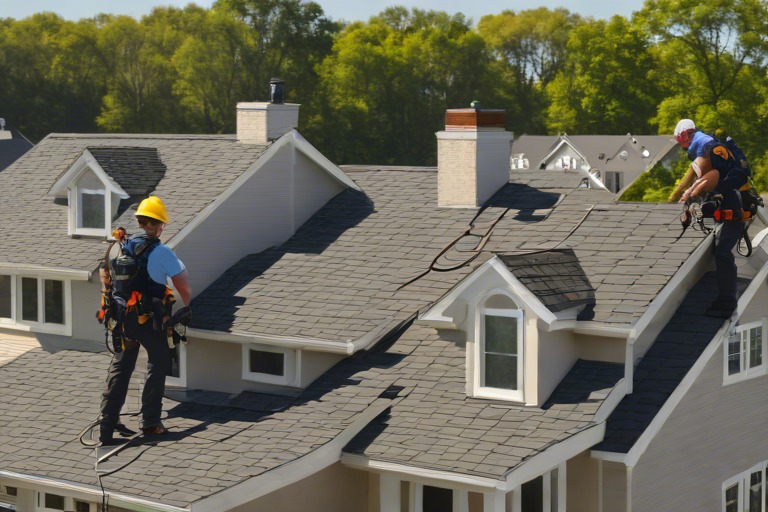
Engineering the Ultimate Coastal Defense: High-Wind Residential Shingle Systems in South Norfolk
As a coastal roofing engineer and the founder of Aquashield Roofing Corporation, I have spent my career analyzing how Atlantic weather patterns systematically dismantle inferior roof installations. In Chesapeake—specifically within the Historic South Norfolk district and along the Jordan Bridge approach—we aren't just dealing with "rain." We are battling high-velocity wind vortexes that whip off the water and a relentless salt-fog oxidation process that eats through substandard fasteners and flashing in record time. When you live near Poindexter St, your roof isn’t just an aesthetic choice; it is a structural shield designed to withstand 130-MPH hurricane gusts without failing at the nail line.
For residential slopes, we exclusively deploy GAF Timberline HDZ shingles, but the shingle itself is only half of the equation. The true engineering happens in the fastening pattern. Most contractors follow "standard" installation guides that are insufficient for our specific coastal corridor. At Aquashield, we implement a strict 6-nail high-wind fastening protocol to meet and exceed ASTM D3161 Class F requirements. This ensures your roof is not merely "attached," but structurally integrated into the decking to resist wind uplift during Nor'easters.
Technical Specifications for High-Wind Residential Installations: * GAF Timberline HDZ Shingles: Utilizing LayerLock technology to provide a wider nailing zone and superior grip, reducing shingle blow-offs in high-velocity winds. * 6-Nail Fastening Pattern: Every single shingle is secured with six corrosion-resistant nails rather than the industry standard of four, drastically increasing wind uplift resistance. * ASTM D3161 Class F Compliance: Our installations are engineered to meet this rigorous standard, ensuring a 130-MPH hurricane warranty that provides genuine peace of mind during peak storm seasons. * Synthetic Underlayment: We replace traditional felt with high-performance synthetic underlayments that act as a secondary water barrier against wind-driven rain forced beneath the shingle laps. * Coastal Starter Shingles: Specialized starter strips are installed along all eaves and rakes to eliminate "edge lift," where most roof failures begin during a storm event.
The Zero Overlay Mandate: Decking Integrity and CDX Plywood Inspection
In my years of auditing failed roofs in the South Norfolk area, I have found one recurring theme: the "nail-over." Many companies attempt to save time by installing new shingles directly over old ones. From an engineering perspective, this is a catastrophic error. In our humid coastal environment, layering shingles traps moisture between two layers of asphalt and felt, creating a breeding ground for rot that remains invisible until your ceiling collapses during a heavy rainfall event.
At Aquashield Roofing Corporation, we maintain a strict "Zero Overlay" rule. We perform 100% complete tear-offs down to the bare wood decking on every single project. This is non-negotiable because it allows us to inspect the structural integrity of your CDX plywood. Salt fog and humidity can penetrate old flashing, causing delamination or fungal decay in the roof deck. If we nail new shingles into rotted wood, those nails have no withdrawal resistance; they will pull straight out during a wind event regardless of how many nails are used.
Our Strict Decking Inspection & Preparation Protocol: * Full Tear-Off Execution: Complete removal of all existing shingle layers and underlayments to expose the raw substrate for forensic inspection. * CDX Plywood Verification: We inspect every square foot of decking for "soft spots," water staining, or delamination common in older homes within the Historic South Norfolk district. * Structural Deck Replacement: Any compromised plywood is cut out and replaced with new CDX grade plywood to ensure a rigid, stable foundation for the fastening system. * Fastener Audit: We verify that existing decking nails are flush; any protruding fasteners (nail pops) are reset or corrected to prevent premature shingle wear-through. * Drip Edge Integration: Installation of heavy-gauge aluminum drip edges over a clean deck, ensuring water is shed away from the fascia and into the gutters without wicking back under the roof edge.
Commercial TPO Engineering: Robotic Heat Welding for Low-Slope Structures
Low-slope roofs—found on commercial facilities near Poindexter St or residential sunrooms and porches in South Norfolk—face a different set of challenges than pitched roofs. The primary enemy here is "ponding" water combined with intense UV radiation from the Virginia sun. Traditional torch-down systems are prone to seam failure over time due to thermal expansion and contraction. To solve this, we utilize 60-mil single-ply TPO (Thermoplastic Polyolefin) membranes.
The secret to a leak-proof flat roof isn't just the material; it is the weld. We do not rely on adhesives or tapes for our primary seams. Instead, Aquashield employs robotic heat welding technology that fuses the membrane layers together at 1,000°F. This process creates a monolithic bond—meaning the seam becomes as strong (or stronger) than the rest of the sheet itself. For commercial facilities and high-end residential additions near the Jordan Bridge approach, this is the only way to ensure long-term waterproofing against heavy Atlantic rainfall.
Technical Specifications for TPO Flat Roof Systems: * 60-Mil Single-Ply Membrane: A thick, reinforced white membrane that reflects UV rays (reducing cooling costs) and resists puncture from debris during windstorms. * 1,000°F Robotic Heat Welding: Automated welding equipment ensures a consistent temperature across the entire seam length, eliminating human error and "cold welds." * Low-Slope Optimization: Specifically engineered for sunrooms, porches, and commercial warehouses where water drainage is slower than on pitched roofs. * Mechanically Attached or Fully Adhered Options: Depending on the substrate, we utilize high-wind mechanical fasteners or industrial adhesives to prevent membrane billowing during pressure changes. * Integrated TPO Flashing: All curbs, pipes, and parapet walls are wrapped in matching TPO membranes and heat-welded for a seamless transition from roof to wall.
24/7 Emergency Response: Precision Waterproofing & Coastal Componentry
When a Nor'easter hits the Chesapeake coastline, "standard" repairs aren't enough. Most emergency leak calls we receive involve failures at the most vulnerable points of the envelope: plumbing boots and chimney transitions. Many contractors use rubberized boots or caulking to stop leaks; however, in our salt-heavy air, these materials oxidize and crack within 36 months. As an engineer, I design for permanence, not a temporary patch.
Our emergency repair division focuses on high-performance metallurgy and precision flashing rebuilds. We replace failing rubber pipe boots with lifetime solid lead plumbing pipe boot collars—a material that is impervious to UV degradation and salt oxidation. Similarly, we address chimney leaks by rebuilding reglet step flashing from the ground up, ensuring a mechanical lock between the masonry and the roof deck rather than relying on sealant beads. For complex intersections where water collects, such as dead valleys, we install soldered copper liners for an absolute waterproof seal that lasts decades.
Our Precision Repair & Waterproofing Standards: * Solid Lead Plumbing Boot Collars: We eliminate rubber boots entirely in favor of lead collars, providing a lifetime solution to the most common leak point on residential roofs. * Chimney Reglet Step Flashing Rebuilds: Complete removal and replacement of chimney flashing using precision-bent metal that integrates directly into the masonry reglets for maximum water diversion. * Soldered Copper Dead Valley Liners: For high-risk valley intersections, we use heavy-gauge copper liners, soldered at all joints to create a seamless trough that prevents capillary action leaks. * Salt-Fog Resistant Fasteners: All repair work utilizes stainless steel or hot-dipped galvanized fasteners to prevent the "bleeding" and structural failure caused by coastal oxidation. * 24/7 Rapid Response Deployment: Immediate emergency tarping and stabilization for homes in South Norfolk, followed by permanent engineering repairs once weather conditions stabilize.