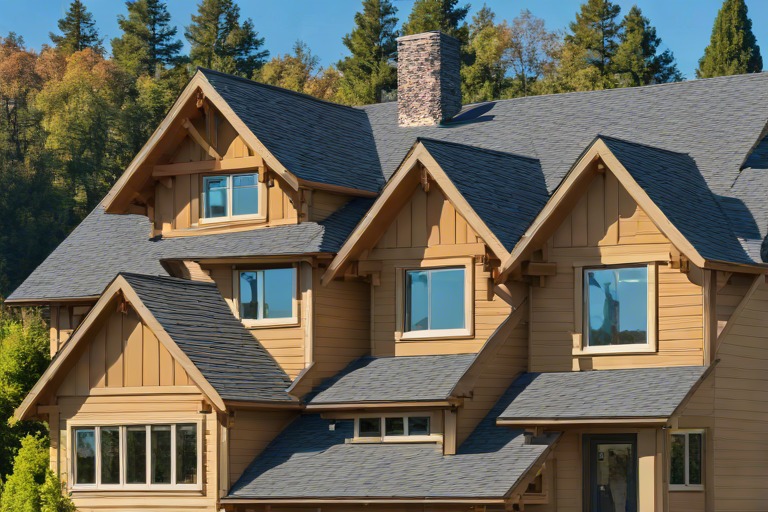
Engineering High-Wind Residential Systems for the Simonsdale Corridor
In my years as a coastal roofing engineer and founder of Aquashield Roofing Corporation, I have observed a recurring tragedy in Portsmouth: roofs that look acceptable from the curb but fail catastrophically during the first high-velocity wind vortex or Nor'easter to roll off the Atlantic. In neighborhoods like Simonsdale—particularly for those properties situated near Rodman Ave—the atmospheric conditions are uniquely hostile. We aren’t just fighting rain; we are battling a combination of salt-fog oxidation that eats through inferior fasteners and sustained pressure gradients that can peel a standard roof back like a tin lid if it isn't engineered correctly.
For residential replacements in Portsmouth, I refuse to compromise on the fastening schedule or material grade. We exclusively deploy GAF Timberline HDZ shingles, but the shingle itself is only half of the equation. The true engineering happens at the nail line. While many contractors follow a standard four-nail pattern to save time and labor costs, Aquashield implements a strict 6-nail high-wind fastening protocol on every single course. This isn't an "upgrade" we offer; it is our baseline requirement for coastal survival.
By increasing the fastener density, we shift the roof’s performance profile from standard residential to industrial grade. Our installation method ensures that your home meets and exceeds ASTM D3161 Class F requirements, providing a certified 130-MPH hurricane warranty. This level of wind uplift resistance is non-negotiable when you live in an area where Atlantic moisture saturates the air and sudden gusts can create localized vacuum effects across roof slopes.
Technical Specifications for our High-Wind Residential Systems: * Material Grade: GAF Timberline HDZ with LayerLock technology, designed to lock shingles together during installation and throughout their lifespan. * Fastening Protocol: 6-nail high-wind pattern per shingle (exceeding standard building codes) to maximize wind uplift resistance. * Certification Standard: ASTM D3161 Class F rating, ensuring the system remains intact under extreme pressure differentials up to 130 MPH. * Underlayment Strategy: High-performance synthetic underlayments that act as a secondary water barrier against heavy rainfall and wind-driven rain penetration. * Coastal Adaptation: Use of corrosion-resistant fasteners specifically chosen to withstand the salt-fog oxidation prevalent in Portsmouth’s coastal air.
The Zero-Tolerance Policy: Complete Tear-Offs & Decking Integrity
One of the most dangerous trends in the Tidewater region is "roof-overs"—the practice of nailing new shingles directly over old, rotted ones. As an engineer, I view this as professional negligence. In Portsmouth, where humidity levels are perpetually high and salt air permeates every crevice, trapping moisture between two layers of shingles creates a greenhouse effect that accelerates the decay of your roof deck from the inside out.
At Aquashield Roofing Corporation, we maintain a strict rule: 100% complete old roof tear-offs down to the clean wood decking. There are no exceptions. If you cannot see the plywood, you cannot verify its structural integrity. A new GAF Timberline HDZ system is only as strong as the substrate it is nailed into; if we nail a high-wind shingle into rotted or delaminated wood, that fastener has zero withdrawal resistance. During a Nor'easter near Portsmouth City Park on the Western Branch, those shingles will pull right out of the deck regardless of how many nails were used.
Once the old materials are stripped away and hauled off-site, we perform a comprehensive forensic inspection of the CDX plywood. We look for "soft spots," water staining, or fungal decay caused by previous leaks that went unnoticed. If any section of the decking is compromised, it is removed and replaced with new structural grade CDX plywood before the underlayment ever touches the surface. This ensures a flat, rigid plane that allows our 6-nail fastening system to perform exactly as engineered.
Our Decking Integrity Protocol: * Total Stripping: Removal of all existing shingles, felts, and nails down to the bare wood substrate. * CDX Plywood Inspection: Manual probe testing for rot or delamination across 100% of the roof surface area. * Substrate Replacement: Immediate replacement of any compromised decking with new CDX plywood to ensure structural fastener grip. * Debris Management: Rigorous cleaning of the deck to remove old nail pops and organic debris that could create uneven surfaces or "bubbles" in the new system. * Ventilation Audit: Inspection of existing ridge vents and soffits to ensure proper airflow, reducing attic heat buildup and preventing premature shingle degradation from the underside.
Commercial Low-Slope Engineering: 60-Mil TPO Systems
Not every structure in Portsmouth is a pitched residential home. From commercial facilities near Rodman Ave to low-slope sunrooms and porches overlooking the Western Branch, flat roofing requires an entirely different engineering approach. The primary enemy of a low-slope roof isn't just wind—it’s ponding water. When water sits on a surface for extended periods, it creates hydrostatic pressure that can force its way through even the smallest seam failure.
To combat this, we specialize in 60-mil single-ply TPO (Thermoplastic Polyolefin) replacements. We utilize a thickness of 60-mils because thinner membranes are simply too susceptible to puncture and thermal degradation under the intense Virginia sun. However, the membrane is only as good as its seams. Hand-welding with a heat gun is prone to human error; it creates "cold spots" where the bond isn't fully fused, leading to leaks during heavy rainfall events.
Aquashield utilizes robotic heat-welded seam technology. Our equipment applies a consistent 1,000°F temperature across the entire width of the overlap, fusing the two sheets into one continuous, monolithic piece of plastic. This molecular bond is stronger than the membrane itself. Whether it's a commercial warehouse or a residential porch extension near Portsmouth City Park, this robotic precision eliminates the risk of seam failure and provides an impenetrable barrier against Atlantic salt-fog and torrential rains.
Commercial TPO Technical Specifications: * Membrane Thickness: 60-mil single-ply TPO for maximum puncture resistance and long-term durability in commercial environments. * Seam Fusion: Robotic heat welding at exactly 1,000°F to create a monolithic bond that eliminates seam leakage. * Reflective Properties: High-albedo white membranes designed to reflect UV rays, significantly reducing cooling costs for Portsmouth businesses and homeowners. * Application Scope: Ideal for low-slope commercial facilities, flat sunrooms, porches, and industrial warehouses. * Drainage Engineering: Integration of precision scuppers and internal drains to prevent ponding water and reduce hydrostatic pressure on the membrane.
24/7 Emergency Response & Precision Coastal Waterproofing
When a Nor'easter hits Portsmouth, it doesn’t happen during business hours. A failed flashing or a cracked pipe boot can turn into an interior disaster in minutes. That is why Aquashield provides 24/7 emergency roof leak repairs for the Simonsdale area and surrounding neighborhoods. However, "emergency repair" does not mean "temporary patch." We do not believe in using roofing cement (tar) as a long-term solution; tar dries out, cracks under UV exposure, and eventually fails.
Our approach to waterproofing focuses on the most vulnerable points of the roof: plumbing penetrations, chimney transitions, and dead valleys. For plumbing pipe boots, we move away from standard rubber gaskets which perish in coastal salt air. Instead, we install lifetime solid lead plumbing pipe boot collars. Lead is malleable yet impervious to the oxidation that destroys synthetic materials, ensuring a permanent seal around your vents.
Furthermore, we address the common failure points found in older Portsmouth homes: chimney flashing and dead valleys. We rebuild chimney reglet step flashing from the ground up, cutting into the masonry to ensure the metal is properly embedded (the "reglet") rather than just slapped against the brick with caulk. For those complex areas where two roof planes meet at a 90-degree angle—dead valleys—we install soldered copper dead valley liners. Copper provides an unmatched lifespan in coastal environments, and by soldering the seams instead of overlapping them, we create a watertight trough that can handle any volume of rainfall without leaking into your ceiling.
Precision Waterproofing Specifications: * Plumbing Penetrations: Installation of solid lead pipe boot collars to replace failing rubber boots; guaranteed for lifetime durability against salt-fog oxidation. * Chimney Integration: Full rebuilds of reglet step flashing, ensuring the metal is mechanically integrated into the masonry substrate. * Valley Engineering: Custom fabrication and installation of soldered copper dead valley liners for permanent water diversion in high-risk areas. * Emergency Response: 24/7 rapid deployment to mitigate active leaks during storm events near Rodman Ave and Portsmouth City Park. * Material Selection: Exclusive use of heavy-gauge metals (copper, lead, galvanized steel) over temporary sealants or adhesives for all critical flashing work.