Engineered Residential Roofing for the High-Wind Zones of Seaford
As a coastal roofing engineer and the founder of Aquashield Roofing Corporation, I have spent my career analyzing how Atlantic weather patterns interact with residential structures in Yorktown. Living near the York River shoreline means your home is not just fighting rain; it is battling high-velocity wind vortexes and salt-fog oxidation that can degrade inferior materials in a fraction of their expected lifespan. When you are situated near landmarks like the Seaford Yacht Club, you aren't dealing with "average" Virginia weather—you are living in a corridor prone to intense Nor'easters and hurricane-force gusts.
For these reasons, I do not believe in "standard" installations. A roof is an engineered system designed to shed water while resisting uplift. For our residential clients in Seaford, we specialize exclusively in the installation of GAF Timberline HDZ shingles. While many contractors simply follow a basic manual, Aquashield employs a rigorous high-wind fastening protocol that transforms these shingles into a fortress against the elements.
To achieve an ASTM D3161 Class F 130-MPH hurricane warranty, we move beyond the industry minimums. Most crews use four nails per shingle; however, in coastal Yorktown, that is insufficient for long-term structural survival during a major storm event. We implement a strict six-nail fastening pattern on every single course of shingles. This increased mechanical attachment significantly reduces the risk of "shingle blow-off" when high-pressure wind systems hit your roofline from the coast.
Technical Specifications for High-Wind Residential Systems: * Material Selection: GAF Timberline HDZ with LayerLock technology, chosen specifically for its resistance to algae and salt-air degradation common near Back Creek. * Fastening Protocol: 6-nail high-wind installation per shingle (exceeding standard manufacturer requirements). * Certification Standard: Engineered to meet ASTM D3161 Class F specifications for maximum wind uplift resistance. * Wind Warranty Performance: Validated protection up to 130 MPH, providing peace of mind during the peak Atlantic hurricane season. * Underlayment Integration: High-performance synthetic underlayments that act as a secondary water barrier against driving rain pushed horizontally by coastal winds.
The Aquashield Mandate: Absolute Tear-Offs and Structural Validation
In my years of engineering roofs across Yorktown, the most common failure point I encounter is not the shingle itself, but what lies beneath it. There is a pervasive, dangerous practice in this industry known as "nailing over"—installing new shingles directly on top of old ones to save time and disposal costs. At Aquashield Roofing Corporation, we have a strict internal rule: We never nail over existing roofing.
Performing an overlay is essentially gambling with your home's structural integrity. Old shingles trap moisture against the roof deck; if you cover them up, you are sealing in potential rot that can compromise the very bones of your house. In coastal environments like Seaford, where humidity and salt-fog penetrate deep into building materials, this risk is amplified.
Our process begins with a 100% complete tear-off down to the bare wood decking. This allows my team to perform a comprehensive forensic inspection of the roof's substrate. We specifically look for degradation in the CDX plywood—the structural gold standard for coastal sheathing. If we find soft spots, delamination, or water damage caused by previous leaks near your chimney or valleys, those sections are removed and replaced with new, high-grade CDX plywood before a single piece of underlayment is laid.
Our Structural Integrity Protocol: * Zero Overlay Policy: 100% removal of all existing layers to ensure no trapped moisture remains in the system. * Substrate Inspection: Manual probe testing of every sheet of decking to identify rot or structural compromise. * CDX Plywood Replacement: Immediate replacement of damaged sheathing with new CDX plywood, ensuring a flat and rigid surface for shingle adhesion. * Debris Management: Full site cleanup using industrial magnets to ensure no nails are left in your landscaping or driveways near the York River shoreline. * Decking Leveling: Ensuring all seams are tight and flush to prevent "telegraphing" (bumps) through the new roof surface, which can create wind-catch points during storms.
Commercial TPO Engineering for Low-Slope Coastal Structures
Not every structure in Seaford is a pitched residential home. Many of our clients possess low-slope additions—such as sunrooms and porches—or operate commercial facilities that require flat roofing solutions. In these environments, traditional shingles are useless; you need a monolithic membrane that can withstand standing water and the relentless UV radiation reflected off the York River.
For these applications, we utilize 60-mil single-ply TPO (Thermoplastic Polyolefin). I specify the 60-mil thickness because it provides superior puncture resistance and longevity compared to thinner membranes. However, the material is only as good as its seams. A seam that is merely taped or glued will eventually fail under the pressure of a Yorktown Nor'easter.
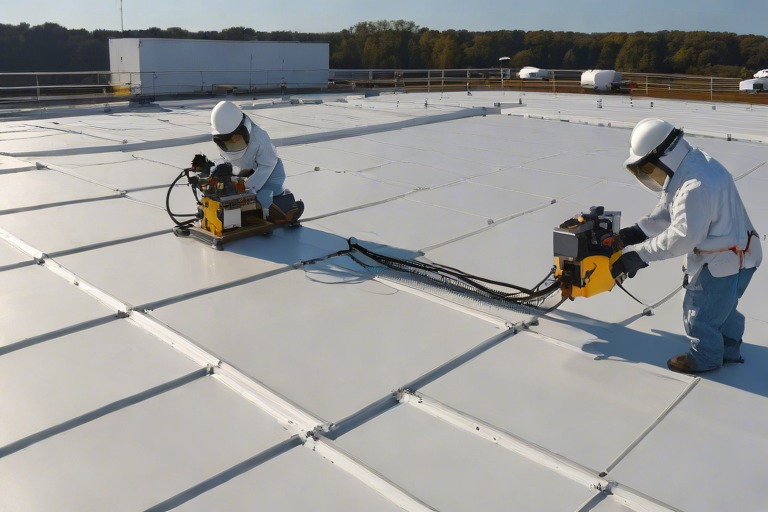
To eliminate this failure point, Aquashield employs robotic heat-welding technology. Our equipment uses precise 1,000°F thermal energy to fuse the TPO membranes together at the molecular level. This process creates a seam that is actually stronger than the membrane itself, turning your entire roof into one seamless, waterproof sheet of plastic. Whether it's a commercial warehouse or a luxury sunroom overlooking Back Creek, this robotic weld ensures there are no gaps for water to penetrate during heavy rainfall events.
Commercial TPO Technical Specifications: * Membrane Thickness: 60-mil single-ply TPO for maximum durability and resistance to salt-fog oxidation. * Seam Integration: Robotic heat-welding at exactly 1,000°F to create a monolithic, fused bond across all joints. * Application Areas: Ideal for low-slope commercial buildings, residential sunrooms, porches, and flat-roof extensions. * Thermal Efficiency: High solar reflectance (white membrane) to reduce cooling costs in the humid Virginia summers. * Waterproofing Integrity: Elimination of traditional "lap seams" that are prone to leaking under hydrostatic pressure from heavy rain accumulation.
24/7 Emergency Repairs and Precision Coastal Waterproofing
Roof leaks do not happen on a convenient schedule; they occur at midnight during a torrential downpour when the wind is whipping off the York River shoreline. That is why Aquashield provides 24/7 emergency roof leak repairs for our Seaford neighbors. However, an "emergency repair" should never be a temporary patch with asphalt sealant and caulk—those are cosmetic fixes that fail within months due to salt-air corrosion.
True coastal waterproofing requires the use of noble metals and precision flashing engineering. When we address leaks around plumbing vents, we do not use rubber boots, which crack under UV exposure. Instead, we install lifetime solid lead plumbing pipe boot collars. Lead is naturally resistant to the corrosive effects of Atlantic salt air and provides a permanent seal that will outlast the roof itself.
Furthermore, many homes in Yorktown suffer from failures at the chimney-roof junction—the most vulnerable point on any house. We specialize in rebuilding chimney reglet step flashing. This involves cutting into the masonry (if necessary) to ensure the metal is properly embedded and draped over the shingles, preventing water from migrating behind the siding. For complex roof intersections where two slopes meet, we install soldered copper dead valley liners. Copper is the only material capable of providing a lifetime waterproof barrier in high-moisture coastal zones without rusting or degrading.
Emergency Repair & Waterproofing Standards: * Plumbing Vent Seals: Installation of solid lead pipe boot collars to eliminate the failure points associated with rubber/plastic boots. * Chimney Integration: Full rebuilds of reglet step flashing, ensuring a watertight transition between masonry and roofing materials. * Valley Engineering: Soldered copper dead valley liners for high-stress water diversion zones, providing permanent oxidation resistance. * Rapid Response: 24/7 emergency availability to mitigate interior damage during Nor'easters or sudden storm surges in the Seaford area. * Forensic Leak Detection: Utilizing thermal imaging and moisture probes to find the actual source of a leak rather than just treating the symptom on the ceiling.