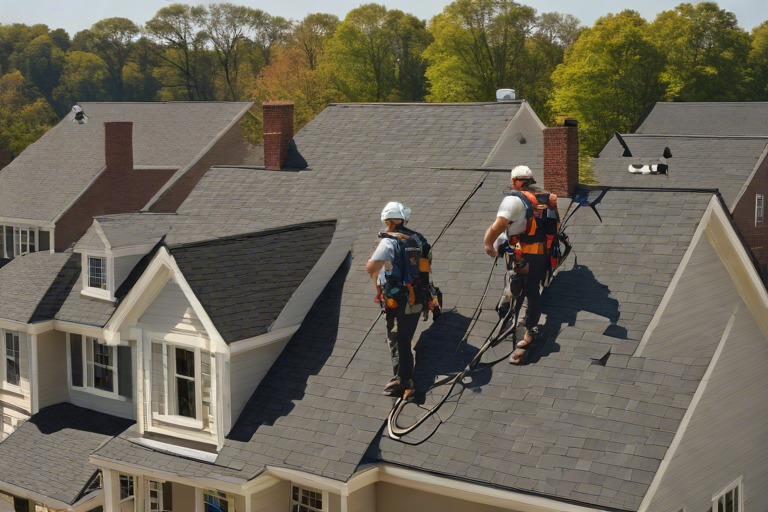
High-Velocity Residential Shingle Engineering for the Queens Lake Corridor
As the founder of Aquashield Roofing Corporation and a coastal roofing engineer, I have spent my career studying how wind behaves as it moves from the Atlantic coast through the York River watershed into the residential pockets of Williamsburg. In areas like Queens Lake and along the Colonial Parkway, homeowners aren't just fighting rain; they are fighting high-velocity wind vortexes that can peel a standard roof off in minutes if the installation is mediocre. Most contractors offer "standard" installations. At Aquashield, we provide engineered systems designed to withstand 130 MPH hurricane-force winds through strict adherence to ASTM D3161 Class F standards.
The cornerstone of our residential strategy is the GAF Timberline HDZ shingle. However, a high-quality shingle is only as good as its attachment method. In Williamsburg's coastal environment—where Nor'easters can create sudden pressure differentials across roof slopes—the standard four-nail pattern is insufficient. We implement a rigorous 6-nail fastening protocol on every single course of shingles to ensure the wind uplift resistance required for our Class F warranties.
Beyond the fasteners, my most uncompromising rule as an engineer concerns what lies beneath the shingle: the decking. I have seen too many "budget" roofers in Virginia perform nail-overs—laying new shingles over old ones to save time and labor costs. This is a catastrophic mistake in coastal zones. Trapped moisture between layers of asphalt accelerates rot and hides structural failure from view. At Aquashield, we mandate 100% complete tear-offs down to the clean wood decking on every project.
Our Residential Technical Specifications: * GAF Timberline HDZ Implementation: Utilization of LayerLock technology combined with a proprietary 6-nail fastening pattern for maximum wind uplift resistance. * ASTM D3161 Class F Certification: Engineering our installations to meet the highest industry standard for high-wind performance, ensuring warranties valid up to 130 MPH gusts. * Zero-Tolerance Tear-Off Policy: Complete removal of all existing roofing materials down to the substrate; we never nail over old shingles regardless of their apparent condition. * CDX Plywood Inspection: A comprehensive structural audit of the roof deck upon tear-off, identifying and replacing compromised or rotted CDX plywood before any underlayment is applied. * Synthetic Underlayment Barrier: Installation of high-performance synthetic underlayments that provide a secondary water barrier against heavy rainfall common in the York River watershed.
Commercial TPO Systems for Low-Slope Coastal Structures
Low-slope roofing—found on commercial facilities, sunrooms, and enclosed porches throughout Williamsburg—presents a different set of engineering challenges than pitched roofs. In these environments, water does not shed quickly; it lingers. When you combine this with the Atlantic salt-fog oxidation that degrades inferior materials, you need a monolithic membrane rather than a series of taped or glued seams.
For our commercial and low-slope projects in Queens Lake and surrounding areas, we specialize in 60-mil single-ply TPO (Thermoplastic Polyolefin) replacements. The "60-mil" thickness is critical; it provides the necessary puncture resistance and longevity to withstand falling debris during severe storms moving inland from Queen Creek. However, the true strength of a TPO system lies not in the membrane itself, but in how the seams are joined.
While many firms rely on hand-welding or adhesives—which can fail under the thermal expansion and contraction cycles of Virginia's humid summers and freezing winters—Aquashield utilizes robotic heat welding. By applying precisely 1,000°F of heat to the overlap, we fuse the two sheets into a single, continuous piece of plastic. This creates a chemical bond that is structurally stronger than the membrane itself, ensuring that no matter how much rain dumps during a Nor'easter, your facility remains bone-dry.
Our Commercial TPO Technical Specifications: * 60-Mil Single-Ply Membrane: Deployment of heavy-duty 60-mil TPO to ensure maximum durability against UV degradation and physical impact. * Robotic Heat Welding: Utilization of automated welding equipment calibrated to exactly 1,000°F for seamless, monolithic joint integration. * Low-Slope Optimization: Specialized engineering for sunrooms, porches, and commercial flats that prevents "ponding" through precise slope correction and drainage planning. * Salt-Fog Resistance: Selection of materials specifically engineered to resist the oxidative effects of salt-laden air common near the York River watershed. * Thermal Expansion Management: Installation techniques that allow for the natural movement of large membrane sheets without stressing the seams or fasteners.
Precision Emergency Leak Repair and Coastal Waterproofing
When a roof leaks in Williamsburg, it is rarely because the shingles failed; it is almost always because the "penetrations" were handled with shortcuts. The points where different materials meet—plumbing vents, chimneys, and valleys—are the primary failure points during high-velocity wind events or heavy rainfall near Colonial Parkway. Most repair companies simply apply a layer of roofing cement (tar) over the leak, which dries out, cracks, and fails within twelve months due to salt-fog oxidation and UV exposure.
At Aquashield Roofing Corporation, we do not "patch" leaks; we re-engineer them using permanent materials. For plumbing vents, we have banned rubber boots in favor of lifetime solid lead plumbing pipe boot collars. Lead is impervious to the ozone degradation that destroys synthetic rubbers over time.
Similarly, chimney flashing is often a source of chronic failure. We perform full reglet step flashing rebuilds, which involve cutting directly into the brick mortar joints to embed new metal flashing deep within the wall structure. This ensures an airtight and watertight seal that cannot be bypassed by wind-driven rain. Finally, for those complex "dead valleys" where two roof planes meet a vertical wall—areas notorious for leaking in coastal homes—we install soldered copper dead valley liners. Copper is the gold standard for longevity, and soldering it creates a permanent, waterproof trough that will outlast the home itself.
Our Emergency Repair Technical Specifications: * Solid Lead Pipe Boot Collars: Replacement of all failing rubber boots with heavy-gauge solid lead collars to eliminate future shrinkage and cracking. * Reglet Step Flashing Rebuilds: Precision cutting into masonry joints for integrated flashing installation, ensuring a mechanical bond between the roof and chimney. * Soldered Copper Dead Valley Liners: Fabrication and soldering of custom copper liners in high-stress valley intersections to provide permanent waterproofing. * 24/7 Emergency Response: Rapid deployment teams equipped to stabilize structural leaks during active Nor'easters or hurricane events. * Oxidation Audit: Comprehensive inspection of all metal flashings for signs of salt-fog oxidation, replacing compromised steel with galvanized or copper alternatives.
Engineering Against the Williamsburg Coastal Climate
To understand why these technical specifications are non-negotiable, one must understand the specific environmental stressors of the Queens Lake area and the broader York River watershed. We operate in a unique climatic intersection where Atlantic moisture meets inland wind corridors. This creates several distinct threats that "standard" roofing contractors often overlook until it is too late.
First is the phenomenon of salt-fog oxidation. The air moving through Queen Creek carries microscopic saline particles that act as an accelerant for corrosion on metal fasteners and flashing. If a contractor uses inferior galvanized steel or low-grade nails, those components will oxidize rapidly, losing their grip precisely when a high-velocity wind vortex hits during a storm. This is why our choice of materials—from lead to copper to GAF's advanced coatings—is based on chemical resistance as much as structural strength.
Second is the impact of Nor'easters and hurricane remnants moving along the Colonial Parkway corridor. These storms don't just bring rain; they create extreme pressure differentials. When wind hits a home, it creates an uplift force (Bernoulli's principle) that attempts to pull shingles upward from the deck. By utilizing 6-nail fastening and ensuring we are anchored into clean, structurally sound CDX plywood, we shift the point of failure away from the roof attachment and back onto the storm itself.
Finally, there is the issue of humidity and saturation within the York River watershed. The high moisture content in our air means that any trapped water—such as that found under a "nail-over" installation—will lead to rapid fungal growth and wood rot. By insisting on 100% tear-offs, we ensure that the home can breathe and that the structural integrity of the decking is verified before we seal it beneath an engineered system.
Local Environmental Considerations: * Wind Vortex Mitigation: Engineering roof slopes and fastening patterns to counteract the specific uplift forces found in coastal Virginia residential zones. * Saline Corrosion Control: Utilizing non-ferrous metals (copper, lead) and high-grade coatings to prevent salt-fog oxidation of critical flashing points. * Hydrostatic Pressure Management: Designing drainage systems for low-slope TPO roofs that can handle the sudden volume of water associated with Atlantic storm cells. * Substrate Breathability: Ensuring complete removal of old materials to allow CDX plywood decks to be inspected and dried, preventing trapped moisture rot in humid coastal climates.