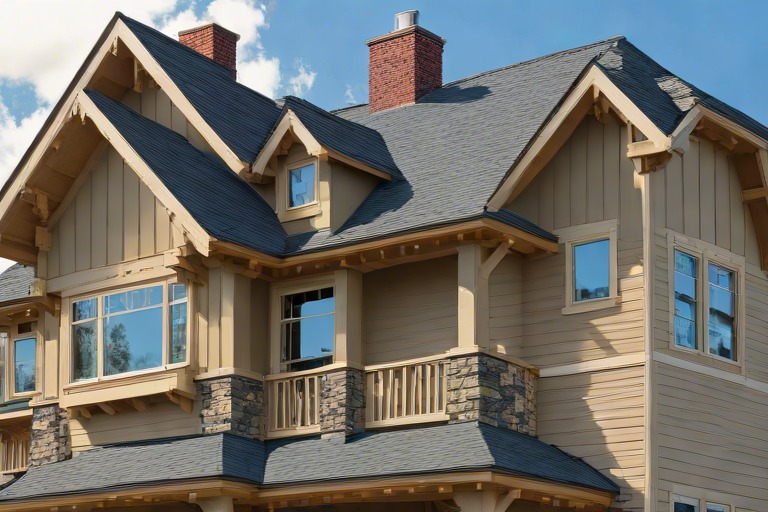
Engineering the Ultimate Coastal Defense: High-Wind Residential Roofing in Port Norfolk
As a coastal roofing engineer and the founder of Aquashield Roofing Corporation, I have spent my career studying the destructive synergy between Atlantic salt-fog oxidation and high-velocity wind vortexes. In Portsmouth, Virginia—particularly for those properties situated near the Historic Port Norfolk waterfront—a roof is not merely an aesthetic choice; it is a structural barrier against some of the most aggressive weather patterns on the East Coast. When Nor'easters roll in off the Elizabeth River, they don’t just bring rain; they bring sustained pressure and sudden gusts that can peel a substandard roof off like wet parchment.
To combat this, Aquashield does not offer "standard" installations. We provide engineered systems designed to withstand 130-MPH hurricane conditions. Our primary weapon for residential slopes is the GAF Timberline HDZ shingle, but the secret to its performance isn't just the material—it is the fastening protocol we mandate on every single square of our Portsmouth projects.
The Aquashield High-Wind Specification: * GAF Timberline HDZ Integration: We utilize these shingles for their LayerLock technology and wind resistance, but we elevate them beyond the manufacturer's minimum requirements to ensure maximum uplift resistance. * 6-Nail Fastening Protocol: While many contractors stick to a standard 4-nail pattern, Aquashield mandates a strict 6-nail fastening system per shingle. This increases the mechanical bond between the asphalt and the deck, drastically reducing the risk of shingles lifting during high-wind events common near the marine terminals. * ASTM D3161 Class F Certification: By combining GAF Timberline HDZ with our specific 6-nail pattern, we achieve an ASTM D3161 Class F rating. This is the gold standard for wind resistance, allowing us to provide a comprehensive 130-MPH hurricane warranty that gives homeowners genuine peace of mind during storm season. * The "Zero Overlay" Mandate: I have built this company on a strict engineering rule: we perform 100% complete old roof tear-offs down to the clean wood decking. We never, under any circumstances, nail new shingles over old rotted ones. An overlay hides structural decay and adds unnecessary weight that can compromise your rafters during a storm. * CDX Plywood Inspection: Once the deck is stripped bare, we conduct a forensic inspection of the CDX plywood. In Port Norfolk’s humid environment, moisture often traps between layers, leading to delamination or dry rot. We replace any compromised sheathing with new, high-grade CDX before a single piece of underlayment is laid, ensuring our fastening system has a solid substrate to bite into.
Industrial Grade Low-Slope Solutions: 60-Mil TPO for Commercial and Residential Flat Roofs
The architecture around the Elizabeth River marine terminals often requires low-slope or flat roofing solutions—whether it's a large commercial warehouse facility or a residential sunroom and porch extension in Historic Port Norfolk. In these environments, water doesn’t just run off; it lingers. When you combine standing water with salt-laden air from the waterfront, traditional asphalt membranes fail rapidly due to oxidation and seam separation.
For these applications, Aquashield specializes in 60-mil single-ply TPO (Thermoplastic Polyolefin) replacements. Unlike EPDM or modified bitumen, which rely on adhesives or tapes that degrade under UV exposure and salt spray, our TPO systems are engineered for monolithic integrity through heat welding.
Technical Specifications for Low-Slope Systems: * 60-Mil Single-Ply Membrane: We utilize a heavy-duty 60-mil thickness to provide superior puncture resistance and long-term durability against the abrasive nature of coastal particulates. * Robotic Heat-Welded Seams: To eliminate human error, we employ robotic welding technology that applies precise heat at exactly 1,000°F. This process fuses the TPO sheets together into a single, seamless membrane. A welded seam is physically stronger than the rest of the sheet itself, ensuring no leaks even under extreme hydrostatic pressure from heavy rainfall. * Reflective Cool-Roof Technology: The white surface of our TPO membranes reflects solar radiation, significantly reducing cooling costs for commercial facilities and preventing the "heat soak" that can warp structural supports in Portsmouth's humid summers. * Custom Flashing Integration: We don’t use generic flashing tapes on flat roofs. Every penetration—from HVAC curbs to drainage scuppers—is heat-welded to ensure a watertight seal that resists the vibration and shifting common in industrial marine zones.
Precision Emergency Repairs: Stopping Coastal Leaks at the Source
Emergency roof leaks are rarely "simple." In Portsmouth, most leakages occur because of material failure caused by Atlantic salt-fog oxidation or structural movement during Nor'easters. When a homeowner calls Aquashield for an emergency repair, we don’t just apply sealant and hope for the best; we perform surgical engineering to replace failed components with materials that are chemically suited for coastal environments.
The most common points of failure in Port Norfolk homes are plumbing vents, chimney junctions, and dead valleys—areas where water concentrates and salt air accelerates corrosion. We address these using industrial-grade metals and traditional craftsmanship that modern "quick-fix" companies have forgotten.
Our Emergency Repair Standards: * Lifetime Solid Lead Plumbing Pipe Boot Collars: Most contractors use rubber or plastic boots that crack within five years due to UV degradation and temperature swings. Aquashield installs solid lead collars around plumbing vents. Lead is naturally impervious to the corrosive effects of salt air and provides a permanent, flexible seal against the pipe. * Chimney Reglet Step Flashing Rebuilds: We don't just caulk chimney leaks. We rebuild the reglet step flashing by cutting into the masonry (where necessary) to ensure the metal is properly embedded and overlapped. This creates a mechanical diversion of water that prevents moisture from seeping behind the siding or into the attic. * Soldered Copper Dead Valley Liners: In areas where two roof planes meet at an angle—the "dead valley"—water volume increases exponentially during heavy rainfall. We install custom-fabricated copper liners, and crucially, we solder every joint. Soldering creates a molecular bond that is far superior to folding or taping, ensuring the dead valley remains watertight for decades despite constant exposure to salt fog. * 24/7 Rapid Response: Because Portsmouth's weather can turn in an instant, our emergency crews are equipped with high-grade materials and engineering tools ready to deploy at any hour to prevent minor leaks from becoming structural catastrophes.
The Aquashield Engineering Standard: Why Port Norfolk Demands More
The difference between a "roofing company" and a coastal roofing engineer is the understanding of environmental stressors. In Portsmouth, Virginia, you are fighting a constant battle against moisture—not just in the form of rain, but as an atmospheric brine that eats through galvanized steel and degrades cheap asphalt. If your contractor isn't talking about ASTM Class F ratings or 1,000°F heat welds, they aren't building for Portsmouth; they are building for a landlocked suburb.
At Aquashield Roofing Corporation, we view every project near the Historic Port Norfolk waterfront as an exercise in fortification. The high-velocity wind vortexes that whip through the Elizabeth River marine terminals require more than just "extra nails"—they require a calculated approach to fastening and material selection.
Our Commitment to Portsmouth Property Owners: * No Shortcuts on Substrates: We will never install a roof over rotted wood or old shingles, regardless of how much it might lower the initial quote. The integrity of your home depends on the quality of the deck beneath the surface. * Material Superiority: From soldered copper to 60-mil TPO and GAF Timberline HDZ, we only use materials that have been proven in high-salinity coastal zones. * Engineering Transparency: We provide our clients with a detailed breakdown of exactly how their roof is being fastened and why specific metals were chosen for flashing. You deserve to know the science behind your shelter.
Whether you are managing a commercial facility near the docks or preserving a historic home in Port Norfolk, your roof should be an asset that adds value and security to your property—not a liability waiting for the next Nor'easter. By adhering to these strict engineering standards, Aquashield Roofing Corporation ensures that when the wind howls across the Elizabeth River, your structure remains unyielding.