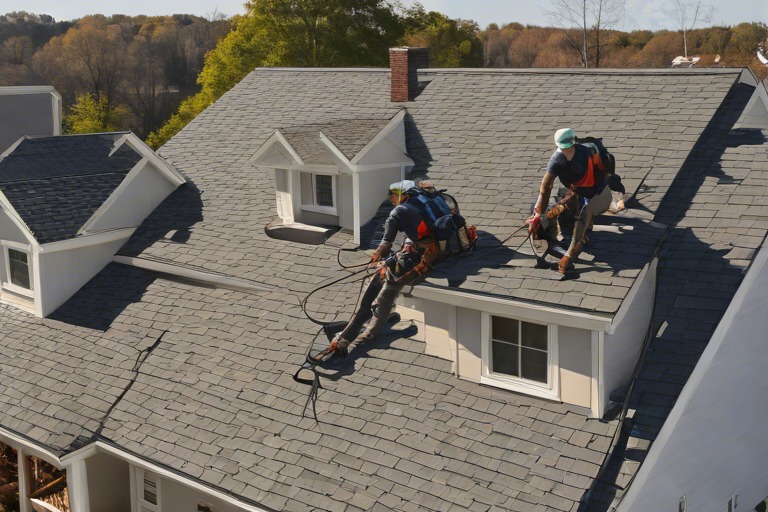
Engineering the Gold Standard for Newport News Residential Roofing
As a coastal roofing engineer and the founder of Aquashield Roofing Corporation, I have spent my career analyzing why roofs fail in the Tidewater region. In Newport News, we aren’t just fighting rain; we are battling high-velocity wind vortexes that roll off the Chesapeake Bay and an aggressive Atlantic salt-fog oxidation process that eats through inferior fasteners and flashing. Most contractors offer a "standard" installation, but standard is not enough when your home sits in the path of a Nor'easter or a Category 3 hurricane. My approach to residential roofing is rooted in structural integrity and strict adherence to ASTM standards.
The cornerstone of our residential replacement strategy is the GAF Timberline HDZ shingle system. However, the product itself is only as good as its attachment method. In Newport News, "standard" nailing patterns are a liability. To ensure your home can withstand extreme wind events, we implement an engineered fastening protocol designed for maximum uplift resistance.
- ASTM D3161 Class F Certification: We install GAF Timberline HDZ shingles using 6-nail high-wind fastening per shingle. This specific configuration is required to achieve the ASTM D3161 Class F rating, providing a hurricane warranty that protects your home up to wind speeds of 130 MPH.
- The "Zero Overlay" Mandate: At Aquashield Roofing Corporation, we have a strict engineering rule: there are no overlays. We never nail new shingles over old ones. Nailing over an existing layer traps moisture and prevents us from identifying structural compromises in the roof deck. 100% complete tear-offs are mandatory for every project.
- CDX Plywood Inspection: Once we have stripped the roof down to the bare wood, my team performs a rigorous inspection of the CDX plywood decking. We look for delamination, soft spots from previous slow leaks, and rot. If the substrate is compromised, it cannot support 6-nail fastening; therefore, we replace damaged sheathing with new CDX plywood before any underlayment is applied.
- Coastal Underlayment Systems: To combat the heavy rainfall patterns common near Newport News Shipbuilding, we utilize high-performance synthetic underlayments that act as a secondary water barrier, ensuring that even if a shingle were to be compromised during a storm, your interior remains dry.
By treating every roof replacement as an engineering project rather than a simple commodity service, we eliminate the "callback" culture of local roofing and provide Newport News homeowners with a fortress against the elements.
High-Performance Commercial TPO Systems for Low-Slope Structures
Commercial properties in areas like City Center at Oyster Point face unique thermal and structural challenges. Flat or low-slope roofs—including commercial facilities, sunrooms, and porches—are prone to "ponding" water, which accelerates membrane degradation if the installation is flawed. For these applications, I specify 60-mil single-ply TPO (Thermoplastic Polyolefin) membranes.
TPO is superior for our coastal environment because it reflects UV rays, reducing cooling costs during Virginia's humid summers and resisting the chemical oxidation caused by salt air. However, the weakest point of any flat roof is the seam. Hand-welding with a heat gun often leads to "cold welds" or inconsistent bonds that leak within three years.
- Robotic Heat-Welded Seams: To eliminate human error, we utilize robotic welding technology for our TPO installations. These machines apply consistent 1,000°F heat across the entire seam overlap, fusing the two membranes into a single, monolithic sheet of plastic. This creates a bond that is structurally stronger than the membrane itself.
- 60-Mil Membrane Thickness: We exclusively use 60-mil TPO for our commercial replacements. The increased thickness provides superior puncture resistance and long-term durability against debris carried by high winds during Atlantic storm systems.
- Precision Drainage Engineering: A flat roof is never truly flat; it must be engineered to move water toward scuppers or internal drains. We analyze the slope of your facility's rooftop to ensure there are no low spots where water can stagnate and degrade the membrane over time.
- Edge Detail & Termination Bars: To prevent wind-uplift at the roof perimeter—a common failure point in Newport News commercial buildings—we utilize heavy-duty termination bars and industrial-grade sealants that resist salt-fog degradation.
Whether it is a small residential sunroom or a large-scale warehouse, our TPO installations are designed to be permanent solutions, not temporary patches. We build these systems to withstand the specific hydrostatic pressures of Virginia’s heaviest rainfalls.
24/7 Emergency Leak Repair and Specialized Waterproofing
When a roof leaks during a Nor'easter, most companies will send a technician with a tube of silicone caulk to "stop the bleed." As an engineer, I find this practice unacceptable. Caulk is a temporary bandage that hides the symptom while the underlying structural rot continues. At Aquashield Roofing Corporation, our 24/7 emergency repairs are focused on permanent mechanical solutions and professional metallurgy.
The most common failure points in Newport News homes—particularly those near historic areas or around the Mariners' Museum—are plumbing boots, chimney transitions, and dead valleys. These require specialized materials that can withstand thermal expansion and contraction without cracking.
- Lifetime Solid Lead Plumbing Pipe Boot Collars: We reject rubberized boot collars which dry-rot in the Virginia sun within five to seven years. Instead, we install solid lead pipe boot collars. Lead is malleable yet impervious to UV degradation and salt air, providing a lifetime waterproof seal around vent pipes.
- Chimney Reglet Step Flashing Rebuilds: Many leaks occur where the roof meets the chimney because of failed "cut-in" flashing. We perform full reglet step flashing rebuilds, which involve cutting into the masonry mortar joint to embed new galvanized or stainless steel flashing directly into the brickwork, ensuring water is shed away from the structure regardless of wind direction.
- Soldered Copper Dead Valley Liners: In complex roof intersections where "dead valleys" occur (where two slopes meet at a right angle), shingles are insufficient. We install custom-fabricated copper liners that are soldered—not caulked—at every joint. Soldering creates a molecular bond between the metal sheets, ensuring an airtight and watertight seal for decades.
- Rapid Response Stabilization: Our emergency teams arrive equipped to perform "triage" stabilization during active storm events, followed by permanent engineering repairs once weather conditions allow for safe heat-welding or soldering operations.
By focusing on these high-spec mechanical details, we ensure that a repair is not just a temporary fix, but an upgrade in the home's overall structural integrity.
Navigating the Newport News Coastal Environment
Roofing in Newport News requires more than general knowledge; it requires local environmental intelligence. The geography of our city—sandwiched between the James River and the Chesapeake Bay—creates a microclimate that is hostile to building materials. From the industrial corridors surrounding Newport News Shipbuilding to the refined commercial hubs at City Center at Oyster Point, every structure faces an onslaught of atmospheric stressors.
The primary enemy in this region is Atlantic salt-fog oxidation. Salt particles carried by the wind settle on roofing components and act as catalysts for corrosion. This accelerates the failure of cheap galvanized nails and degrades low-grade asphalt shingles through a process called "granule loss," where the protective mineral layer is stripped away, leaving the bitumen exposed to UV radiation.
- Wind Vortex Management: The proximity to large bodies of water creates high-velocity wind vortexes that can create negative pressure (suction) on your roof's leeward side. This is why our 6-nail fastening system and ASTM D3161 Class F standards are non-negotiable; they prevent the "peeling" effect common in coastal storms.
- Hydrological Pressure: Newport News experiences intense, concentrated rainfall events. When combined with salt air, this water can penetrate even a tiny gap in flashing. Our use of soldered copper and lead collars is specifically designed to combat these hydrological pressures where standard materials fail.
- Thermal Cycling: The temperature swings between our humid summers and freezing winters cause roofing materials to expand and contract significantly. By using high-grade TPO for flat roofs and HDZ shingles with engineered underlayments, we provide a system that flexes without cracking or breaking the seal.
At Aquashield Roofing Corporation, my goal as founder is to move away from "contractor" thinking and toward "engineering" thinking. We don't just install materials; we build weather-resistant systems tailored specifically for the unique challenges of Newport News. When you choose us, you are choosing a roof designed by an engineer who understands exactly what it takes to survive another century on the Virginia coast.