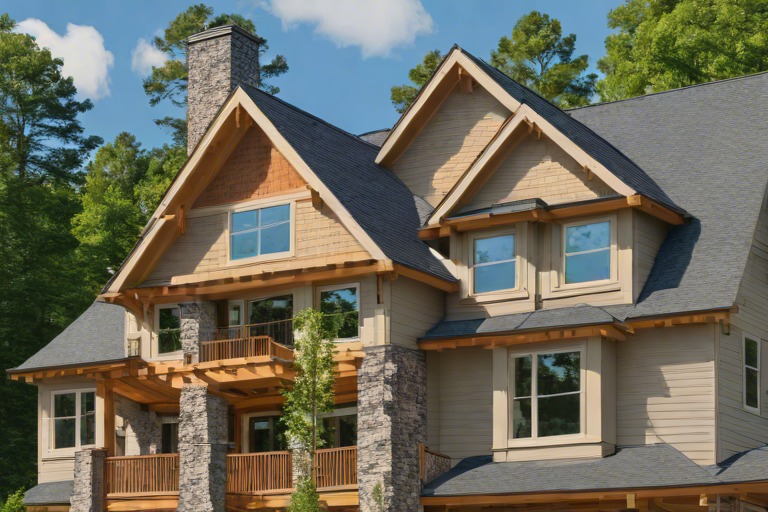
Engineered Residential Resilience: GAF Timberline HDZ & High-Wind Fastening
In my years as a coastal roofing engineer and founder of Aquashield Roofing Corporation, I have seen too many homes in the Nansemond area suffer from premature roof failure. The geography of Suffolk—specifically along the Nansemond Parkway industrial and residential belt—exposes structures to a brutal combination of Atlantic salt-fog oxidation and high-velocity wind vortexes that can peel back standard installations like wet paper. To combat this, we do not offer "standard" shingle replacements; we provide engineered roofing systems designed for maximum uplift resistance.
Our primary specification for residential slopes is the GAF Timberline HDZ shingle system. While many contractors are content with a basic installation to meet minimum code, Aquashield adheres to an uncompromising fastening protocol. We utilize 6-nail high-wind fastening on every single course of shingles. This isn't just about adding more nails; it is about achieving the ASTM D3161 Class F wind warranty rating. By increasing the nail count and ensuring precise placement in the sealant strip, we create a mechanical bond capable of withstanding 130-MPH hurricane gusts without failure.
However, the most advanced shingle in the world is useless if it is installed over a compromised substrate. This leads to our strictest company rule: The Zero-Overlay Mandate. At Aquashield Roofing Corporation, we never nail new shingles over old ones. "Roofing over" is a shortcut that traps moisture and hides structural decay. We perform 100% complete tear-offs down to the original wood decking. This allows my team to conduct a forensic inspection of the CDX plywood; if there is any sign of delamination, rot, or water saturation from previous Nor'easters, it is replaced immediately before the new system is deployed.
Technical Specifications for Residential High-Wind Systems: * Material: GAF Timberline HDZ Layered shingles with WindGuard® durability. * Fastening Pattern: 6-nail high-wind application per shingle to meet ASTM D3161 Class F standards. * Warranty Threshold: Engineered for wind speeds up to 130 MPH. * Substrate Protocol: Full tear-off of all existing layers; mandatory inspection and replacement of compromised CDX plywood decking. * Underlayment: High-performance synthetic underlayment with reinforced seams to prevent moisture infiltration during the installation phase.
Commercial Low-Slope Engineering: 60-Mil TPO & Robotic Heat Welding
The Nansemond Parkway industrial belt presents a different set of challenges than residential neighborhoods. Large commercial facilities, warehouses, and high-end residential sunrooms or porches often feature low-slope roofs that are prone to "ponding"—where water sits stagnant due to minimal pitch. In the humid coastal climate of Suffolk, this standing water accelerates membrane degradation through UV exposure and chemical oxidation from salt air.
To solve this, Aquashield specializes in 60-mil single-ply TPO (Thermoplastic Polyolefin) replacements. We choose a 60-mil thickness over thinner alternatives because it provides superior puncture resistance and long-term durability against the thermal expansion and contraction cycles typical of Virginia’s volatile weather patterns.
The critical point of failure on any flat roof is the seam. Traditional adhesives or tapes are insufficient for commercial applications in high-wind zones. That is why we employ robotic heat welding technology. Our equipment fuses TPO seams at a precise 1,000°F, creating a monolithic bond where the two sheets essentially become one continuous piece of plastic. This weld is structurally stronger than the membrane itself, ensuring that even during heavy rainfall and high-pressure wind events, there are no gaps for water to penetrate into the building envelope.
Technical Specifications for Commercial TPO Systems: * Membrane Grade: 60-mil single-ply reinforced TPO (Thermoplastic Polyolefin). * Seam Integration: Robotic heat welding at a constant temperature of 1,000°F to ensure monolithic fusion. * Application Areas: Industrial warehouses along Nansemond Parkway, commercial retail spaces, and residential low-slope porches/sunrooms. * Thermal Properties: High solar reflectivity (Cool Roof technology) to reduce HVAC loads in the Suffolk summer heat. * Edge Detail: Heavy-duty reinforced termination bars and flashing to prevent wind uplift at the perimeter edges.
Precision Waterproofing & 24/7 Emergency Leak Intervention
A roof is only as strong as its weakest penetration point. In my experience, most "leaks" in Suffolk homes aren't caused by shingle failure but by a lack of precision engineering around plumbing vents and chimneys. When the Nor'easters hit Nansemond Parkway, they drive rain horizontally into these gaps with immense pressure. Most contractors use rubber boots or silicone caulk—temporary fixes that degrade under UV exposure within three years.
Aquashield takes an old-school engineering approach to waterproofing. For every plumbing vent penetration, we install lifetime solid lead plumbing pipe boot collars. Lead is malleable and impervious to the salt-fog oxidation common in coastal Virginia; once formed around a pipe, it provides a permanent seal that will not crack or shrink over time.
Furthermore, chimney leaks are often caused by improper flashing at the brick line. We do not rely on sealant beads. Instead, we perform full chimney reglet step flashing rebuilds. This involves cutting into the masonry to embed metal flashing directly into the structure, ensuring water is shed away from the house rather than seeping behind the siding. For complex intersections and "dead valleys" where two roof planes meet at a wall, we install soldered copper dead valley liners. Copper provides an unmatched lifespan in coastal environments, and soldering ensures there are no mechanical seams for water to penetrate.
Technical Specifications for Emergency & Precision Repairs: * Plumbing Penetrations: Installation of solid lead pipe boot collars (lifetime durability vs. rubber/plastic). * Chimney Integration: Reglet step flashing rebuilds involving masonry integration and counter-flashing. * Valley Engineering: Custom soldered copper dead valley liners for high-risk water collection points. * Emergency Response: 24/7 rapid intervention team available throughout the Nansemond area to mitigate storm damage. * Diagnostic Process: Thermal imaging and moisture mapping used during emergency calls to locate hidden leaks before they cause structural rot.
The Coastal Standard: Engineering for the Suffolk Environment
Roofing in the Nansemond Parkway industrial and residential belt requires more than just labor; it requires an understanding of coastal physics. Many contractors move into this market from inland areas, unaware that Atlantic salt-fog acts as a catalyst for oxidation on metal components and accelerates the breakdown of asphalt granules. When you combine this chemical stress with high-velocity wind vortexes—which can create localized vacuum effects that literally pull shingles off a roof—you realize why "standard" installation is an invitation to failure.
At Aquashield Roofing Corporation, my philosophy as founder and engineer is based on redundancy. We don't just meet the building code; we exceed it by creating multiple layers of defense. Whether it is the 6-nail fastening pattern for our GAF HDZ systems or the robotic welding of our TPO membranes, every decision is made to ensure that your property remains dry regardless of what the Atlantic throws at us.
We understand the specific architectural landscape of Suffolk—from the sprawling industrial complexes near Nansemond Parkway to the historic residential estates in the surrounding area. Each structure has unique vulnerabilities based on its orientation toward prevailing winds and its exposure to salt spray. By combining high-grade materials with rigorous engineering standards, we provide a level of protection that is rare in today's market. We aren't just replacing shingles; we are installing an engineered shield designed for the specific atmospheric pressures of coastal Virginia.
The Aquashield Coastal Commitment: * Environmental Analysis: Every project begins with a site-specific assessment of wind exposure and salt-fog risk based on proximity to Nansemond Parkway corridors. * Material Integrity: Use only professional-grade, high-wind rated materials that resist UV degradation and oxidation. * Engineering Oversight: Direct supervision by an experienced coastal roofing engineer (Jeff Childers) to ensure all fastening and flashing specs are met perfectly. * Local Expertise: Deep familiarity with Suffolk's building codes and the unique weather patterns of the Nansemond region, ensuring long-term compliance and resilience.