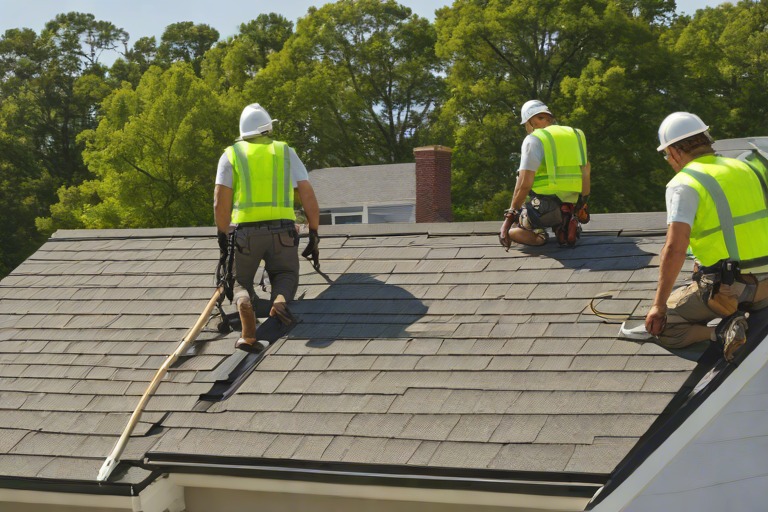
Engineered Residential Roofing for Norfolk’s High-Velocity Wind Zones
As the founder of Aquashield Roofing Corporation and a coastal roofing engineer, I have spent my career analyzing how Atlantic weather patterns dismantle inferior roof installations. In the Military Highway area—particularly around the high-traffic intersection of Virginia Beach Blvd—homes are subjected to unique atmospheric pressures. Between the salt-fog oxidation drifting in from the coast and the sudden, violent wind vortexes associated with Nor'easters, a "standard" shingle installation is simply not enough for Norfolk homeowners.
At Aquashield, we do not believe in shortcuts or "roof-overs." The most common failure point I see in local residential properties is the practice of nailing new shingles over old ones to save on labor costs. This creates an unstable thermal mass and hides critical structural decay. Our firm adheres to a strict engineering mandate: 100% complete tear-offs down to the clean wood decking. We do not guess what is underneath; we inspect every square inch of your CDX plywood for rot, delamination, or moisture saturation before a single new component is installed. If the substrate is compromised, it cannot support an engineered system.
For our primary residential installations, we utilize GAF Timberline HDZ shingles, but the product alone isn't what provides the protection—it is the fastening methodology. To combat Norfolk’s wind profiles and meet ASTM D3161 Class F standards, we implement a rigorous 6-nail high-wind fastening pattern on every shingle course. This ensures that your roof doesn't just look good; it earns an industry-leading 130-MPH hurricane warranty.
Technical Specifications for Residential High-Wind Systems: * Substrate Verification: Full removal of all existing layers to inspect and replace damaged CDX plywood sheathing, ensuring a flat, structurally sound base. * Fastening Protocol: Implementation of the GAF 6-nail pattern per shingle, exceeding standard building codes to achieve ASTM D3161 Class F wind resistance ratings. * Wind Load Capacity: Engineered for stability and uplift resistance up to 130 MPH, specifically designed to withstand high-velocity vortexes common in coastal Virginia. * Material Selection: GAF Timberline HDZ shingles featuring LayerLock technology for an extra level of grip and wind protection against Atlantic gusts. * Underlayment Integration: High-performance synthetic underlayments that act as a secondary water barrier during extreme Nor'easter rainfall events.
Precision Commercial TPO & Low-Slope Engineering
The commercial corridor surrounding Military Circle is the economic heartbeat of Norfolk, but its flat and low-slope roofs are often the most neglected assets on the property. From large industrial facilities to residential sunrooms and porches near Virginia Beach Blvd, "flat" roofing in a coastal environment requires an entirely different engineering approach than pitched shingles. The primary enemy here is ponding water combined with intense UV radiation and salt air, which can cause premature membrane degradation.
For these applications, Aquashield Roofing Corporation specializes in 60-mil single-ply TPO (Thermoplastic Polyolefin) replacements. While many contractors rely on adhesives or tapes to join seams—which inevitably fail under the thermal expansion and contraction of Virginia's seasonal swings—we utilize robotic heat-welding technology. Our equipment fuses the overlapping membranes at a precise temperature of 1,000°F, creating a monolithic bond that is physically stronger than the membrane itself.
This process eliminates the "seam failure" variable from the equation. Whether we are covering a sprawling commercial warehouse or a residential porch extension, our TPO systems provide an impenetrable white reflective surface that reduces cooling costs and resists the corrosive effects of salt-fog oxidation common in Norfolk’s coastal air.
Commercial Low-Slope Technical Standards: * Membrane Grade: 60-mil single-ply TPO for superior puncture resistance and long-term durability against UV degradation. * Seam Integration: Robotic heat-welding at 1,000°F to ensure a fused, permanent bond across all laps, eliminating the reliance on chemical adhesives. * Application Scope: Engineered solutions for commercial facilities, low-slope sunrooms, porches, and industrial flat roofs within the Military Highway corridor. * Thermal Management: High-albedo white membranes designed to reflect solar radiation, significantly lowering HVAC loads during humid Virginia summers. * Drainage Optimization: Precision slope correction to prevent ponding water, reducing the risk of membrane fatigue and structural loading issues.
24/7 Emergency Mitigation & Coastal Metallurgy
In my experience as an engineer, most roof leaks do not occur in the middle of a field; they happen at the transitions—the points where different materials meet. In Norfolk, these transition points are under constant assault from heavy rainfall and salt-laden air that accelerates oxidation on cheap galvanized metals. When a Nor'easter hits the Military Circle area, homeowners often discover "hidden" leaks around chimneys and plumbing vents that were improperly flashed by previous contractors.
Aquashield provides 24/7 emergency roof leak repairs, but we do not believe in temporary patches or silicone caulking, which degrades rapidly under UV exposure. We employ high-grade coastal metallurgy to ensure a permanent fix. For instance, most "standard" plumbing boots are made of thin rubber that cracks within five years; we install lifetime solid lead plumbing pipe boot collars. Lead is naturally resistant to the corrosive salt air and provides an airtight, watertight seal that lasts for decades.
Furthermore, we address the two most common failure points in Norfolk residential roofing: chimney transitions and dead valleys. We rebuild chimney reglet step flashing from the ground up, ensuring a mechanical lock into the masonry rather than relying on sealant. For complex roof intersections where water collects—the "dead valley"—we install soldered copper liners. Copper is the gold standard for coastal engineering due to its extreme longevity and resistance to oxidation when properly installed.
Emergency Repair & Metallurgy Specifications: * Plumbing Vent Seals: Installation of lifetime solid lead pipe boot collars, replacing inferior rubber or plastic boots that fail in salt-fog environments. * Chimney Integration: Complete rebuilds of chimney reglet step flashing, utilizing mechanical integration into the brickwork to prevent water infiltration at the roofline. * Dead Valley Management: Custom fabrication and installation of soldered copper dead valley liners for permanent waterproofing of complex internal roof junctions. * Oxidation Resistance: Use of high-gauge non-ferrous metals (copper/lead) specifically chosen to resist Atlantic salt-fog oxidation. * Rapid Response: 24/7 emergency deployment for leak mitigation during extreme weather events in the Norfolk and Virginia Beach Blvd junction areas.
The Aquashield Standard: Engineering Over Installation
The difference between a "roofing company" and an engineering firm is the approach to risk management. Most contractors look at your roof as a series of shingles; I look at it as a complex system designed to manage hydrostatic pressure, wind uplift, and thermal expansion. In the Military Highway area, you are not just fighting rain—you are fighting a combination of high-velocity winds that create suction on the leeward side of your home and an atmospheric chemistry that eats through low-grade metals.
Our commitment to Norfolk is based on transparency and technical rigor. When we talk about "100% tear-offs," it isn't just about removing old materials; it’s about a forensic audit of your roof deck. If I find rotted CDX plywood, the project stops until that substrate is replaced. Nailing into rotten wood is an engineering failure, and at Aquashield Roofing Corporation, we do not accept failures.
Whether you are managing a commercial facility near Military Circle or protecting your family home near Virginia Beach Blvd, our goal is to provide a roof that exceeds local building codes and stands as a fortress against the Atlantic climate. We combine GAF’s best materials with robotic precision in TPO welding and old-world metallurgy in copper and lead flashing to ensure that once we leave your property, you will not have to worry about your roof for a generation.
The Aquashield Engineering Checklist: * Forensic Deck Audit: Mandatory inspection of all wood decking after tear-off; zero tolerance for nailing over rotted or compromised plywood. * Wind Load Calculation: Application of ASTM D3161 Class F fastening patterns to mitigate the risk of shingle blow-offs during hurricane-force winds. * Material Synergy: Pairing GAF Timberline HDZ with high-performance underlayments and coastal metals for a cohesive, multi-layered defense system. * Robotic Precision: Utilizing 1,000°F heat welding on all TPO seams to ensure commercial roofs are monolithic and leak-proof. * Local Expertise: Deep understanding of the specific micro-climates around Norfolk’s Military Highway corridor, including salt-fog patterns and wind vortexes.