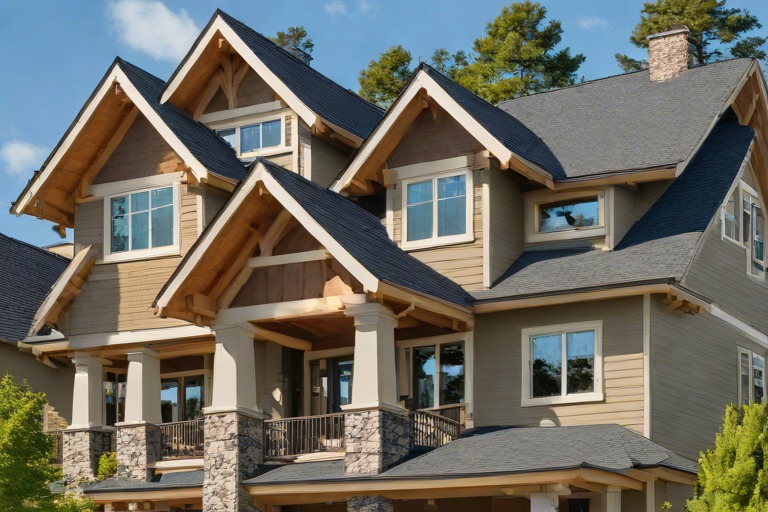
Engineered Residential Roofing: High-Velocity Wind Protection for Menchville Homes
As a coastal roofing engineer, I have spent my career studying how high-velocity wind vortexes interact with residential structures along the Virginia coast. In Newport News—particularly within the Menchville area and near the mouth of the Warwick River—your roof is not merely a shelter; it is your first line of defense against Atlantic salt-fog oxidation and the brutal force of Nor'easters. Most roofing contractors offer "standard" installations, but in this corridor, standard isn’t enough to survive 130 MPH gusts. At Aquashield Roofing Corporation, we don't just install shingles; we engineer wind-resistant systems designed for maximum uplift resistance.
Our primary residential specification is the GAF Timberline HDZ shingle system. While these shingles are renowned for their aesthetic appeal and durability, the secret to their performance in Newport News lies in our fastening protocol. We strictly adhere to a 6-nail high-wind fastening pattern on every single course of shingles. This isn't an optional upgrade; it is our baseline standard. By increasing the fastener density beyond the industry average, we ensure that your roof meets the rigorous ASTM D3161 Class F requirements, qualifying you for hurricane warranties up to 130 MPH.
When a storm surges through the Menchville High marina community, wind doesn't just push against a roof—it creates suction (uplift) that can peel back shingles like paper if they are only held by four nails. Our engineering approach ensures that each shingle is mechanically locked into the deck, preventing the "shingle lift" common in coastal Virginia after heavy rainfall and high-wind events.
Technical Specifications for Residential High-Wind Systems: * Material Selection: GAF Timberline HDZ shingles featuring LayerLock technology to prevent blow-offs. * Fastening Protocol: Strict 6-nail per shingle installation pattern across the entire roof surface. * Certification Standard: ASTM D3161 Class F wind resistance rating for maximum uplift protection. * Warranty Threshold: Engineered specifically to withstand and warrant against winds up to 130 MPH. * Underlayment Grade: High-performance synthetic underlayments that provide a secondary water barrier against driving rain during Nor'easters. * Ventilation Engineering: Precision installation of ridge vents and soffit intake systems to reduce attic heat buildup, which prevents shingle curling caused by the humid Newport News climate.
The Aquashield Integrity Standard: 100% Tear-Offs & Decking Validation
In my years as founder of Aquashield Roofing Corporation, I have seen countless roofs fail prematurely because a contractor chose to "nail over" an existing layer of shingles. In the coastal environment of Newport News, this is professional negligence. Adding a second layer of asphalt increases the dead load on your rafters and traps moisture between layers—a recipe for disaster when dealing with Atlantic salt-fog oxidation and extreme humidity.
Our strict company rule is non-negotiable: we perform 100% complete old roof tear-offs down to the clean wood decking. We do not believe in "overlays." The only way to ensure a coastal roof survives long-term is to inspect the substrate before any new material is applied. Once the old shingles are removed, my team conducts a comprehensive audit of your CDX plywood and OSB sheathing.
We look for signs of delamination, soft spots from previous slow leaks, and rot caused by moisture intrusion during heavy rainfall events near the Warwick River mouth. If we find compromised decking, it is replaced immediately with high-grade CDX plywood to provide a rigid, structural foundation. Nailing new shingles into rotted wood provides zero uplift resistance; if the deck fails, the 6-nail pattern becomes irrelevant because the nails are pulling out of decayed timber rather than solid wood.
Our Decking & Tear-Off Protocol: * Zero Overlay Policy: Complete removal of all existing shingle layers to expose the raw roof deck. * Substrate Inspection: Manual probe testing and visual inspection for rot, mold, or structural sagging in CDX plywood/OSB. * Decking Replacement: Immediate excision of rotted wood and replacement with new architectural-grade CDX plywood before underlayment installation. * Fastener Audit: Removal of all old nails to ensure a flush surface, preventing "nail pops" that can puncture synthetic underlayments. * Debris Management: Full site cleanup using industrial magnets to remove thousands of displaced fasteners from your lawn and driveway—critical for the safety of families in the Menchville High marina community.
Commercial Low-Slope Engineering: Robotic TPO Membrane Systems
Low-slope roofing presents a different set of challenges than pitched roofs. In Newport News, commercial facilities, sunrooms, and porches are particularly vulnerable to "ponding" water during heavy rainfall events. Traditional asphalt or EPDM membranes often fail at the seams due to thermal expansion and contraction caused by our volatile coastal temperature swings. To combat this, Aquashield Roofing Corporation specializes in 60-mil single-ply TPO (Thermoplastic Polyolefin) replacements.
The critical failure point of any flat roof is the seam. While many contractors use adhesives or tapes that degrade over time under UV exposure and salt air, we utilize robotic heat-welding technology. Our equipment applies a precise 1,000°F thermal weld to every single overlap in the TPO membrane. This process doesn't just "glue" the seams together; it fuses the two sheets of plastic into one monolithic piece of material.
For commercial properties and residential sunrooms near the Warwick River mouth, this robotic welding ensures a watertight seal that is structurally stronger than the rest of the field. When combined with 60-mil thickness—which provides superior puncture resistance compared to thinner membranes—your low-slope roof becomes an impenetrable barrier against the elements.
Commercial TPO Technical Specifications: * Membrane Grade: High-performance 60-mil single-ply TPO for maximum durability and UV reflection (reducing cooling costs). * Seam Integration: Robotic heat-welding at exactly 1,000°F to create a fused, monolithic bond. * Thermal Stability: Engineered to withstand the extreme expansion/contraction cycles of Virginia's coastal climate. * Water Management: Installation of heavy-duty TPO scuppers and internal drains to eliminate ponding water during Nor'easters. * Edge Detailing: Reinforced termination bars and drip edges to prevent wind uplift at the perimeter—a common failure point in high-velocity vortexes.
24/7 Emergency Response & Precision Coastal Waterproofing
A roof leak is rarely a minor inconvenience in Newport News; it is an emergency that can lead to rapid mold growth due to our extreme humidity levels. When homeowners near the Menchville High marina community experience sudden failures during a storm, they need more than a "patch job." They need engineering-grade waterproofing. Aquashield Roofing Corporation provides 24/7 emergency leak repairs focusing on the three most common failure points: plumbing boots, chimneys, and dead valleys.
We reject the use of standard rubber boot collars or silicone caulking, which dry out and crack under Atlantic salt-fog oxidation within a few seasons. Instead, we install lifetime solid lead plumbing pipe boot collars. Lead is malleable yet impervious to UV degradation and corrosion, providing a permanent seal around vent pipes that will not perish over time.
Furthermore, chimney leaks are often the result of failed flashing. We perform complete chimney reglet step flashing rebuilds, ensuring that water is mechanically diverted away from the brickwork and onto the shingles. For those complex areas where two roof planes meet—the dead valleys—we utilize soldered copper liners. Copper is the gold standard for coastal waterproofing; when properly soldered into a seamless trough, it provides an everlasting conduit for water to exit the roof system without ever touching the wooden decking below.
Emergency Repair & Waterproofing Standards: * Plumbing Vent Seals: Installation of solid lead pipe boot collars—eliminating the need for frequent rubber replacements. * Chimney Integration: Full reglet step flashing rebuilds using heavy-gauge galvanized or copper metals to prevent masonry saturation. * Valley Engineering: Custom fabrication and soldering of copper dead valley liners for permanent water diversion in high-risk areas. * Emergency Response: 24/7 rapid deployment teams equipped for immediate tarping and stabilization during active Nor'easters. * Leak Diagnostics: Use of infrared moisture detection to identify hidden saturation within the decking before performing surgical repairs.