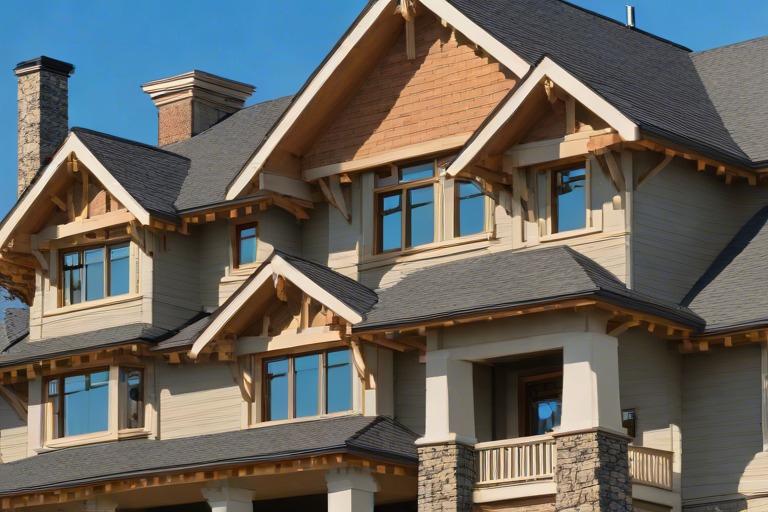
Engineering the Ultimate Coastal Defense: GAF Timberline HDZ & High-Wind Residential Systems
As a coastal roofing engineer and the founder of Aquashield Roofing Corporation, I have spent my career analyzing how Atlantic weather patterns dismantle inferior roof installations. In Newport News—specifically within the Lee Hall corridor near the Historic Lee Hall Mansion—we aren't just fighting rain; we are battling high-velocity wind vortexes and an aggressive salt-fog oxidation that eats through substandard materials. A residential roof in this region is not a decorative cap; it is a structural shield designed to withstand Nor'easters and hurricane-force gusts.
When I design a shingle replacement for a home near the Reservoir or surrounding Lee Hall, we do not settle for "standard" installation practices. We utilize GAF Timberline HDZ shingles, but the material is only as good as its attachment method. Most contractors follow basic manufacturer guidelines; Aquashield follows engineering mandates. To achieve an ASTM D3161 Class F rating—the gold standard for wind resistance—we implement a strict 6-nail high-wind fastening pattern on every single shingle.
This specific configuration is the only way to guarantee that your roof remains intact during 130-MPH hurricane winds. By increasing the fastener density, we distribute the uplift pressure across more points of contact with the decking, preventing the "peel back" effect common in coastal failures. However, a high-wind fastening system is useless if it is anchored into compromised wood.
This leads to our non-negotiable rule: 100% complete old roof tear-offs. I have seen too many homes near Fort Eustis where contractors simply "nail over" existing shingles to save time and disposal costs. This is a catastrophic engineering failure. Nailing over old shingles traps moisture, hides active rot in the sheathing, and creates an uneven plane that compromises shingle alignment. At Aquashield, we strip every layer down to the clean wood decking.
Our Residential Engineering Specifications: * Material Selection: GAF Timberline HDZ Shingles for superior wind-resistance and architectural depth. * Fastening Protocol: 6-nail high-wind pattern per shingle to meet ASTM D3161 Class F standards (certified up to 130 MPH). * Decking Integrity Audit: Full removal of all existing layers; comprehensive inspection of CDX plywood for delamination, rot, or water saturation. * Substrate Restoration: Replacement of any compromised sheathing with new CDX plywood before underlayment application—never nailing over rotted wood. * Coastal Underlayment: High-performance synthetic barriers designed to prevent moisture migration during the heavy rainfall typical of Newport News Nor'easters.
Commercial Low-Slope Solutions: Robotic TPO Heat-Welding for Lee Hall Facilities
Commercial structures and residential additions—such as sunrooms, porches, and garages near the Fort Eustis main gates—face a different set of challenges than pitched roofs. In these low-slope environments, water does not shed quickly; it lingers. When combined with the salt-laden air drifting from the coast, traditional flat roofing materials often succumb to premature oxidation and seam failure.
To combat this, Aquashield Roofing Corporation specializes in 60-mil single-ply TPO (Thermoplastic Polyolefin) membrane replacements. The "60-mil" thickness is critical; it provides a robust puncture resistance and thermal stability that thinner membranes cannot match. However, the true strength of a TPO system lies not in the sheet itself, but in the seams.
We have moved beyond manual heat guns and adhesives. For our commercial projects in Newport News, we utilize robotic welding technology to fuse the membrane seams at exactly 1,000°F. This process creates a monolithic bond—essentially turning multiple sheets of TPO into one continuous, waterproof skin. A robotically welded seam is chemically fused; it does not rely on glue that can degrade under UV exposure or peel during extreme temperature fluctuations.
Whether we are protecting a commercial facility near the industrial hubs of Lee Hall or a residential sunroom overlooking the Reservoir, our approach to low-slope roofing focuses on eliminating "points of entry." By ensuring every seam is fused at 1,000°F and perfectly calibrated, we remove the risk of capillary action drawing water into the building envelope.
Our Commercial TPO Technical Specifications: * Membrane Grade: Heavy-duty 60-mil single-ply TPO for maximum durability against UV degradation and salt-fog oxidation. * Seam Integration: Robotic heat-welding at a precise 1,000°F to ensure an airtight, monolithic bond across all joints. * Application Scope: Specialized installation for low-slope commercial facilities, industrial warehouses near Fort Eustis, and residential porches/sunrooms. * Thermal Efficiency: Integration of high-density polyiso insulation boards to reduce HVAC loads in the humid Virginia climate. * Edge Detailment: Reinforced perimeter flashing and termination bars to prevent wind uplift at the roof edges during high-velocity storm events.
Surgical Emergency Repairs: Precision Waterproofing & Coastal Metallurgy
Roof leaks are rarely "simple." In my experience as an engineer, most leak repairs fail because contractors treat the symptom rather than the source. When a homeowner in Lee Hall calls us for emergency repair after a Nor'easter has battered their property near Historic Lee Hall Mansion, they aren't looking for a patch of tar; they are looking for a permanent engineering solution.
The primary failure points on coastal roofs are transitions: where different materials meet or where plumbing penetrates the roof deck. Standard rubber boots and asphalt cements fail quickly in Newport News due to the combination of extreme UV exposure and salt-air corrosion. This is why Aquashield employs "surgical" repair standards using high-grade metallurgy.
For plumbing penetrations, we utilize lifetime solid lead plumbing pipe boot collars. Unlike rubber or plastic alternatives that crack under thermal expansion and contraction, lead provides a malleable yet permanent seal that conforms to the pipe and resists oxidation for decades.
Furthermore, chimney leaks are often caused by failing "step flashing." We don't just caulk these gaps; we perform full chimney reglet step flashing rebuilds. This involves cutting into the masonry (the reglet) to ensure the metal is embedded within the structure, creating a physical barrier that water cannot bypass regardless of wind direction. Finally, for those complex areas where two roof planes meet—dead valleys—we install soldered copper dead valley liners. Copper is the only material capable of withstanding the corrosive Atlantic environment while providing an impermeable shield against heavy rainfall.
Our Emergency Repair & Waterproofing Standards: * Plumbing Penetrations: Installation of solid lead pipe boot collars to eliminate rubber degradation and cracking. * Chimney Integration: Full reglet step flashing rebuilds, ensuring metal is integrated into the masonry for a permanent water block. * Valley Protection: Custom-fabricated, soldered copper dead valley liners—the gold standard in coastal metallurgy for corrosion resistance. * Response Protocol: 24/7 emergency leak mitigation to prevent structural damage during active Nor'easters and storm surges. * Diagnostic Approach: Use of infrared moisture detection to locate the exact source of infiltration before performing surgical repairs.
The Aquashield Standard: Engineering Integrity for Newport News Homeowners
The difference between a roofing contractor and a coastal roofing engineer is found in the details that are hidden from view once the project is complete. Many companies can make a roof look aesthetically pleasing from the curb, but very few build systems designed to survive thirty years of Virginia’s volatile weather patterns. From the high-velocity wind vortexes that sweep through Lee Hall to the relentless humidity near the Reservoir and Fort Eustis, your home's exterior must be an engineered system, not just a collection of materials.
At Aquashield Roofing Corporation, our philosophy is rooted in structural longevity. We believe that shortcuts—such as nailing over old shingles or using manual heat-welding on TPO—are unacceptable risks. When we commit to 6-nail fastening for GAF Timberline HDZ systems, when we insist on full tear-offs down to the CDX plywood, and when we utilize soldered copper and solid lead in our repairs, we are applying engineering principles to protect your most valuable asset.
Living near Historic Lee Hall Mansion means living in an area of immense beauty but significant environmental stress. The salt fog that drifts inland doesn't just affect cars; it accelerates the oxidation of roofing components. By choosing materials like 60-mil TPO and copper liners, we ensure that our clients are not trapped in a cycle of constant repairs every five years.
We invite the residents and business owners of Newport News to move beyond "standard" roofing. Whether you require a full residential replacement designed for 130-MPH winds or a commercial flat roof fused by robotic precision, Aquashield provides an authoritative level of protection that only comes from engineering expertise. We don't just install roofs; we build coastal fortresses.
Why the Engineering Approach Matters in Lee Hall: * Environmental Resistance: Specifically tailored solutions for Atlantic salt-fog oxidation and high humidity levels. * Wind Mitigation: Adherence to ASTM D3161 Class F standards ensures your home remains secure during hurricane season. * Structural Transparency: Our strict tear-off policy guarantees that the foundation of your roof (the decking) is sound before a single shingle is laid. * Long-Term Value: By investing in lead, copper, and robotic welding now, you eliminate the recurring costs of failed "quick-fix" repairs.