Engineering Resilience for Kingsmill: High-Velocity Wind Protection and GAF Timberline HDZ Systems
As the founder of Aquashield Roofing Corporation and a coastal roofing engineer, I have spent my career analyzing how Atlantic weather patterns dismantle inferior roof installations. In Williamsburg—specifically within the prestigious enclave of Kingsmill on the James River Resort—the challenges are unique. We aren't just fighting rain; we are battling high-velocity wind vortexes that funnel off the water and Nor'easters that put immense pressure on a home’s structural envelope. When I design a roofing system for a residence near Mounts Bay Road or adjacent to the PGA Golf Courses, I am not looking at aesthetics alone—I am engineering a fortress.
The cornerstone of our residential steep-slope installations is the GAF Timberline HDZ shingle. However, the shingle itself is only as effective as its attachment method. Most contractors follow "standard" installation patterns that are insufficient for coastal Virginia's wind loads. At Aquashield, we implement a rigorous 6-nail high-wind fastening protocol. This isn’t an optional upgrade; it is our engineering standard to ensure the roof meets ASTM D3161 Class F requirements, qualifying homeowners for a 130-MPH hurricane warranty. By increasing the fastener density and ensuring precise penetration into the decking, we eliminate the "shingle lift" common in many Kingsmill homes after a severe storm event.
Beyond fastening, our most uncompromising rule is our approach to roof preparation. I have seen too many homeowners fall victim to "roof overs," where new shingles are nailed directly over old ones. This practice is an engineering failure; it traps moisture, hides structural rot, and adds unnecessary dead load to the rafters. At Aquashield Roofing Corporation, we mandate a 100% complete tear-off down to the clean wood decking.
Our Residential Engineering Specifications: * Full Decking Inspection: We strip every layer of old material to inspect the CDX plywood for delamination or moisture saturation. If rot is found, it is replaced immediately; we never nail over compromised substrates. * ASTM D3161 Class F Compliance: Utilization of 6-nail fastening patterns per shingle to resist wind uplift and ensure a monolithic bond between the HDZ layer and the deck. * GAF Timberline HDZ Integration: Leveraging LayerLock technology for an enhanced installation speed that does not sacrifice structural integrity, providing superior wind resistance compared to traditional architectural shingles. * High-Performance Underlayment: Installation of synthetic high-grip underlayments that act as a secondary water barrier against the heavy rainfall characteristic of Williamsburg's coastal climate.
Commercial Grade Low-Slope Solutions: 60-Mil TPO and Robotic Heat Welding
Low-slope roofing—found on sunrooms, porches, and commercial facilities throughout Kingsmill—presents a different set of engineering hurdles than steep slopes. The primary enemy here is ponding water combined with the relentless UV radiation and Atlantic salt-fog oxidation that degrades traditional asphalt or EPDM membranes over time. To combat this, Aquashield specializes in 60-mil single-ply TPO (Thermoplastic Polyolefin) replacements.
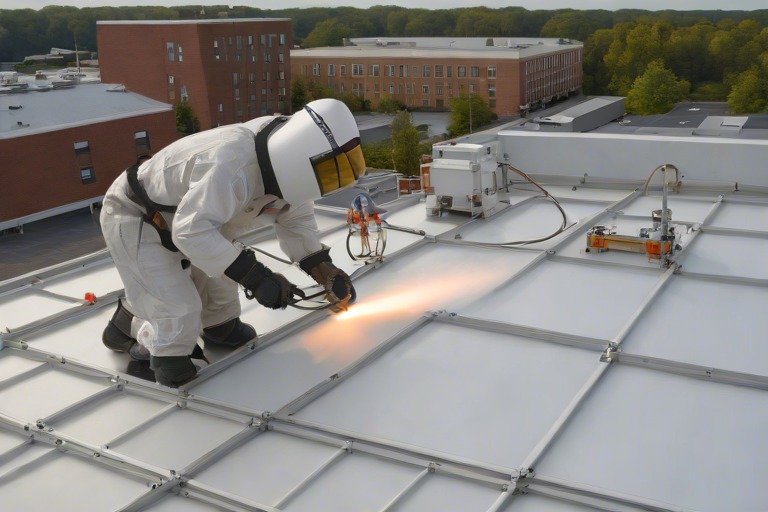
The "60-mil" designation refers to the thickness of the membrane; we utilize a heavier gauge than the industry standard to provide superior puncture resistance and longevity against the elements. However, the true strength of a TPO system lies in its seams. Many contractors rely on adhesives or manual heat guns that leave gaps for water infiltration. We have eliminated this variable by utilizing robotic 1,000°F heat-welded seams.
By using automated welding technology, we fuse the overlapping membranes into a single, monolithic sheet of plastic. This thermal fusion creates a bond that is actually stronger than the membrane itself. For homeowners in Kingsmill with expansive porches or sunrooms overlooking the James River, this means an absolute seal against water intrusion, regardless of how much rainfall accumulates during a seasonal Nor'easter.
Our Low-Slope Technical Standards: * 60-Mil TPO Membrane: A heavy-duty single-ply system designed to reflect UV rays (reducing cooling costs) and resist the corrosive effects of salt air oxidation. * Robotic Thermal Fusion: Seams are welded at precisely 1,000°F using robotic equipment to ensure a consistent, airtight seal across every square inch of the roof surface. * Precision Slope Analysis: We evaluate existing drainage patterns on porches and sunrooms to prevent "ponding," ensuring water moves efficiently toward scuppers or gutters. * Commercial-Grade Detailing: Integration of reinforced flashing at all parapet walls and curbs, utilizing TPO membranes that are chemically bonded for a lifetime of performance.
Precision Leak Mitigation: 24/7 Emergency Repairs and Metallurgical Standards
A roof is only as strong as its weakest penetration point. In my experience engineering roofs in the Williamsburg area, most "leaks" aren't caused by shingle failure but by failures at the flashing and plumbing interfaces. When a homeowner calls us for an emergency repair near Mounts Bay Road during a storm, we don’t apply temporary patches or silicone caulk—which degrades rapidly under UV exposure. We implement permanent metallurgical solutions designed to last decades.
One of our strictest standards involves plumbing vent pipes. The industry standard is a rubber boot with aluminum clamps; these dry-rot and crack within five to seven years in the Virginia climate. Aquashield replaces these failures with lifetime solid lead plumbing pipe boot collars. Lead provides an impermeable, malleable seal that conforms perfectly to the pipe and resists salt-fog corrosion indefinitely.
Similarly, we address chimney leaks through a complete rebuild of the reglet step flashing. We don't simply "seal" the gap between the brick and the roof; we cut into the masonry (the reglet) to embed new metal flashing directly into the structure, ensuring water is shed away from the house rather than seeping behind the siding. For complex intersections where two roof planes meet—dead valleys—we utilize soldered copper liners. Copper's natural resistance to corrosion makes it the only logical choice for high-end Kingsmill properties facing constant Atlantic humidity and salt spray.
Our Emergency Repair & Waterproofing Protocol: * Solid Lead Boot Collars: Replacement of all failing rubber boots with solid lead collars, eliminating the primary point of failure in residential plumbing vents. * Reglet Step Flashing Rebuilds: Precision cutting into chimney masonry to install integrated metal flashing that prevents water from migrating behind the brickwork. * Soldered Copper Dead Valley Liners: Installation of custom-fabricated copper liners at dead valleys, soldered for a seamless transition and maximum corrosion resistance against salt air. * 24/7 Rapid Response: Immediate deployment for emergency leak mitigation to prevent interior structural damage during heavy rainfall events or high-wind vortexes.
The Aquashield Standard: Defending the Architecture of Kingsmill on the James River Resort
Living in Williamsburg, and specifically within the luxury corridors surrounding the PGA Golf Courses and Mounts Bay Road, means accepting a constant battle with nature. The proximity to the James River introduces an atmospheric cocktail of high humidity and salt-fog oxidation that accelerates the decay of standard building materials. A roof here cannot be "standard"; it must be engineered for coastal resilience.
At Aquashield Roofing Corporation, we view ourselves not just as contractors, but as stewards of your home's structural integrity. The difference between a failed roof and one that lasts thirty years is found in the details: the choice of CDX plywood over OSB, the decision to use 6 nails instead of 4, and the commitment to robotic welding over manual adhesives. We understand that for our clients in Kingsmill on the James River Resort, their home is likely their most significant investment. Protecting it requires a level of technical precision that only an engineering-first approach can provide.
Whether we are executing a full GAF Timberline HDZ replacement with Class F wind warranties or performing intricate copper soldering in a dead valley, our goal remains the same: to eliminate every possible point of failure before the next Nor'easter arrives. We don't believe in shortcuts because salt-fog and high-velocity winds eventually find every shortcut taken. When you choose Aquashield, you are choosing an engineered system designed specifically for the unique environmental pressures of Williamsburg’s coastal landscape.
Why Kingsmill Homeowners Trust Our Engineering: * Local Environmental Expertise: We design systems based on actual data regarding Atlantic salt-fog oxidation and local wind patterns near the James River. * Uncompromising Material Selection: From lead collars to 60-mil TPO, we only use materials that exceed residential building codes for coastal zones. * Transparent Structural Audits: Every project begins with a comprehensive audit of the decking and rafters, ensuring the foundation is sound before any new material is applied. * Lifetime Performance Focus: We prioritize permanent metallurgical solutions (copper/lead) over temporary chemical fixes to ensure long-term peace of mind for our clients.