Engineered for Resilience: High-Velocity Wind Protection in Isle of Wight
As the founder and lead engineer at Aquashield Roofing Corporation, I have spent my career analyzing how coastal environments dismantle inferior roofing systems. In the County Corridor area of Isle of Wight—particularly along the Route 17 and Route 258 corridors—we aren't just fighting rain; we are fighting a relentless combination of Atlantic salt-fog oxidation and high-velocity wind vortexes that can peel a standard roof off like a piece of parchment. When you live in proximity to the James River Bridge western approach, your home is essentially on the front lines of every Nor'easter that rolls up the coast.
A "standard" installation is not enough for this geography. To ensure structural integrity and long-term warranty compliance, we specialize exclusively in high-wind residential systems designed to withstand extreme pressure differentials. We utilize GAF Timberline HDZ shingles, but the shingle itself is only as good as its attachment method. Most contractors follow a standard nailing pattern that suffices for inland regions; however, coastal engineering demands more.
To achieve an ASTM D3161 Class F rating—the gold standard for wind resistance—we implement a strict six-nail fastening protocol per shingle. This isn't just "extra nails"; it is a calculated engineering decision to ensure the roof remains monolithic during 130-MPH hurricane gusts. By increasing the fastener density, we distribute the uplift forces across more points of contact with the decking, preventing the catastrophic shingles-lift that occurs when wind gets underneath the tabs.
Technical Specifications for High-Wind Residential Systems: * Material Grade: GAF Timberline HDZ architectural shingles featuring LayerLock technology to prevent blow-offs. * Fastening Protocol: Strict 6-nail high-wind fastening pattern per shingle, exceeding standard manufacturer minimums. * Certification Standard: Engineered for ASTM D3161 Class F compliance, providing a verified wind warranty up to 130 MPH. * Underlayment Strategy: High-performance synthetic underlayments that act as a secondary water barrier against driving rain during Nor'easters. * Edge Detail: Reinforced starter strips and drip edges specifically gauged to prevent perimeter uplift in high-velocity wind zones.
The Aquashield Mandate: 100% Tear-Offs and Decking Integrity
In my years as a coastal roofing engineer, I have seen more roof failures caused by "nail-overs" than almost any other factor. There is a common, lazy practice in the industry where contractors install new shingles directly over old ones to save time and disposal costs. At Aquashield Roofing Corporation, we have an absolute, non-negotiable rule: 100% complete tear-offs down to the clean wood decking on every single project.
The reason for this is simple physics and biology. In Isle of Wight’s humid climate, moisture often traps itself between layers of shingles, leading to silent rot in the roof deck. If we nail over old shingles, we are essentially blindfolding ourselves; we cannot see if the CDX plywood has been compromised by Atlantic salt-fog or slow leaks from a failing flashing point. Nailing into rotted wood is useless—the fastener loses its grip (withdrawal strength), and during a high-wind event along Route 17 or Route 258, those shingles will pull right out of the deck regardless of how many nails were used.
Our process involves stripping every layer of existing material to expose the raw substrate. Once we reach the decking, my team performs a rigorous inspection of all CDX plywood sheets. We look for delamination, soft spots, and fungal decay. If any section is compromised, it is replaced with new structural-grade plywood before a single piece of underlayment is laid. This ensures that our 6-nail fastening system has a solid, rigid foundation to bite into.
Our Strict Tear-Off & Decking Protocol: * Zero Overlay Policy: Absolute prohibition against "roof-overs"; all existing materials are removed and hauled away. * Substrate Inspection: Comprehensive audit of the roof deck for structural integrity and moisture damage (rot/mold). * CDX Plywood Replacement: Immediate removal and replacement of any compromised decking with matching thickness CDX plywood to ensure a level plane. * Debris Management: Industrial-grade magnetic sweeping of all perimeter areas, including landscaping near the James River Bridge approach, to remove stray nails. * Fastener Alignment: Ensuring that new fasteners are driven perpendicular to the deck for maximum pull-out resistance.
Commercial Precision: 60-Mil TPO and Robotic Heat Welding
Low-slope roofing—found on commercial facilities, sunrooms, and porches throughout Isle of Wight—presents a different set of engineering challenges than steep slopes. The primary enemy here is ponding water combined with the corrosive nature of salt air. Traditional torch-down or adhered systems often fail at the seams over time due to thermal expansion and contraction caused by our volatile coastal temperature swings.
For these applications, Aquashield Roofing Corporation utilizes 60-mil single-ply TPO (Thermoplastic Polyolefin) membranes. The "60-mil" thickness is critical; it provides a significantly more robust puncture resistance and UV barrier than the thinner 45-mil alternatives often pushed by budget contractors. However, the true strength of a TPO system lies in its seams.
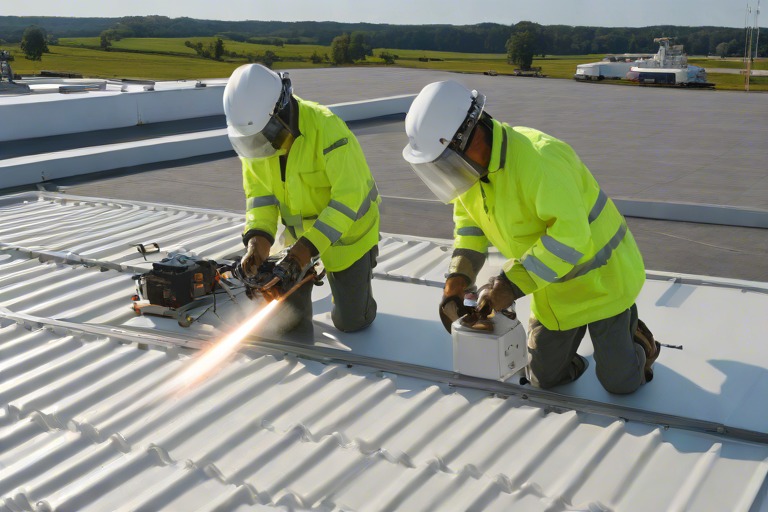
We do not rely on tapes or glues for our primary seals. Instead, we employ robotic heat-welding technology that fuses the membrane sheets together at exactly 1,000°F. This process creates a molecular bond—essentially turning two separate sheets into one continuous, monolithic waterproof skin. When these seams are robotically welded, they become stronger than the field of the membrane itself. For commercial properties and residential sunrooms in the Route 258 corridor, this is the only way to guarantee that heavy rainfall won't penetrate through a seam failure during an Atlantic storm surge.
Commercial TPO Technical Specifications: * Membrane Thickness: Heavy-duty 60-mil single-ply TPO for maximum durability and longevity against UV degradation. * Seam Integration: Robotic heat-welding at 1,000°F to create a fused, monolithic waterproof barrier. * Application Scope: Specialized installations for low-slope commercial buildings, residential porches, and enclosed sunrooms. * Salt-Fog Resistance: TPO chemistry specifically chosen for its stability in high-salinity coastal environments (preventing oxidation). * Thermal Efficiency: Integration of polyisocyanurate insulation boards to reduce energy costs for Isle of Wight business owners.
Surgical Emergency Repairs and Precision Waterproofing
A roof leak is rarely a simple "hole" that needs plugging; it is usually the result of systemic failure at critical transition points. When our emergency crews are dispatched 24/7 to homes near the James River Bridge western approach or along Route 17, we don't apply silicone caulk and call it a day. We perform surgical engineering repairs designed to last for decades, not weeks.
The most common failure points in coastal Virginia are plumbing boots and chimney transitions. Most contractors use rubberized plastic boot collars that crack under the intense UV exposure of our region. Aquashield replaces these with lifetime solid lead plumbing pipe boot collars. Lead is malleable yet impervious to the oxidation caused by salt-fog, ensuring a permanent seal around vent pipes.
Furthermore, we address "dead valleys"—the areas where two roof planes meet at an interior wall—with soldered copper dead valley liners. Copper is the gold standard for coastal waterproofing because it develops its own protective patina and does not rust or degrade like galvanized steel. For chimneys, we rebuild reglet step flashing from the ground up, ensuring that water is mechanically diverted away from the masonry rather than relying on sealants to hold back a Nor'easter.
Emergency Repair & Precision Waterproofing Standards: * Plumbing Vent Seals: Installation of solid lead pipe boot collars for permanent, crack-proof waterproofing. * Chimney Transitions: Full rebuilds of reglet step flashing and counter-flashing to ensure mechanical water diversion. * Dead Valley Solutions: Custom fabrication and soldering of copper dead valley liners to eliminate the most common leak points in complex rooflines. * 24/7 Rapid Response: Emergency mobilization for Isle of Wight residents facing active leaks during extreme weather events. * Diagnostic Accuracy: Use of thermal imaging and moisture probes to locate the exact source of intrusion before beginning repairs, avoiding unnecessary replacements.