Engineering Resilience: GAF Timberline HDZ & High-Wind Fastening for Chesapeake’s Coastal Corridor
As a coastal roofing engineer and the founder of Aquashield Roofing Corporation, I have spent my career analyzing how Atlantic weather patterns dismantle inferior roof installations. In Southern Chesapeake—particularly across the Hickory High corridor and along Benefit Road—we aren't just dealing with "rain." We are fighting high-velocity wind vortexes, salt-fog oxidation from the coast, and the relentless battering of Nor'easters that sweep through our farmland regions. A standard roof installation is a liability in this environment; what you need is an engineered system designed for uplift resistance.
For residential replacements in Hickory, we exclusively deploy GAF Timberline HDZ shingles, but it is not just about the brand—it is about the fastening physics. Most contractors follow "standard" nail patterns that are insufficient for Virginia's coastal wind loads. At Aquashield, we implement a rigorous 6-nail high-wind fastening protocol on every single shingle. This isn't an optional upgrade; it is our baseline engineering standard to ensure your home meets the ASTM D3161 Class F rating.
When you achieve Class F certification through precise installation and GAF’s advanced layering, you are securing a 130-MPH hurricane warranty. In a region where wind gusts can suddenly shift from a breeze to a destructive force moving across open farmland, this difference is the gap between a roof that stays put and one that ends up in your neighbor's yard.
Technical Specifications for High-Wind Residential Systems: * Material: GAF Timberline HDZ with LayerLock technology for an instant wind lock. * Fastening Protocol: 6-nail installation per shingle, ensuring maximum grip into the decking substrate to prevent uplift during high-velocity vortexes. * Certification Standard: ASTM D3161 Class F (the highest industry standard for wind resistance). * Warranty Threshold: Engineered and installed specifically to withstand gusts up to 130 MPH. * Environmental Guard: Integration of synthetic underlayments that act as a secondary moisture barrier against Atlantic salt-fog oxidation and heavy rainfall penetration.
The Aquashield Mandate: Total Tear-Offs & Substrate Integrity Inspection
In the roofing industry, there is a dangerous shortcut known as "nailing over." Some contractors will suggest adding a second layer of shingles to save time and disposal costs. As an engineer, I consider this practice professional negligence—especially in Southern Chesapeake where humidity levels are extreme and moisture traps lead to rapid structural decay.
At Aquashield Roofing Corporation, we maintain a strict, non-negotiable rule: 100% complete old roof tear-offs down to the clean wood decking. We do not "recover" roofs. The only way to ensure the longevity of a new system is to inspect the CDX plywood and OSB sheathing for signs of delamination or rot caused by previous leaks or salt-air saturation.
If we nail over old shingles, we are effectively sealing in trapped moisture and hiding compromised decking. This creates a "sponge effect" where water migrates through small gaps and rots the wood from the inside out, eventually compromising the structural integrity of your roof rafters. By stripping everything back to the bare wood, my team can identify soft spots in the CDX plywood immediately. We replace damaged sheathing on a piece-by-piece basis before any underlayment is applied, ensuring that our 6-nail fastening system has a solid, rigid foundation to bite into.
Our Substrate Preparation Standards: * Zero Recovery Policy: Absolute removal of all existing shingle layers; no "overlaying" permitted regardless of the current roof's apparent condition. * CDX Plywood Audit: A comprehensive structural inspection of every square foot of decking to identify rot, sagging, or water-damaged sheathing. * Debris Mitigation: Full magnetic sweep and site cleanup to ensure that thousands of old nails are removed from your landscaping and driveways along the Benefit Rd area. * Moisture Management: Application of high-performance ice and water shields in critical valleys and eaves, preventing capillary action during heavy Chesapeake rainfall events.
Commercial Low-Slope Engineering: 60-Mil TPO & Robotic Heat Welding
Low-slope roofing—found on commercial facilities, sunrooms, and porches throughout the Hickory area—presents a different set of engineering challenges than pitched roofs. On a flat surface, water does not vanish; it lingers. This makes these areas highly susceptible to ponding and subsequent membrane failure if the seams are weak.
For our commercial projects in Southern Chesapeake, we utilize 60-mil single-ply TPO (Thermoplastic Polyolefin) membranes. The "60-mil" thickness is critical—it provides a significantly higher puncture resistance and UV stability than thinner alternatives, which is essential given the intense sun exposure on open farmland properties.
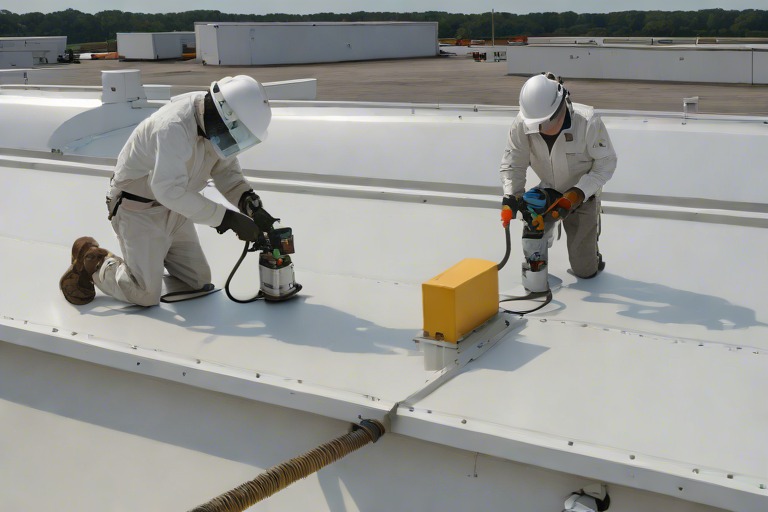
However, the membrane itself is only as good as its seams. Traditional adhesives or tapes are failure points in coastal climates because they degrade under thermal expansion and contraction. Aquashield utilizes robotic heat-welding technology to fuse TPO seams at temperatures of 1,000°F. This process doesn't just "glue" the sheets together; it creates a monolithic chemical bond that transforms separate membranes into one single, seamless sheet of waterproof plastic. The seam becomes stronger than the membrane itself, eliminating the risk of leaks during those heavy Nor'easters and ensuring your commercial facility remains dry for decades.
Commercial TPO Technical Specifications: * Membrane Grade: 60-mil reinforced white TPO (high reflectivity to reduce cooling costs in Virginia summers). * Seam Technology: Robotic heat welding at a precise 1,000°F temperature to ensure fusion of the thermoplastic layers. * Application Scope: Ideal for low-slope commercial warehouses, residential sunrooms, and covered porches across the Hickory High corridor. * Drainage Engineering: Precision slope correction using tapered insulation if necessary to eliminate ponding water. * Edge Detail: Heavy-duty reinforced termination bars and flashing to prevent wind uplift at the perimeter of the roof.
24/7 Emergency Mitigation: Precision Metal Work & Leak Remediation
When a leak occurs during a midnight storm in Southern Chesapeake, you don't need a "patch"; you need an engineered solution that addresses the root cause of water ingress. Most leaks are not caused by shingle failure but by failures at the transition points—where different materials meet.
Aquashield provides 24/7 emergency roof leak repairs for our local clients, focusing on high-failure zones like plumbing stacks and chimneys. We avoid "caulk-and-hope" methods. Instead, we employ permanent engineering solutions using professional-grade metals that resist the corrosive effects of Atlantic salt air.
For instance, standard rubber boots around plumbing pipes eventually crack under UV exposure. We install lifetime solid lead plumbing pipe boot collars; lead is naturally impervious to corrosion and provides a malleable seal that lasts for generations. Similarly, chimney leaks are often caused by poor flashing integration. We perform full chimney reglet step flashing rebuilds, cutting directly into the masonry (the "reglet") to ensure water cannot travel behind the brickwork. Finally, in complex roof intersections where valleys meet, we install soldered copper dead valley liners. Copper is the gold standard for coastal longevity; once soldered, it creates a watertight trough that directs massive volumes of rainfall away from your home's interior without the risk of rust or degradation.
Emergency Repair & Precision Metal Standards: * Plumbing Transitions: Installation of solid lead pipe boot collars to eliminate UV-related cracking and leaks at vent stacks. * Chimney Integration: Full reglet step flashing rebuilds, ensuring a mechanical bond between the roofing system and masonry walls. * Valley Engineering: Custom fabrication and installation of soldered copper dead valley liners for permanent water diversion in high-flow areas. * Response Time: 24/7 emergency availability to mitigate interior damage during Nor'easters or sudden storm events along Benefit Rd. * Material Selection: Exclusive use of corrosion-resistant metals (copper, lead, and galvanized steel) to combat salt-fog oxidation common in the Chesapeake region.