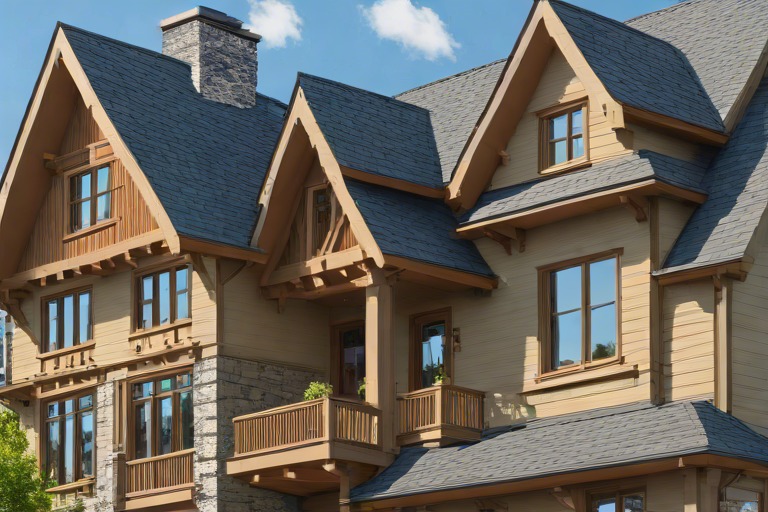
Engineering the Gold Standard for Ghent’s Historic Rooflines
As the founder of Aquashield Roofing Corporation and a coastal roofing engineer, I have spent my career analyzing the intersection of structural integrity and Atlantic weather patterns. In Norfolk, Virginia—specifically within the architectural jewel that is the Ghent area—roofing isn't just about aesthetics; it is about defensive engineering. The homes lining Historic Colley Ave and those overlooking the serene waters of The Hague canal are subjected to a brutal environmental cocktail: high-velocity wind vortexes during Nor'easters, relentless heavy rainfall, and the insidious effects of Atlantic salt-fog oxidation that eats away at inferior materials.
In Ghent, you aren’t just fighting gravity; you are fighting an environment designed to compromise your home's envelope. Many contractors offer "standard" installations, but in a coastal zone, standard is synonymous with failure. My approach is rooted in the physics of wind uplift and moisture migration. When we install a residential steep-slope system, we aren’t just laying shingles; we are building a reinforced shield designed to withstand 130 MPH gusts without shifting an inch.
For our primary residential installations, I specify GAF Timberline HDZ shingles, but the secret isn't in the shingle itself—it is in the fastening protocol. Most crews follow basic manufacturer guidelines to save time; at Aquashield, we adhere to a strict engineering standard for high-wind zones. We utilize 6-nail high-wind fastening on every single course of shingles to ensure compliance with ASTM D3161 Class F standards. This is not an optional upgrade—it is the baseline requirement for any home in Norfolk that intends to survive the next decade of coastal volatility.
Technical Specifications for High-Wind Residential Systems: * Material Selection: GAF Timberline HDZ shingles, selected for their LayerLock technology and wind resistance properties. * Fastening Protocol: 6-nail high-wind fastening pattern per shingle to maximize uplift resistance. * Warranty Standard: Engineered specifically to meet ASTM D3161 Class F requirements, providing a robust warranty against hurricane-force winds up to 130 MPH. * Underlayment Integration: High-performance synthetic underlayments that act as a secondary water barrier during extreme rain events common near the Chrysler Museum of Art and surrounding districts.
The Non-Negotiable Protocol: Total Tear-Offs & Deck Integrity
One of the most pervasive—and dangerous—practices in the Norfolk roofing industry is "nailing over." Some contractors will suggest adding a second layer of shingles to save you money on labor or disposal fees. As an engineer, I view this as professional negligence. In Ghent’s historic district, where homes have aged through decades of humidity and salt-air exposure, layering new materials over old ones traps moisture against the roof deck, accelerating rot and compromising structural stability.
At Aquashield Roofing Corporation, we maintain a strict rule: 100% complete old roof tear-offs down to clean wood decking. There are no exceptions. The only way to truly assess the health of your home is to see the bare substrate. Once the old shingles are removed and hauled away, my team performs a comprehensive forensic inspection of the CDX plywood. We look for signs of delamination, soft spots caused by long-term leaks, and salt-fog oxidation that may have compromised the wood's integrity.
If we find rotted decking, it is replaced immediately with new, high-grade CDX plywood before a single piece of underlayment is laid. Nailing into rotten wood is like trying to hang a door on a cardboard frame; the nails will not hold during a Nor'easter, and your expensive GAF shingles will be vulnerable regardless of how many nails we use. By ensuring a clean, structurally sound deck, we create a rigid foundation that allows our high-wind fastening systems to function as intended.
Our Decking & Tear-Off Standards: * Zero Overlay Policy: Absolute prohibition against nailing over existing shingle layers; 100% removal of all previous roofing materials is mandatory. * Substrate Inspection: Detailed audit of the roof deck for moisture intrusion, fungal decay, and structural sagging. * CDX Plywood Replacement: Immediate replacement of any compromised decking with industry-standard CDX plywood to ensure a nail-secure surface. * Debris Management: Full site cleanup including magnetic sweeping to remove all fasteners from gardens and driveways along Historic Colley Ave.
Commercial Low-Slope Engineering: Robotic TPO Systems
While steep slopes dominate the residential landscape of Ghent, there is an abundance of low-slope challenges—from commercial facilities near the Chrysler Museum of Art to private sunrooms and porches overlooking The Hague canal. These flat or low-slope areas are where most leaks occur because water does not shed quickly; it lingers, creating a constant pressure on the seams.
For these applications, I specify 60-mil single-ply TPO (Thermoplastic Polyolefin) membranes. Unlike traditional rolled roofing or bitumen, which can crack under the thermal expansion and contraction caused by Virginia's seasonal swings, TPO is highly reflective—reducing cooling costs in our humid summers—and incredibly durable. However, a membrane is only as strong as its seams.
To eliminate human error, we utilize robotic heat-welding for all TPO seams. Our equipment applies precise 1,000°F heat to fuse the membranes together at a molecular level. This creates a monolithic bond that is actually stronger than the sheet itself. While other companies rely on adhesives or tapes—which eventually fail due to Atlantic salt air and moisture infiltration—our robotic welds create an airtight, watertight seal that prevents water from ever reaching the substrate of your porch or commercial facility.
Commercial TPO Technical Specifications: * Membrane Thickness: 60-mil single-ply TPO for maximum puncture resistance and longevity. * Seam Integration: Robotic heat-welding at exactly 1,000°F to ensure a permanent, fused bond across all joints. * Application Scope: Ideal for commercial flat roofs, residential sunrooms, enclosed porches, and low-slope additions in the Norfolk area. * Thermal Performance: High solar reflectivity (cool roof technology) designed to mitigate heat absorption during peak Virginia summers.
Precision Emergency Repairs & Coastal Waterproofing
The reality of living near the coast is that perfection can be interrupted by a freak storm or an unexpected failure point. When a Nor'easter slams into Norfolk, homeowners often discover leaks in their most vulnerable areas: plumbing vents and chimney transitions. Most "quick-fix" repair companies use silicone caulk or rubber boots from a big-box store—materials that degrade rapidly under the UV intensity and salt spray of our region.
Aquashield provides 24/7 emergency roof leak repairs, but we do not believe in temporary patches. We provide permanent engineering solutions. For plumbing vents, I insist on lifetime solid lead plumbing pipe boot collars. Lead is naturally resistant to corrosion and can be molded perfectly to the vent pipe, providing a lifelong seal that rubber simply cannot match.
Furthermore, chimney leaks are often caused by failing flashing at the junction of the masonry and the roofline. We specialize in full chimney reglet step flashing rebuilds, ensuring that water is mechanically diverted away from the home's interior rather than relying on sealant. For those complex "dead valleys" where two roof planes meet a wall—common in Ghent’s historic architecture—we install soldered copper dead valley liners. Copper is the gold standard for coastal longevity; when properly soldered, it creates an impermeable barrier that stands up to decades of heavy rainfall and salt-fog oxidation without corroding.
Emergency Repair & Waterproofing Standards: * Plumbing Vent Seals: Installation of lifetime solid lead plumbing pipe boot collars to eliminate common leak points at the roof peak. * Chimney Integration: Full rebuilds of chimney reglet step flashing, utilizing heavy-gauge metals and precision cutting for a watertight fit. * Valley Protection: Custom fabrication and installation of soldered copper dead valley liners for maximum durability in high-moisture transition zones. * Emergency Response: 24/7 availability to mitigate water damage during Atlantic storm events throughout the Ghent area.