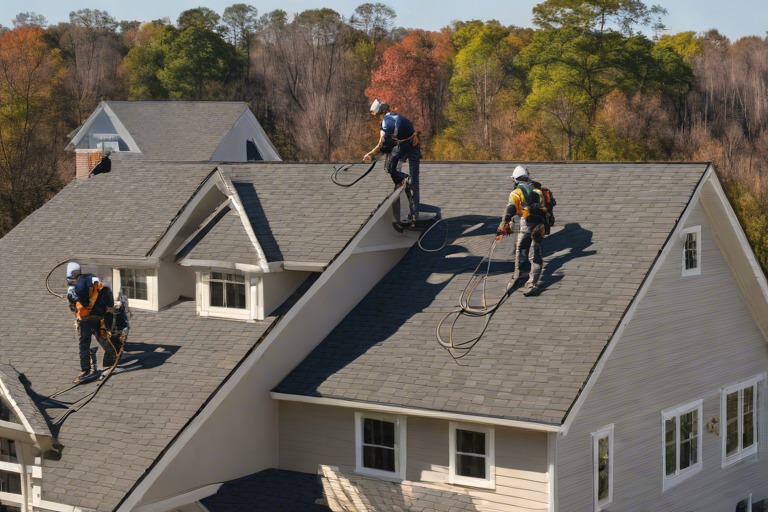
Engineering-Grade Residential Roofing for the Ford's Colony Community
As a coastal roofing engineer, I have spent my career analyzing how high-velocity wind vortexes and Atlantic salt-fog oxidation degrade standard residential installations. In Williamsburg, Virginia—particularly within the prestigious estates of Ford's Colony and the historic woodland properties lining John Tyler Highway—a roof cannot simply be "installed." It must be engineered to withstand the unique atmospheric pressures of our region. At Aquashield Roofing Corporation, we do not believe in shortcuts or industry-standard compromises; we build for permanence.
When homeowners in Fords Colony seek a shingle replacement, they are often presented with generic estimates that ignore the physics of wind uplift during Nor'easters. My approach is rooted in technical precision and material science. We exclusively utilize GAF Timberline HDZ shingles, but it is our fastening protocol that separates an Aquashield roof from any other installation in Williamsburg.
- ASTM D3161 Class F High-Wind Fastening: While many contractors stick to the minimum nail count required for a basic warranty, we implement a strict 6-nail high-wind fastening pattern on every single shingle. This specific configuration is designed to meet and exceed ASTM D3161 Class F standards, ensuring your roof can withstand wind gusts up to 130 MPH without lifting or peeling.
- The "Zero Overlay" Mandate: I have a non-negotiable rule regarding the preparation of the roof deck: we perform 100% complete old roof tear-offs down to the clean wood decking. Nailing new shingles over an existing layer—commonly known as "overlaying"—is a failure in engineering logic. It traps moisture, hides structural rot, and adds unnecessary dead load to your rafters.
- CDX Plywood Inspection: Once the deck is stripped bare, my team conducts a rigorous inspection of the CDX plywood substrate. We look for delamination, soft spots from previous slow leaks, or fungal decay common in our humid coastal climate. Any compromised sheathing is replaced with new, structural-grade CDX before any underlayment is applied.
- Advanced Underlayment Systems: To combat heavy rainfall and wind-driven rain typical of the Virginia Peninsula, we employ high-performance synthetic underlayments that provide a secondary water barrier far superior to traditional organic felt.
By combining GAF's industry-leading HDZ materials with an engineering-first fastening strategy, we ensure that homes in our historic woodland estates remain secure regardless of how aggressive the Atlantic weather becomes. We aren't just replacing shingles; we are creating a wind-resistant envelope for your home.
High-Performance TPO Systems for Commercial and Low-Slope Structures
Low-slope roofing—found on sunrooms, porches, and commercial facilities throughout Williamsburg—presents a different set of engineering challenges than steep slopes. The primary enemy here is ponding water combined with intense UV radiation and salt air oxidation. For these applications, Aquashield Roofing Corporation specializes in 60-mil single-ply TPO (Thermoplastic Polyolefin) membrane replacements.
TPO has become the gold standard for our commercial clients near John Tyler Highway because of its reflectivity and chemical stability. However, a TPO roof is only as strong as its seams. In many installations, seams are taped or poorly heat-welded by hand, creating weak points that fail under the pressure of heavy rainfall.
- Robotic 1,000°F Heat-Welding: To eliminate human error and ensure a monolithic seal, we utilize robotic welding technology for our TPO seams. These machines apply consistent, precision heat at exactly 1,000°F, fusing the two layers of membrane into one continuous sheet. This creates a seam that is actually stronger than the rest of the field membrane itself.
- 60-Mil Membrane Thickness: We specify a minimum thickness of 60-mil for our TPO installations. The added thickness provides superior puncture resistance and long-term durability against the abrasive elements found in coastal environments, ensuring your sunroom or commercial facility remains watertight for decades.
- Precision Slope Integration: Low-slope roofs must be engineered to move water efficiently toward drains or scuppers. We analyze the existing pitch of porches and flat roof sections to ensure there is no "birdbaths" (standing water), which can accelerate membrane degradation through hydrostatic pressure.
- Thermal Expansion Management: Because TPO expands and contracts with Virginia's extreme temperature swings, we utilize high-grade fasteners and termination bars that allow the system to breathe without compromising the seal at the perimeter walls.
Whether it is a luxury addition in Ford's Colony or a commercial warehouse near the city center, our low-slope systems are designed to be impervious to leaks while reflecting solar heat to reduce cooling costs during those humid Virginia summers.
24/7 Emergency Leak Mitigation and Precision Component Repair
A roof leak is rarely just about a missing shingle; it is usually a failure of the flashing—the critical transition points where different materials meet. In Williamsburg, these failures are often accelerated by Atlantic salt-fog oxidation which eats through cheap galvanized steel and thin rubber boots. At Aquashield Roofing Corporation, we provide 24/7 emergency repairs that focus on permanent engineering solutions rather than temporary "caulk-and-hope" patches.
When my team responds to an emergency call in the historic woodland estates or Fords Colony, we don't just stop the leak; we rebuild the failure point using materials designed for a lifetime of service.
- Lifetime Solid Lead Plumbing Pipe Boot Collars: Most contractors use rubberized plastic boots that crack and perish within five to seven years due to UV exposure. We install solid lead plumbing pipe boot collars. Lead is naturally corrosion-resistant, malleable for a perfect seal, and effectively permanent. Once installed correctly, these collars will outlast the shingles themselves.
- Chimney Reglet Step Flashing Rebuilds: Chimneys are common leak points in Williamsburg's traditional architecture. We perform full reglet rebuilds, which involve cutting a precise groove (the reglet) into the masonry mortar joint to embed new metal flashing directly into the brickwork. This prevents water from running behind the siding and into the wall cavity during heavy Nor'easters.
- Soldered Copper Dead Valley Liners: In complex roof geometries where two slopes meet at a 90-degree angle (a dead valley), standard shingles are insufficient. We install custom-fabricated copper liners, soldered at every joint to create a seamless metal trough. Soldered copper is the only material capable of resisting coastal oxidation while providing an absolute waterproof barrier in high-stress valleys.
- Rapid Response Diagnostics: Our emergency service includes professional moisture mapping and thermal imaging to locate the exact entry point of water, ensuring we aren't just treating the symptom (the ceiling stain) but are curing the disease (the roof breach).
By focusing on these technical details—lead, copper, and precision masonry integration—we eliminate the cycle of repetitive repairs that many homeowners in Williamsburg have grown accustomed to.
The Aquashield Standard: Engineering for the Virginia Coast
The geography of Williamsburg requires a specialized approach to roofing. Being situated between the historic heart of the city and the coastal influences of the Chesapeake Bay, properties near Ford's Colony master community face an onslaught of environmental stressors. From high-velocity wind vortexes that can peel back poorly nailed shingles to the relentless salt air that corrodes inferior metals, your roof is the first line of defense for your most valuable asset.
As a founder and engineer, my philosophy is simple: if it isn't built to last 30 years under worst-case scenarios, it shouldn't be installed. This commitment to excellence extends beyond our materials; it defines every interaction we have with our clients along John Tyler Highway and throughout the surrounding woodland estates.
- Combatting Salt-Fog Oxidation: We select all flashing and fasteners based on their ability to resist chloride-induced corrosion. By utilizing high-grade copper, lead, and specialized coatings, we ensure that your roof's hardware doesn't rust away in a decade of coastal humidity.
- Managing High-Velocity Wind Loads: The wind patterns around Fords Colony can be unpredictable. Our use of the 6-nail pattern is not an "option"—it is our standard because it mathematically reduces the probability of shingle blow-off during extreme weather events.
- Environmental Stewardship in Woodland Estates: We recognize that many homes in Williamsburg are nestled within historic woodland estates with mature canopy cover. This means higher moisture retention and more organic debris on roofs. Our systems include enhanced shedding capabilities to prevent algae growth and water backup under the shingles.
- Engineering Accountability: Every project we undertake is backed by a level of technical documentation and quality control that you won't find with general contractors. We provide clear specifications, material data sheets, and an installation guarantee based on engineering principles, not marketing promises.
At Aquashield Roofing Corporation, we don't just "do roofs." We engineer protective systems designed to withstand the unique volatility of Virginia’s coastal climate. When you choose us for your home in Williamsburg or Ford's Colony, you are investing in a structure that is built to endure long after others have failed.