Engineering High-Velocity Wind Resistance: The Aquashield Standard for Denbigh Residential Roofing
As a coastal roofing engineer, I have spent my career analyzing why roofs fail in Virginia’s Tidewater region. In Denbigh, we aren't just fighting rain; we are battling high-velocity wind vortexes and the relentless pressure of Nor'easters that sweep through the Warwick River basin and across the Fort Eustis corridor. Most roofing contractors offer a "standard installation," but from an engineering perspective, standard is where failure begins. At Aquashield Roofing Corporation, I have implemented a rigid technical protocol for every residential shingle replacement to ensure structural survival during 130-MPH wind events.
The cornerstone of our residential system is the GAF Timberline HDZ shingle. While these shingles are industry leaders in aesthetics and durability, their performance is entirely dependent on how they are fastened to the deck. A shingle is only as strong as its attachment point. To achieve an ASTM D3161 Class F rating—the gold standard for wind resistance—we move beyond the manufacturer's minimum requirements.
Our Residential Technical Specifications: * High-Wind Fastening Protocol: We utilize a strict 6-nail fastening pattern per shingle. By increasing the nail count, we significantly reduce the risk of "shingle lift" during high-velocity wind events common near Denbigh Plantation and Courthouse Way. This specific installation method is required to secure our ASTM D3161 Class F 130-MPH hurricane warranties. * The Absolute Tear-Off Rule: I maintain a zero-tolerance policy regarding "roof overs." We never nail new shingles over old, rotted layers. Every project begins with a 100% complete tear-off down to the original wood decking. This is not merely for aesthetics; it is an engineering necessity. * Substrate Inspection & CDX Plywood: Once the deck is exposed, we perform a forensic inspection of the sheathing. We specifically look for delamination and moisture saturation in the plywood. If any rot is found, we replace compromised sections with high-grade CDX plywood to ensure a rigid, stable foundation that can withstand the shear force of hurricane-force winds. * Advanced Underlayment: To combat Atlantic salt-fog oxidation and heavy rainfall, we employ synthetic underlayments that provide an airtight seal against the deck, preventing moisture from migrating into the attic space during driving Nor'easters.
By treating a roof as a structural system rather than just a covering, we eliminate the common failure points seen in lower-cost installations throughout Denbigh. When you live near the Warwick River basin, your home is exposed to higher humidity and more volatile wind patterns; an engineered approach is the only way to guarantee long-term viability.
Precision Commercial Flat Roofing: 60-Mil TPO & Robotic Heat Welding
Low-slope roofing—found on commercial facilities throughout Denbigh as well as residential sunrooms, porches, and additions—presents a different set of engineering challenges than pitched roofs. The primary enemy here is ponding water combined with the intense UV radiation typical of our coastal climate. If a seam fails on a flat roof, it isn't just a leak; it’s an invitation for structural decay within the decking.
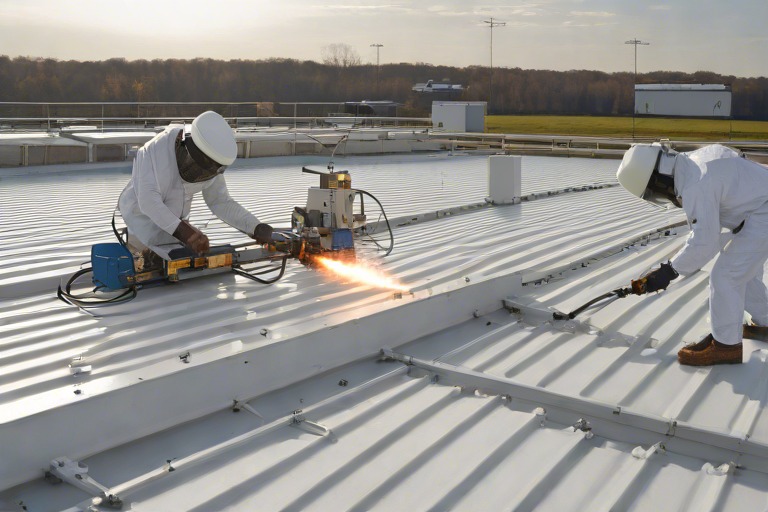
To solve this, Aquashield Roofing Corporation specializes in 60-mil single-ply TPO (Thermoplastic Polyolefin) membrane replacements. The "60-mil" thickness is critical; thinner membranes are susceptible to punctures and premature degradation from salt air oxidation. However, the material itself is only half of the equation. The true point of failure on any flat roof is the seam.
Our Commercial & Low-Slope Technical Specifications: * Robotic Heat Welding: We do not rely solely on adhesives or tapes for our seams. We utilize robotic heat welding technology that reaches precisely 1,000°F to fuse the TPO membranes together. This process creates a monolithic bond—essentially turning multiple sheets of membrane into one single, seamless waterproof shield. * Thermal Expansion Management: Because Denbigh experiences significant temperature swings between humid summers and freezing winters, our TPO installations are engineered to allow for thermal expansion and contraction without stressing the seams or fasteners. * High-Performance Edge Detailing: We implement reinforced perimeter flashing and termination bars that prevent wind uplift at the roof edges—the most vulnerable points during a storm crossing from Fort Eustis toward Courthouse Way. * Application Versatility: This system is engineered for diverse applications, including large commercial warehouses in Denbigh's industrial zones as well as high-end residential sunrooms and porches where traditional shingles are not an option due to the slope gradient.
The transition from a "glued" seam to a heat-welded seam represents a quantum leap in roofing engineering. By fusing the material at 1,000°F, we eliminate the risk of adhesive failure caused by moisture infiltration or UV breakdown, ensuring that low-slope structures remain watertight for decades regardless of how much rainfall hits the Warwick River basin area.
Surgical Emergency Repairs: Lead Collars and Copper Dead Valleys
Emergency roof leaks are rarely solved with a tube of caulk and a prayer. As an engineer, I view a leak as a symptom of a systemic failure in flashing or material fatigue. In Denbigh, these failures are often accelerated by Atlantic salt-fog oxidation, which eats through galvanized steel and cheap aluminum components far faster than it would inland. When our 24/7 emergency teams respond to calls near Denbigh Plantation or the Fort Eustis corridor, we don't "patch"—we rebuild using materials that outlast the home itself.
The most common failure points in coastal Virginia are plumbing boots and chimney transitions. Most contractors use rubberized plastic collars that crack under UV exposure within five years. Aquashield replaces these with lifetime solid lead plumbing pipe boot collars. Lead is naturally resistant to corrosion and provides a malleable, permanent seal around vent pipes.
Our Emergency Repair & Waterproofing Specifications: * Solid Lead Plumbing Boot Collars: We replace failing rubber boots with heavy-gauge solid lead. This prevents the "micro-cracking" that leads to slow leaks in attic insulation during Denbigh's rainy seasons. * Chimney Reglet Step Flashing Rebuilds: Instead of applying sealant over old flashing, we perform reglet cuts into the masonry and install new step flashing integrated directly with the roof’s weather-resistive barrier. This ensures a mechanical diversion of water away from the chimney structure. * Soldered Copper Dead Valley Liners: In areas where two roof planes meet to create a "dead valley," we avoid using shingles or membranes that can be pushed up by wind. Instead, we install custom-fabricated copper liners with soldered seams. Soldering creates a permanent chemical bond between the metal sheets, ensuring zero leaks in high-pressure water channels. * Oxidation Mitigation: We treat all exposed fasteners and flashing components to resist salt-fog oxidation, preventing the premature rusting that often plagues homes near the coast.
These "surgical" repairs are designed for permanence. By utilizing lead and soldered copper—materials used by engineers a century ago but forgotten by modern contractors—we provide Denbigh homeowners with peace of mind knowing their most vulnerable points are fortified against any Nor'easter.
The Coastal Engineering Mandate: Navigating the Denbigh Environment
Roofing in Denbigh, Virginia, is not the same as roofing in the Midwest or the mountains. Our geography puts us at a crossroads of extreme environmental stressors. Between the Warwick River basin and the Fort Eustis corridor, we deal with a unique cocktail of high humidity, salt-laden air from the Atlantic, and sudden, violent wind shifts that create localized vortexes capable of stripping an improperly fastened roof in minutes.
From my perspective as founder and engineer, every decision—from the choice of CDX plywood to the 1,000°F heat weld on a TPO seam—is driven by these local conditions. The salt-fog oxidation we see around Denbigh Plantation doesn't just affect aesthetics; it compromises the structural integrity of metal flashings and fasteners if they aren't specified correctly for coastal use.
Why Engineering Matters in Our Locality: * Wind Vortex Management: In areas like Courthouse Way, wind can wrap around structures and create uplift pressures that exceed standard building codes. This is why our 6-nail fastening pattern isn't an "upgrade"—it is a requirement for survival here. * Moisture Load Handling: The heavy rainfall associated with Virginia Nor'easters requires more than just shingles; it requires a comprehensive drainage strategy, including the soldered copper dead valleys and reglet flashing mentioned above. * Material Longevity in Salt Air: We specify materials that are chemically stable in salt-rich environments to prevent the premature degradation of membranes and metals.
At Aquashield Roofing Corporation, we don't believe in "good enough." A roof is a complex engineering system designed to protect your family and your investment from an aggressive environment. By adhering to strict tear-off rules, utilizing robotic welding for flat roofs, and employing high-wind fastening patterns for shingles, we ensure that every home in Denbigh stands resilient against the elements of the Virginia coast. Whether you are near the Warwick River or stationed at Fort Eustis, your roof should be an impenetrable shield—not a liability.