Engineering the Coastal Shield: High-Velocity Wind Protection for Deep Creek Residences
As a coastal roofing engineer and the founder of Aquashield Roofing Corporation, I have spent my career analyzing how Atlantic weather patterns interact with residential structures in Chesapeake, Virginia. Living and working near the Dismal Swamp Canal trail and along George Washington Highway, we are not merely dealing with "rain"—we are contending with high-velocity wind vortexes, salt-fog oxidation that eats through inferior metals, and the relentless pressure of Nor'easters rolling up the coast toward the Deep Creek Locks. In this environment, a roof cannot be a mere aesthetic covering; it must be an engineered system designed to withstand extreme uplift forces.
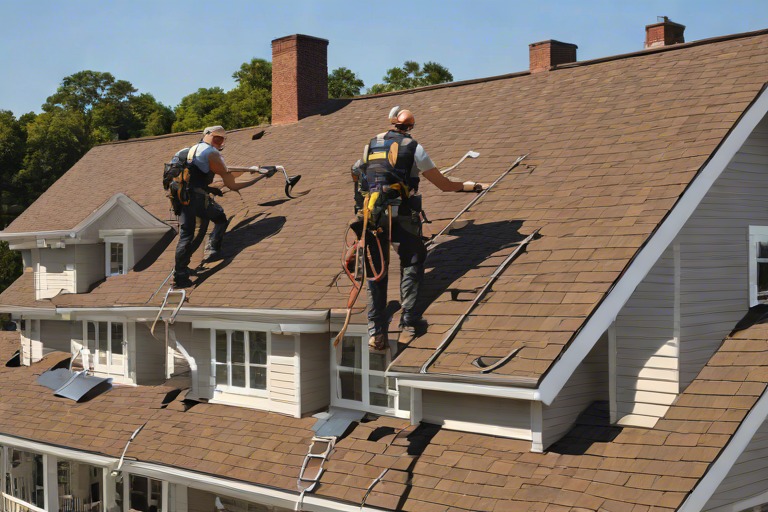
For residential properties in the Deep Creek area, we exclusively deploy GAF Timberline HDZ shingles when our clients require maximum durability without sacrificing curb appeal. However, the shingle itself is only one part of the equation. The real engineering happens at the fastening point. Most contractors follow standard installation patterns that are sufficient for inland regions but fail miserably during a coastal storm surge. At Aquashield, we implement a rigorous 6-nail high-wind fastening pattern on every single course.
This specific methodology is not an arbitrary choice; it is designed to meet and exceed the ASTM D3161 Class F standard. By increasing the number of fasteners per shingle, we significantly reduce the risk of "shingle blow-off" during 130-MPH hurricane gusts. When wind enters under a shingle edge near George Washington Highway, it creates an uplift pressure that can peel back entire sections of a roof if they are only held by four nails. Our six-nail system ensures that each shingle is mechanically anchored to the deck with enough redundancy to maintain structural integrity even when subjected to extreme turbulence.
Technical Specifications for Residential High-Wind Systems: * Material Selection: GAF Timberline HDZ shingles featuring LayerLock technology for an extra level of wind protection and grip. * Fastening Protocol: Strict 6-nail per shingle installation pattern, ensuring maximum adherence to the roof deck during high-pressure events. * Certification Standard: Engineered to meet ASTM D3161 Class F requirements, providing a verified defense against catastrophic uplift. * Wind Warranty Eligibility: Installation methods specifically designed to qualify for 130-MPH hurricane warranties, offering homeowners peace of mind in the face of Atlantic storm cycles. * Environmental Defense: Integration of high-performance underlayments that act as a secondary water barrier during wind-driven rain events common near the Deep Creek Locks.
The Non-Negotiable Standard: Full Tear-Offs and Substrate Integrity
In my years of auditing failed roofs across Chesapeake, I have found one recurring theme: the "nail-over." Many contractors attempt to save time and disposal costs by installing new shingles directly over old ones. In a coastal environment like Deep Creek—where humidity is oppressive and salt air permeates every pore of a building—this practice is professional negligence. Nailing over existing shingles traps moisture between layers, creates an uneven surface that disrupts wind flow (increasing uplift), and hides the most critical part of your roof: the decking.
At Aquashield Roofing Corporation, we operate under a strict engineering rule: 100% complete old roof tear-offs down to clean wood decking. There are no exceptions. A roof is only as strong as its foundation, and if you cannot see the deck, you cannot verify its structural integrity. Once the old materials are stripped away, my team performs a comprehensive inspection of the CDX plywood. We look for signs of delamination, soft spots caused by slow leaks, and fungal decay that often hides beneath aged shingles.
If we find rotted or compromised decking, it is replaced immediately with new, high-grade CDX plywood before any underlayment is applied. This ensures a flat, rigid substrate that allows our 6-nail fastening system to bite deeply into solid wood rather than slipping through decayed fibers. By stripping the roof to its bones, we eliminate trapped moisture and prevent the "sandwich effect" where condensation builds up between layers of shingles, leading to premature rot in the rafters—a common sight in homes near the Dismal Swamp Canal trail that were improperly serviced by budget contractors.
Our Substrate Preparation Protocol: * Total Demolition: Complete removal of all existing shingle layers and old felt paper down to the raw wood deck. * CDX Plywood Audit: A point-by-point inspection for rot, sagging, or water damage; any compromised sheathing is excised and replaced with new CDX plywood. * Surface Debris Clearance: High-pressure cleaning of the decking to remove old nails, staples, and organic debris that could puncture new underlayments. * Moisture Analysis: Verification that the wood substrate is dry and structurally sound before applying synthetic high-performance barriers. * Zero Overlay Policy: Absolute prohibition against "roofing over" existing materials to ensure proper ventilation and structural transparency.
Commercial Low-Slope Engineering: 60-Mil TPO Robotic Systems
Deep Creek isn't just residential; our commercial facilities, sunrooms, and enclosed porches require a different engineering approach entirely. These low-slope surfaces are the primary targets for pooling water during heavy rainfall events typical of Virginia’s coastal plains. Traditional asphalt or modified bitumen often fails at the seams over time due to thermal expansion and contraction caused by the intense Southern sun. To solve this, we utilize 60-mil single-ply TPO (Thermoplastic Polyolefin) membranes.
The strength of a TPO roof is not in the membrane itself—though 60-mil provides an exceptional thickness for puncture resistance—but in how the seams are joined. We do not rely on adhesives or tapes, which degrade under UV exposure and salt air oxidation. Instead, we employ robotic heat-welding technology. Our equipment uses a precision heating element to reach exactly 1,000°F, melting the two overlapping sheets of TPO into one single, monolithic piece of plastic.
This fusion process creates a seam that is actually stronger than the membrane itself. For commercial buildings near George Washington Highway or residential sunrooms overlooking the Deep Creek Locks, this means there are no "weak points" for water to penetrate during a Nor'easter. The white reflective surface of the TPO also significantly reduces heat absorption (the Albedo effect), lowering cooling costs and preventing the thermal shock that often causes cracks in traditional flat roofs.
Commercial Flat Roof Technical Specifications: * Membrane Grade: 60-mil single-ply TPO, chosen for its superior thickness and resistance to chemical/UV degradation. * Seam Engineering: Robotic heat welding at a constant 1,000°F, creating a fused molecular bond rather than a glued joint. * Application Scope: Ideal for commercial warehouses, low-slope porches, sunrooms, and industrial facilities in the Chesapeake area. * Thermal Management: High-reflectivity white membrane to mitigate heat island effects and reduce HVAC loads during Virginia summers. * Waterproofing Integrity: A seamless monolithic surface that eliminates common leak points associated with traditional rolled roofing or bitumen.
Precision Emergency Repairs: Solving Coastal Failure Points
When a Nor'easter strikes the Dismal Swamp Canal trail area, homeowners often experience "sudden" leaks. In reality, these are rarely sudden; they are the result of long-term oxidation and material failure at critical transition points. Most repair companies simply apply a layer of silicone or asphalt mastic—a temporary fix that fails within months because it doesn't address the underlying engineering flaw. At Aquashield Roofing Corporation, we provide 24/7 emergency repairs focused on permanent mechanical solutions.
The most common point of failure in Deep Creek homes is the plumbing vent boot. Most contractors use rubber boots that crack under UV exposure and salt-fog oxidation. We replace these with lifetime solid lead plumbing pipe boot collars. Lead provides a malleable, non-corrosive seal that can be custom-fitted to the pipe and will not degrade over time.
Similarly, we address chimney leaks by rebuilding reglet step flashing from the ground up. A "reglet" involves cutting a groove into the masonry of the chimney itself, allowing the metal flashing to be embedded directly into the brickwork before being capped with sealant. This prevents water from running behind the siding and entering the wall cavity—a frequent issue in older homes near George Washington Highway. Finally, for those complex intersections where two roof planes meet at a valley (dead valleys), we install soldered copper liners. Unlike tape or shingles, soldered copper is an impermeable barrier that lasts for decades, ensuring that heavy rainfall is channeled safely away from the home's interior structure regardless of wind direction.
Emergency Repair & Waterproofing Standards: * Plumbing Vent Seals: Installation of solid lead pipe boot collars to eliminate the failure points associated with rubber and plastic boots. * Chimney Integration: Full reglet step flashing rebuilds, embedding metal directly into masonry for a watertight transition between roof and chimney. * Valley Engineering: Custom-fabricated soldered copper dead valley liners, providing an impermeable path for water in high-volume runoff areas. * 24/7 Rapid Response: Immediate deployment during storm events to mitigate interior damage through professional emergency tarping and leak identification. * Oxidation Mitigation: Use of corrosion-resistant materials specifically selected to withstand the salt-heavy atmosphere of coastal Chesapeake.