Engineered GAF Timberline HDZ shingle replacements, 130-MPH hurricane nailing standards, and commercial 60-mil TPO flat roofing systems across Virginia Beach, Chesapeake, and Norfolk.
Direct line-item quote from master roofer Jeff Childers.
Author: Jeff Childers Hampton Roads, VA
Replacing Rotted CDX Plywood To Stop Flat Roof Leaks Fast
By Aquashield Technical Roofing Forensics Team •
Residential & Commercial Building Envelope Division
Diagnosing CDX Plywood Decay in the Tidewater Climate
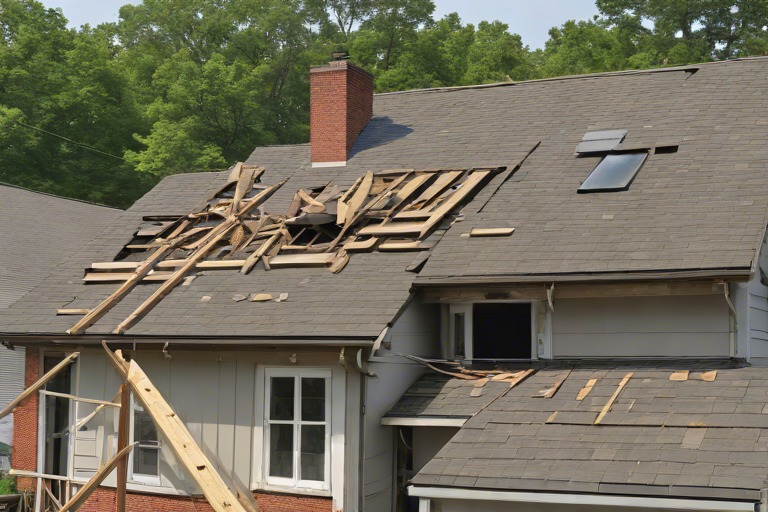
In the unique environmental corridor of Gloucester, VA, and the broader Hampton Roads region, the structural integrity of a roof begins with the decking. CDX plywood—a grade of structural plywood where the "C" and "D" denote the quality of the veneers and "X" indicates a waterproof glue-bond—is the industry standard for residential and light commercial substrates. However, the relentless Atlantic coastal humidity and the recurring impact of Nor'easters create a high-moisture environment that accelerates fungal decay. When moisture penetrates the primary roofing membrane, the CDX substrate acts as a sponge, trapping salt-fog particulates and moisture, which leads to delamination and rot. Aquashield Roofing Corporation identifies this as the primary cause of "soft spots" and sagging rooflines in the 757 area, particularly in homes near the Chesapeake Bay Bridge-Tunnel where salt-air corrosion is most aggressive.
The engineering failure typically begins at the perimeter or around roof penetrations. Once the water-shedding layer is compromised, the plywood undergoes a process of biological degradation. In the Tidewater region, the high dew point means that condensation often forms on the underside of the decking, leading to "bottom-up" rot that can go unnoticed until the structural capacity of the roof is severely diminished. This is why Aquashield Roofing Corporation employs rigorous moisture mapping and probe testing to ensure that no compromised wood remains beneath a new roof installation.
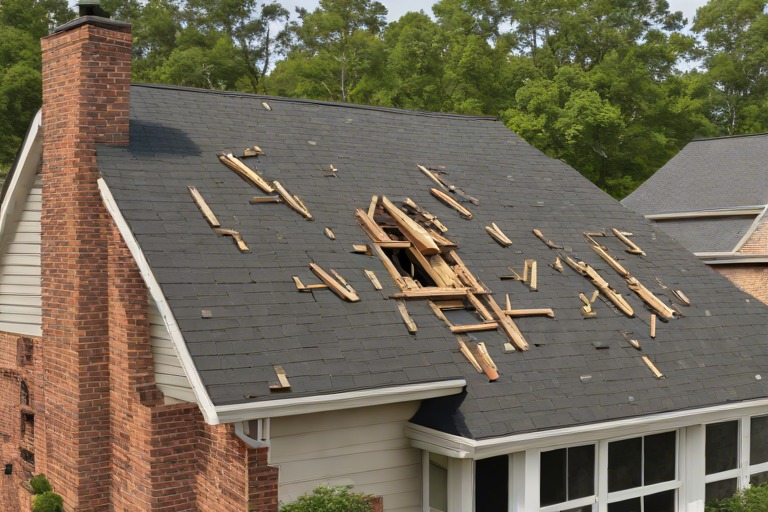
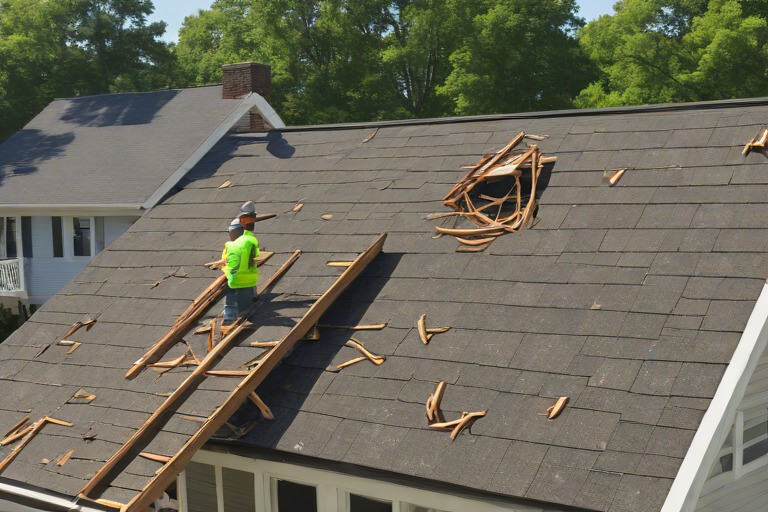
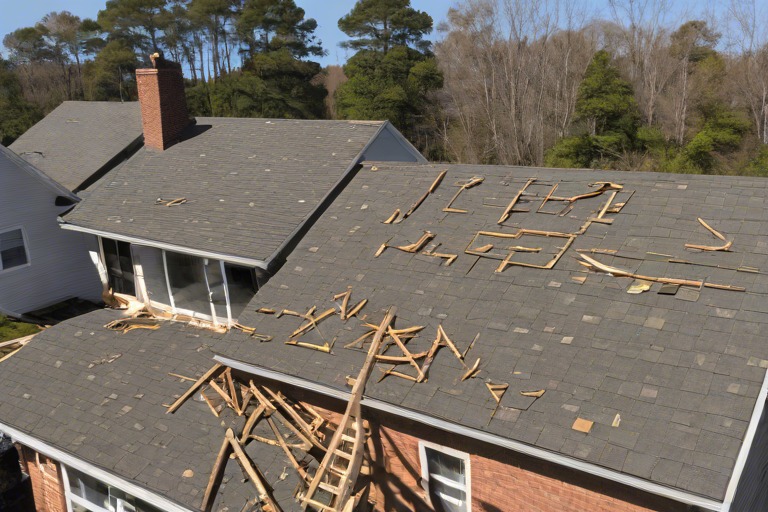
Evidence of "sponginess" when walking the roof surface, indicating a loss of structural rigidity in the CDX Plywood.
Visible dark staining or fungal growth on the underside of the decking, often exacerbated by poor attic ventilation in Virginia coastal homes.
Compression of the nail heads, where the fasteners no longer grip the wood fibers due to advanced rot, increasing the risk of shingle blow-off during tropical storm cycles.
Water rings or ceiling stains that align with the seams of the plywood sheets, suggesting a failure in the underlying deck integrity.
Engineering the CDX Decking Replacement Process
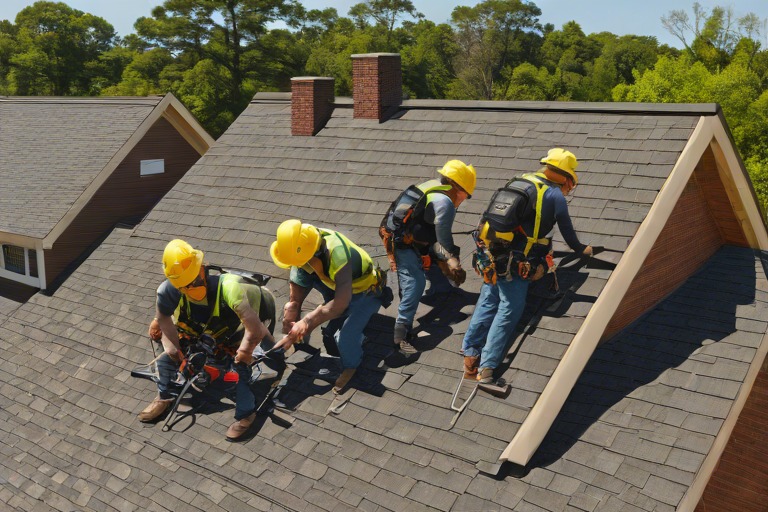
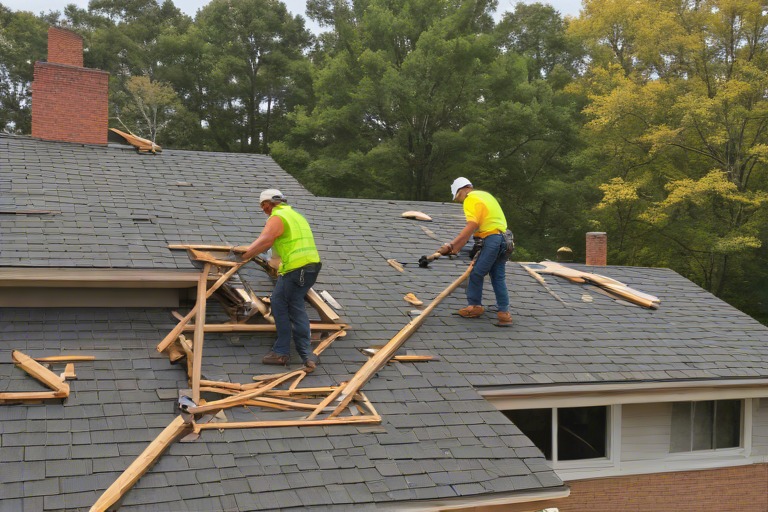
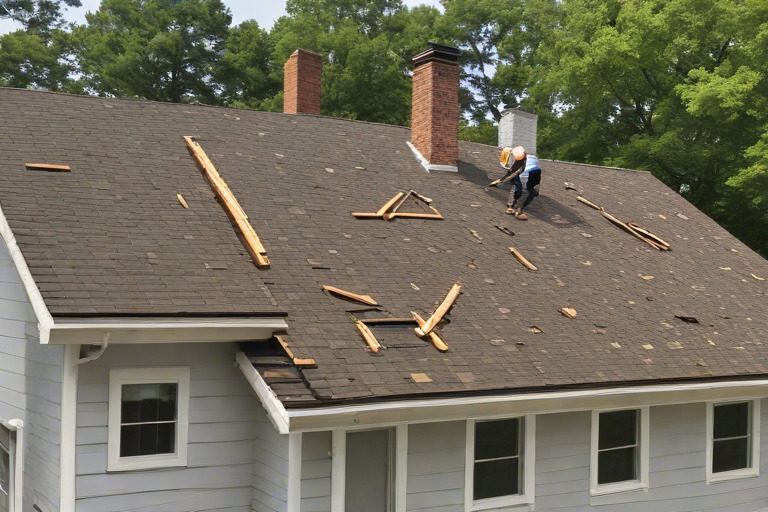
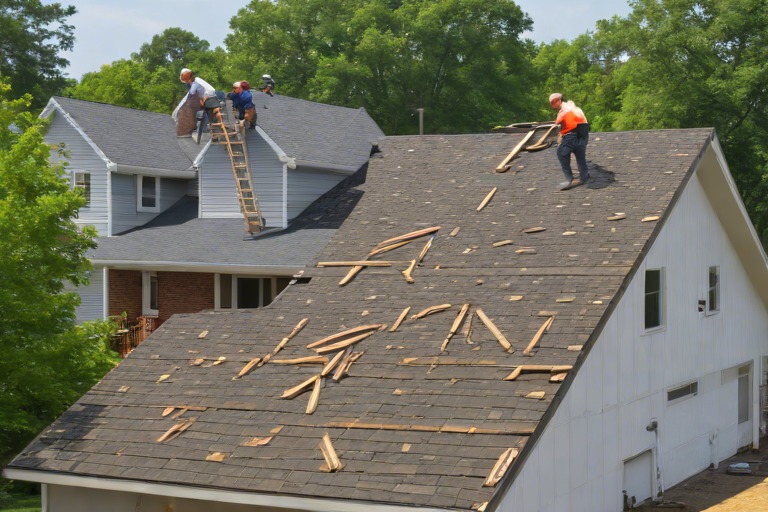
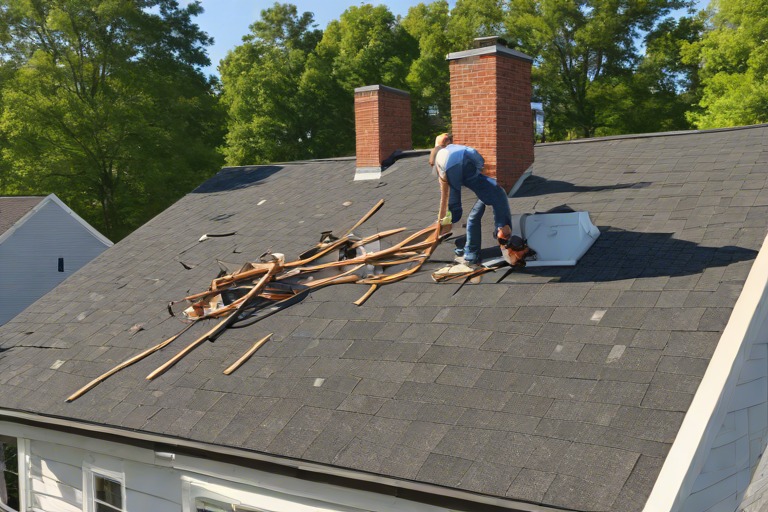
Replacing rotted decking is not a matter of simply layering new wood over old; it requires a surgical approach to ensure the load-bearing capacity of the roof is restored to original building code specifications. Aquashield Roofing Corporation adheres to a strict engineering protocol that begins with the complete removal of all compromised materials down to the rafters. We utilize CDX Plywood that matches the original thickness—typically 15/32" or 5/8"—to maintain a flush surface. This prevents "lipping," which can create stress points on the roofing membrane and lead to premature leaks. In the high-wind environment of Gloucester, ensuring a perfectly flat substrate is critical for the adhesion of underlayments and the stability of the final roof covering.
The fastening pattern is where most contractors fail, but at Aquashield Roofing Corporation, we treat the deck as a diaphragm that must resist the uplift forces of the Atlantic coast. We employ galvanized fasteners to combat the corrosive nature of salt-fog, ensuring that the connection between the CDX Plywood and the rafters remains permanent. By utilizing a staggered joint pattern, we increase the overall shear strength of the roof, providing a robust foundation that can withstand the extreme pressure differentials experienced during a hurricane or a severe Nor'easter.
Precision cutting of rotted sections to the nearest rafter center to ensure new sheets have a solid bearing surface of at least 1.5 inches.
Application of a high-grade synthetic underlayment immediately following deck replacement to prevent "flash-rot" from sudden Virginia rain showers.
Utilization of 8d common galvanized nails spaced every 6 inches along the perimeter and 12 inches in the field to exceed local building codes.
Verification of rafter alignment using a straight-edge to ensure the new CDX Plywood does not create an uneven plane for the final roofing system.
High-Wind Mitigation with GAF Timberline HDZ Shingles
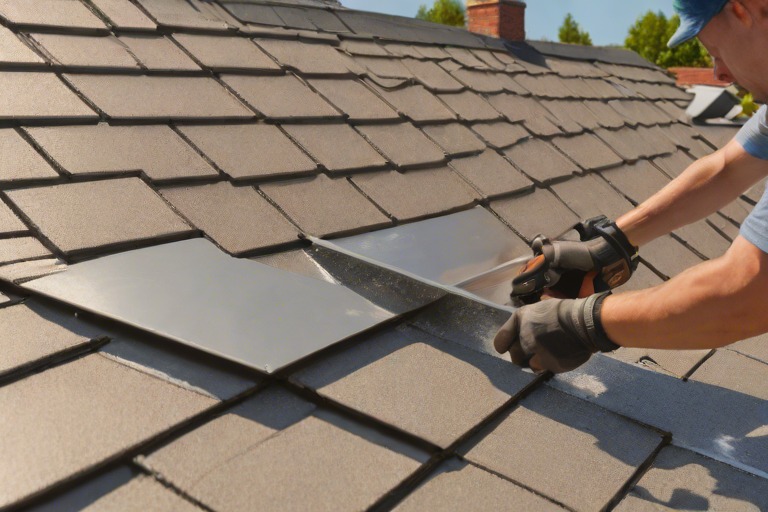
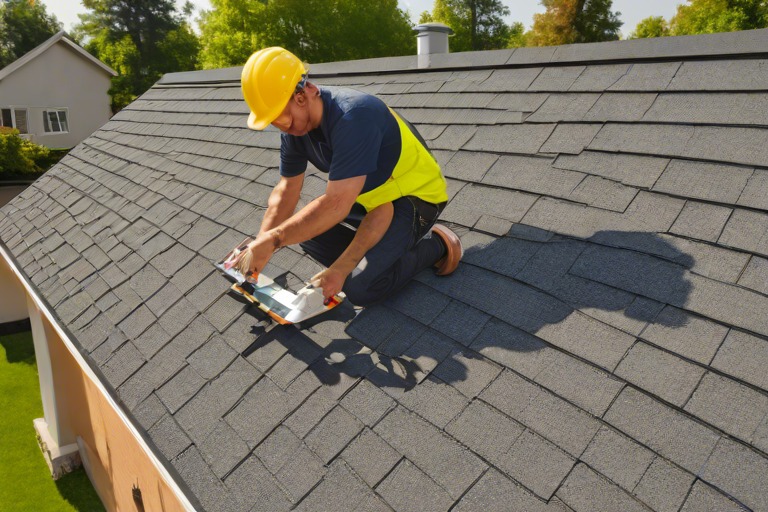
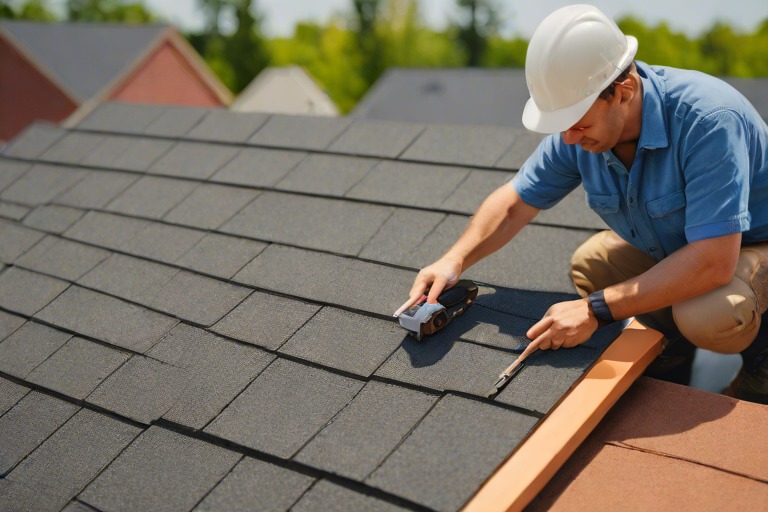
Once the structural integrity of the CDX decking is restored, the focus shifts to the primary weather barrier. For residential slopes in the 757 area, Aquashield Roofing Corporation exclusively recommends GAF Timberline HDZ Architectural Shingles. These shingles are engineered with a unique "WindRidge" technology that provides a reinforced edge, significantly reducing the likelihood of wind-uplift during the high-wind tropical storm cycles common to the Tidewater region. The HDZ line is specifically designed for high-performance wind resistance, making it the ideal choice for homes exposed to the open gusts of the Chesapeake Bay.
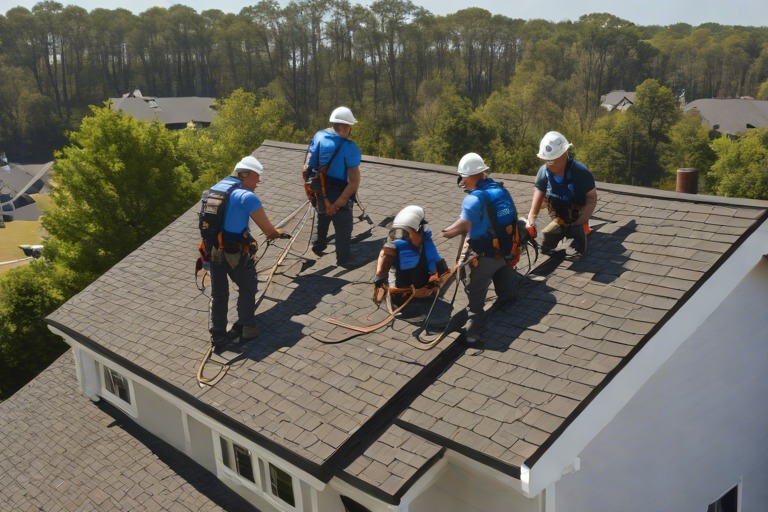
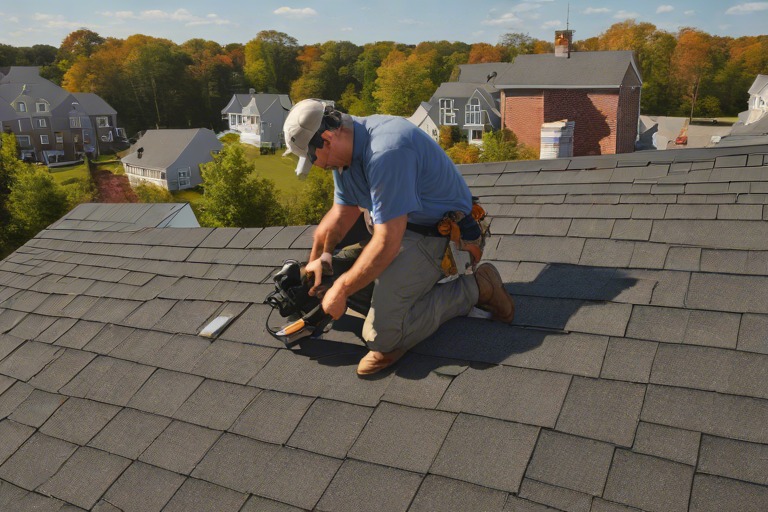
To maximize the performance of these shingles, Aquashield Roofing Corporation implements 130-MPH Hurricane Nailing Standards. While standard installation may suffice in inland regions, the coastal volatility of Gloucester requires a more aggressive fastening strategy. By increasing the nail count per shingle and utilizing a specific nailing pattern, we lock the GAF Timberline HDZ shingles into the newly replaced CDX decking. This creates a unified system where the shingles, the nails, and the decking work in tandem to resist the suction forces created by high-velocity winds, ensuring the roof remains intact even when the wind speeds peak.
Installation of GAF Rubbertized Modified Bitumen or synthetic underlayment to provide a secondary water barrier over the new CDX.
Application of 6 nails per shingle in high-exposure zones to meet the 130-MPH wind-speed rating.
Strategic placement of starter strips to eliminate "lift" at the eaves, where wind pressure is most concentrated during Nor'easters.
Integration of GAF RidgeVent to ensure that the heat and moisture trapped in the attic are exhausted, preventing the new CDX from rotting from the inside out.
Commercial Flat Roof Solutions with 60-Mil TPO
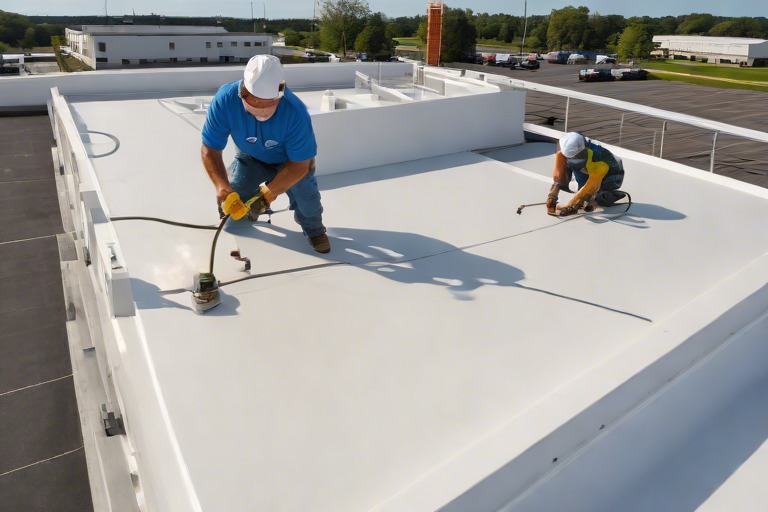
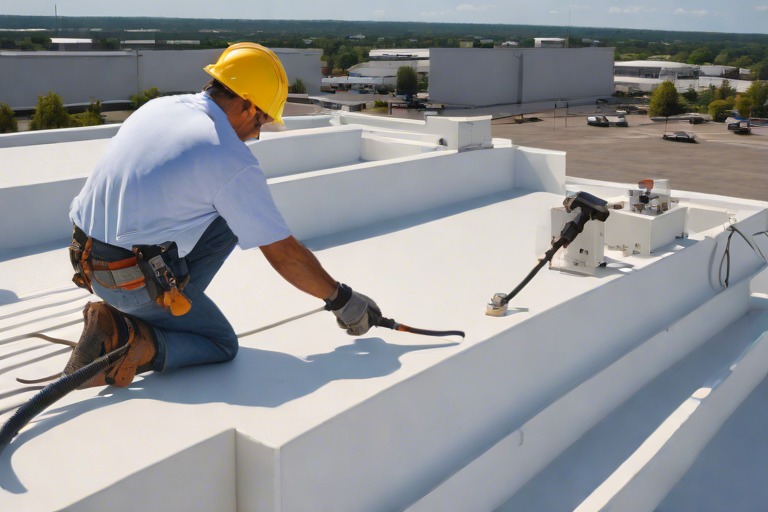
For commercial properties in Gloucester and the surrounding Hampton Roads area, flat roofs present a different set of engineering challenges. The lack of a slope means that water can pond, which, if the CDX decking is compromised, leads to rapid structural failure. Aquashield Roofing Corporation solves this by installing 60-Mil TPO (Thermoplastic Polyolefin) roofing systems. The 60-Mil thickness provides a superior puncture-resistant barrier compared to thinner membranes, which is essential for commercial environments where maintenance traffic and debris are common. TPO is particularly effective in the Tidewater region because its white, reflective surface reduces the "heat island" effect and lowers cooling costs during humid Virginia summers.
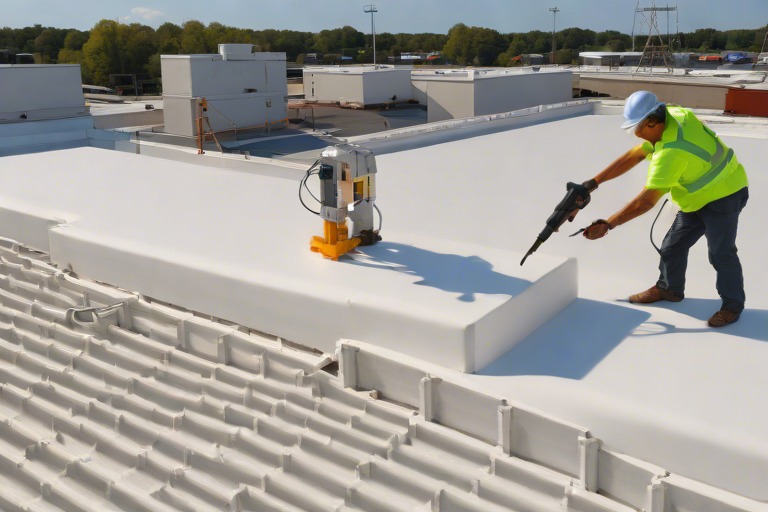
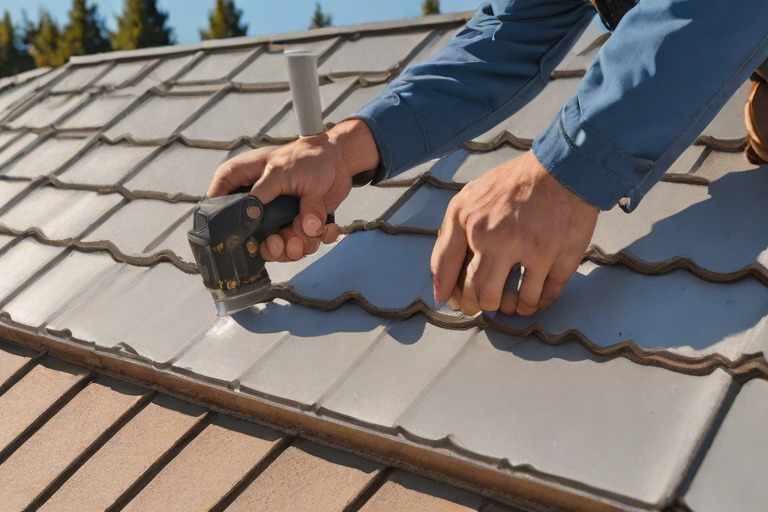
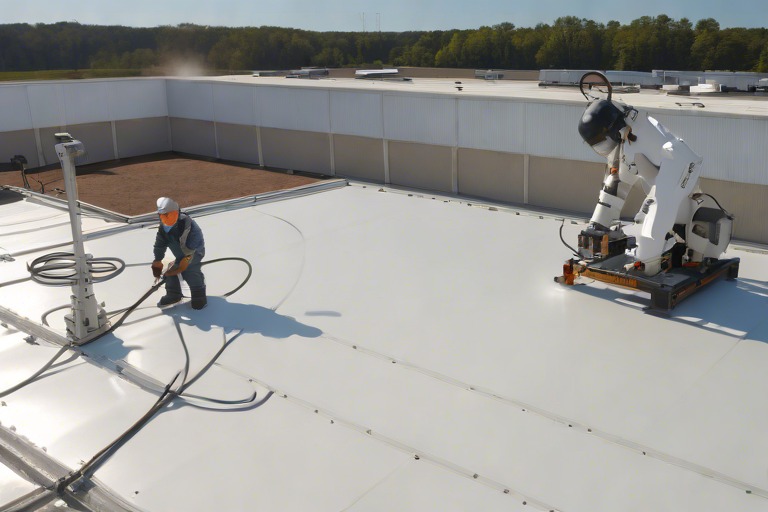
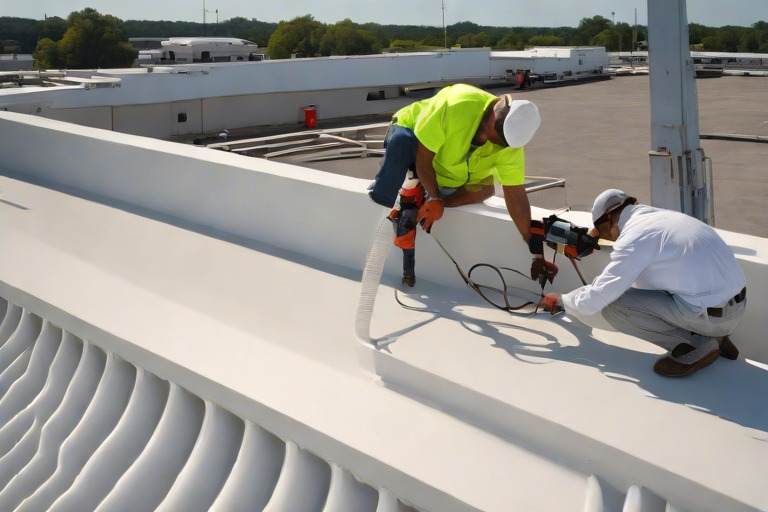
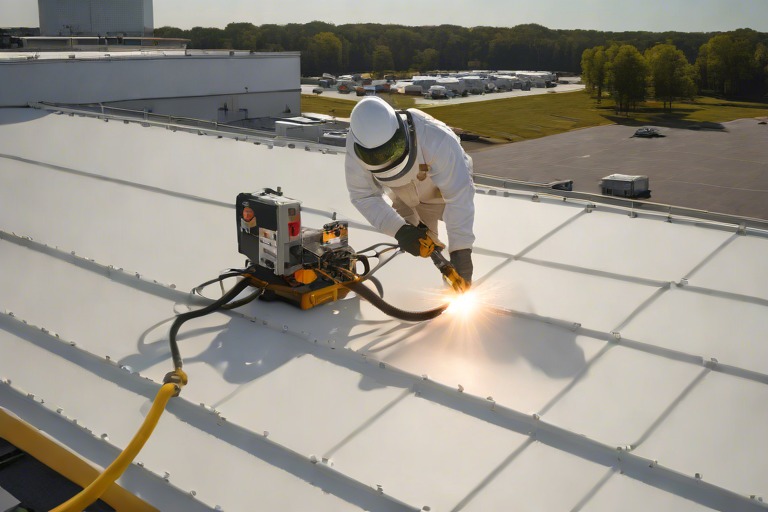
The critical advantage of 60-Mil TPO lies in the heat-welded seams. Unlike adhesives or tapes that can degrade under the influence of salt-fog corrosion and extreme temperature swings, TPO seams are fused together using a hot-air welder. This creates a monolithic, waterproof skin over the CDX Plywood substrate. When Aquashield Roofing Corporation replaces rotted decking on a flat roof, we ensure the new wood is perfectly leveled and primed, allowing the TPO membrane to lay flat without air pockets, which prevents the "ballooning" effect often seen during high-pressure weather systems.
Implementation of a full-perimeter TPO flashing system to ensure that water is directed away from the building envelope and the CDX edges.
Use of heat-welded seams that are physically stronger than the membrane itself, eliminating the risk of seam failure during heavy rainfall.
Installation of a high-density insulation board between the CDX Plywood and the 60-Mil TPO to provide thermal efficiency and additional structural cushioning.
Regular inspection of the TPO membrane for salt-crystal accumulation, which can be abrasive and compromise the membrane if not properly maintained.
Aquashield Roofing Corporation
Real Roofers, Not Salesmen! • Master GAF & 60-Mil TPO Contractor
Physical Headquarters: 4006 Morris Ct., Chesapeake, VA 23323 Direct Master Roofer Dispatch:757-553-5191 Regional Service Areas: Virginia Beach, Chesapeake, Norfolk, Portsmouth, Suffolk, Hampton, Newport News, 757. GPS Coordinates: 36.755164, -76.353932
GAF Shingle Installation Over Reinforced Decking For Mount Trashmore Homes
By Aquashield Technical Roofing Forensics Team •
Residential & Commercial Building Envelope Division
Structural Reinforcement: The Role of CDX Decking in Coastal Virginia
For homeowners in the Mount Trashmore area and across the 757 region, the structural integrity of a roof begins long before the first shingle is laid. Aquashield Roofing Corporation emphasizes the necessity of a reinforced substrate, specifically utilizing CDX (Category D) Plywood, to combat the relentless Atlantic coastal humidity. Unlike standard OSB (Oriented Strand Board), which can swell and lose structural cohesion when exposed to the high moisture levels typical of the Tidewater area, CDX is constructed from high-quality veneers and treated to resist delamination. In the high-humidity corridors near the Chesapeake Bay Bridge-Tunnel, the decking acts as the primary diaphragm for the home; if the decking fails due to rot or moisture saturation, the entire roofing system is compromised regardless of the shingle quality.
The engineering logic behind choosing reinforced CDX decking involves the management of vapor pressure and load distribution. During Nor'easters, the combination of heavy precipitation and fluctuating temperatures creates a "breathability" challenge for the roof deck. Aquashield Roofing Corporation utilizes a rigorous inspection process to identify "soft spots" or compromised sheathing that has been degraded by salt-fog corrosion and long-term humidity. By replacing compromised sections with 5/8-inch or 3/4-inch CDX decking, we ensure a rigid, flat surface that allows fasteners to achieve maximum withdrawal resistance, which is critical for high-wind performance.
CDX Plywood provides superior dimensional stability in the presence of salt-fog and high ambient humidity compared to engineered wood products.
The use of reinforced decking prevents "nail popping," a common failure in Mount Trashmore homes where the substrate has succumbed to moisture-induced expansion.
Aquashield Roofing Corporation ensures all decking is installed with a 1/8-inch gap between sheets to allow for natural thermal expansion and contraction.
Reinforced substrates provide the necessary shear strength to support the added weight of high-definition architectural shingles during extreme weather events.
Properly installed CDX decking creates a seamless transition for the GAF WeatherLock® underlayment, eliminating air pockets where condensation could otherwise accumulate.
High-Velocity Wind Mitigation with GAF Timberline HDZ Shingles
When engineering a roof for the Hampton Roads region, the primary adversary is wind uplift caused by tropical storm cycles and hurricane-force gusts. Aquashield Roofing Corporation specializes in the installation of GAF Timberline HDZ® Architectural Shingles, which are specifically designed with a unique "WindGuard" layering system. This technology ensures that the shingle remains adhered to the roof deck even when subjected to the intense pressure differentials created by high-velocity winds. For homes in the 757 area, we implement a strict 130-MPH Hurricane Nailing Standard, which exceeds standard building codes to provide an extra margin of safety against the unpredictable nature of Atlantic storms.
The technical execution of the 130-MPH nailing pattern involves increasing the number of fasteners per shingle from the standard four to six. These fasteners are strategically placed in the "nailing zone" to ensure that the shingle is mechanically locked into the reinforced CDX decking. This prevents the "peeling" effect often seen after a Nor'easter, where shingles are lifted from the ridge downward. By utilizing GAF’s DuraGrip™ technology, Aquashield Roofing Corporation ensures that the granules remain bonded to the asphalt, preventing the erosion typically caused by salt-laden air and wind-driven rain.
The GAF Timberline HDZ® system utilizes a layered nail-line that prevents wind from getting underneath the shingle tabs.
Implementation of a 6-nail fastening pattern ensures the roof can withstand sustained winds of 130 MPH without catastrophic failure.
Aquashield Roofing Corporation utilizes galvanized roofing nails to prevent the corrosive effects of salt-fog common in the Tidewater region.
The architectural profile of the HDZ shingles creates a heavier, more durable barrier that reduces the likelihood of wind-lift compared to traditional 3-tab shingles.
Precision alignment of the shingle courses ensures that the WindGuard® technology is fully engaged across the entire roof plane.
Combating Atlantic Humidity and Salt-Fog Corrosion
The environmental challenges of the Virginia coast require more than just strong shingles; they require a comprehensive moisture management system. Salt-fog corrosion is a silent killer of roofing components, as the saline particles in the air can accelerate the degradation of metal flashing and underlayments. Aquashield Roofing Corporation addresses this by integrating a high-performance synthetic underlayment that acts as a secondary water barrier. This layer is essential for Mount Trashmore homes, as it prevents moisture from penetrating the CDX decking during the intense rain cycles associated with tropical depressions.
Furthermore, the interaction between high humidity and attic ventilation is a critical engineering concern. If a roof is sealed too tightly without proper ventilation, the "attic oven" effect occurs, where trapped heat and moisture bake the shingles from the inside out. Aquashield Roofing Corporation installs GAF Cobra® High-Performance Ventilation systems to ensure a balanced airflow. This removes the humid air from the attic space and prevents the growth of mold and mildew on the underside of the reinforced decking, which is a frequent issue in the 757 area.
Synthetic underlayments are utilized to provide a waterproof shield that is impervious to the salt-fog corrosion found near the Chesapeake Bay.
The installation of GAF Cobra® Ridge Vents facilitates the exhaust of hot, humid air, extending the lifespan of the asphalt shingles.
Aquashield Roofing Corporation employs drip edge flashing made from heavy-gauge galvanized steel to prevent water from wicking back into the fascia boards.
Ice and water shields are applied to all critical transition points, including valleys and chimneys, to stop leaks during freezing Nor'easters.
The use of specialized sealants ensures that all penetration points, such as vent pipes, are airtight and watertight against driving coastal rain.
Many residential properties in the Hampton Roads and Richmond areas feature complex rooflines that include flat sections, such as porches, garages, or modern additions. For these areas, traditional shingles are inadequate. Aquashield Roofing Corporation recommends the installation of 60-Mil TPO (Thermoplastic Polyolefin) flat roofing. TPO is a single-ply membrane that is heat-welded at the seams, creating a monolithic waterproof surface that is virtually impenetrable to the heavy rainfall of the Virginia coast. The 60-Mil thickness provides the necessary puncture resistance and durability to withstand debris impact during high-wind events.
The primary advantage of TPO in the 757 region is its high solar reflectivity. By reflecting a significant portion of UV radiation, TPO reduces the thermal load on the building, which is critical during the humid Virginia summers. This not only lowers energy costs but also prevents the thermal expansion and contraction cycles that can lead to cracks in the roofing membrane. Aquashield Roofing Corporation ensures that the transition between the GAF Timberline HDZ sloped sections and the <PO TPO flat sections is seamlessly flashed, eliminating the most common points of failure in hybrid roofing systems.
60-Mil TPO membranes are heat-welded using automated machinery to ensure a permanent, leak-proof seal at every seam.
The high Albedo effect of TPO roofing reduces the "Urban Heat Island" effect and lowers cooling costs for Mount Trashmore residents.
TPO is chemically resistant to the salt-fog and pollutants common in the Tidewater and Chesapeake Bay areas.
Aquashield Roofing Corporation utilizes mechanically attached fasteners to ensure the
Aquashield Roofing Corporation
Real Roofers, Not Salesmen! • Master GAF & 60-Mil TPO Contractor
Physical Headquarters: 4006 Morris Ct., Chesapeake, VA 23323 Direct Master Roofer Dispatch:757-553-5191 Regional Service Areas: Virginia Beach, Chesapeake, Norfolk, Portsmouth, Suffolk, Hampton, Newport News, 757. GPS Coordinates: 36.755164, -76.353932
How Structural Reinforcement Prevents Coastal Storm Damage In Tidewater VA
By Aquashield Technical Roofing Forensics Team •
Residential & Commercial Building Envelope Division
The Aerodynamics of Wind Uplift in the Tidewater Region
In Newport News and the broader Hampton Roads area, roofing systems are subjected to a unique set of atmospheric pressures. The proximity to the Chesapeake Bay Bridge-Tunnel creates a wind-tunnel effect where tropical storm cycles and Nor'easters generate significant aerodynamic lift. This phenomenon, known as wind uplift, occurs when high-velocity winds move across the roof surface, creating a low-pressure zone above the roof while pressure remains higher beneath the eaves. Without structural reinforcement, this pressure differential can literally peel a roof away from the rafters, starting at the perimeter and moving inward. Aquashield Roofing Corporation engineers every system to counteract these forces by focusing on the continuity of the load path from the shingle down to the foundation.
Furthermore, the Atlantic coastal humidity and pervasive salt-fog corrosion in the 757 area accelerate the degradation of substandard fasteners. Salt-laden air acts as an electrolyte, speeding up the oxidation of non-galvanized nails, which compromises the mechanical bond between the roof decking and the shingles. When structural reinforcement is ignored, the cumulative effect of humidity-induced rot and wind-driven pressure leads to catastrophic failure during peak storm events. By implementing rigorous engineering standards, Aquashield Roofing Corporation ensures that the roof acts as a monolithic shield rather than a collection of independent components.
The Bernoulli Principle explains how increased wind speed over the roof ridge creates a suction effect that pulls shingles upward.
Salt-fog corrosion reduces the shear strength of standard steel fasteners, necessitating the use of hot-dipped galvanized or stainless steel nails.
Nor'easters bring sustained high-wind events that test the fatigue limits of the roof's perimeter flashing and drip edges.
The "757" coastal zone requires a higher safety factor in structural calculations to account for unpredictable tropical storm surges.
Proper structural reinforcement prevents the "zipper effect," where one failed shingle allows wind to get under the next, leading to total roof loss.
Residential Fortification via GAF Timberline HDZ and Hurricane Nailing
For residential properties in Tidewater VA, the primary line of defense is the combination of high-performance materials and precision fastening. Aquashield Roofing Corporation utilizes GAF Timberline HDZ Architectural Shingles, which are engineered with a unique WindSpeed® nailing zone. Unlike standard shingles, these are designed to withstand high-wind events by optimizing the point of attachment. To meet the rigorous demands of Newport News coastal weather, we implement a 130-MPH Hurricane Nailing Standard. This involves increasing the number of fasteners per shingle from the industry standard of four to six, strategically placed in the reinforced nailing strip to ensure maximum grip during extreme turbulence.
The technical superiority of the GAF Timberline HDZ system lies in its layered construction, which distributes wind loads across a wider surface area. When these shingles are paired with a high-quality underlayment and the 130-MPH fastening pattern, the roof's resistance to uplift is exponentially increased. This structural reinforcement ensures that even during a severe tropical storm, the shingles remain anchored to the deck, preventing the infiltration of wind-driven rain that often leads to interior ceiling collapse and mold growth in humid Virginia climates.
The GAF Timberline HDZ shingles feature a specialized nailing zone that prevents "pull-through" during high-wind gusts.
Implementing 6-nail fastening patterns increases the mechanical resistance to uplift by approximately 50% compared to standard 4-nail installation.
Fasteners are driven to a depth that ensures a tight seal without compromising the integrity of the shingle's surfacing.
The use of GAF Starter® strips provides a reinforced edge that prevents wind from getting under the first course of shingles.
Strategic nail placement at the 130-MPH specification ensures that the load is distributed evenly across the roof deck.
Substrate Integrity: CDX Decking and Moisture Management
A roof is only as strong as the surface it is attached to. In many older homes across Hampton Roads, original decking has been compromised by decades of Atlantic humidity and minor leaks. Aquashield Roofing Corporation advocates for the replacement of degraded OSB (Oriented Strand Board) with CDX Decking Replacement. CDX, a structural-grade plywood, is significantly more resilient to moisture and provides a superior nailing base for GAF Timberline HDZ shingles. In the high-humidity environment of Tidewater, OSB can swell and lose its structural rigidity, which in turn causes nails to "back out," leaving the roof vulnerable to wind uplift.
The structural reinforcement of the substrate also involves the installation of a breathable yet waterproof barrier. By utilizing synthetic underlayments over CDX plywood, we create a secondary layer of protection that prevents salt-fog and moisture from penetrating the wooden structure. This prevents the rot that typically occurs at the roof-to-wall connection, which is the most critical point of failure during a Nor'easter. By ensuring the decking is structurally sound and properly sealed, Aquashield Roofing Corporation provides a rigid foundation that can withstand the lateral and vertical pressures of coastal storms.
CDX Plywood offers superior dimensional stability and nail-holding power compared to engineered wood products in humid climates.
The replacement of water-damaged decking prevents the "soft spot" phenomenon, where shingles lose their anchor point.
Moisture-resistant barriers prevent the capillary action of salt-water spray infiltrating the roof deck.
Properly spaced decking screws and nails ensure the plywood is tightly bonded to the rafters, reducing vibration during high winds.
Structural decking audits are performed to identify hidden rot caused by the chronic humidity of the Chesapeake Bay area.
Commercial Resilience: 60-Mil TPO Flat Roofing Systems
Commercial structures in Newport News, particularly those near industrial hubs and the waterfront, require a different approach to structural reinforcement. Aquashield Roofing Corporation specializes in the installation of 60-Mil TPO (Thermoplastic Polyolefin) flat roofing. The 60-Mil thickness is a critical specification; it provides the necessary puncture resistance and thermal stability to withstand the intense UV radiation and temperature fluctuations of the Virginia coast. Unlike traditional built-up roofs, TPO is heat-welded at the seams, creating a monolithic membrane that is virtually impervious to wind-driven rain and salt-fog penetration.
To prevent the membrane from lifting during high-wind events, we employ advanced mechanical fastening systems. This includes the use of heavy-duty plate fasteners and reinforced insulation boards that are structurally tied into the steel or concrete deck. The heat-welding process ensures that the seams are as strong as the membrane itself, eliminating the risk of seam failure during the pressure drops associated with tropical storms. By combining the thickness of 60-Mil TPO with a rigorous fastening schedule, Aquashield Roofing Corporation ensures that commercial assets in the 757 remain operational and dry, regardless of the weather cycle.
The 60-Mil TPO membrane provides a superior balance of flexibility and strength, reducing the likelihood of stress cracks.
Heat-welded seams create a permanent, waterproof bond that outperforms adhesives in high-humidity coastal environments.
Mechanical fastening patterns are calculated based on the specific wind-load requirements of the building's height and exposure.
TPO's high albedo (reflectivity) reduces thermal expansion and contraction, which protects the structural fasteners from fatigue.
The integration of reinforced edge strips prevents wind from peeling the membrane away from the perimeter parapets.
Aquashield Roofing Corporation
Real Roofers, Not Salesmen! • Master GAF & 60-Mil TPO Contractor
Physical Headquarters: 4006 Morris Ct., Chesapeake, VA 23323 Direct Master Roofer Dispatch:757-553-5191 Regional Service Areas: Virginia Beach, Chesapeake, Norfolk, Portsmouth, Suffolk, Hampton, Newport News, 757. GPS Coordinates: 36.755164, -76.353932
Fix Rotted Roof Decks With CDX Plywood And GAF Shingles
By Aquashield Technical Roofing Forensics Team •
Residential & Commercial Building Envelope Division
Diagnosing Structural Deck Decay in the Tidewater Environment
In the coastal corridors of Yorktown, Virginia, and the surrounding Hampton Roads region, roof decks are subjected to an aggressive atmospheric cocktail. The combination of extreme Atlantic coastal humidity, salt-fog corrosion, and the persistent moisture plumes emanating from the Great Dismal Swamp Canal creates a high-risk environment for organic decay. When a roofing system fails, water infiltrates the substrate, leading to fungal growth and the eventual rot of the plywood or OSB (Oriented Strand Board) decking. Aquashield Roofing Corporation identifies this as a critical failure point; once the structural integrity of the deck is compromised, the shingles above lose their required fastening base, rendering the entire system susceptible to wind uplift during tropical storm cycles.
The degradation process in the 757 area is often accelerated by "attic rain"—the condensation that occurs when warm, humid exterior air meets cooler interior surfaces. This moisture settles on the underside of the roof deck, rotting the wood from the inside out, often before a homeowner notices a leak in the ceiling. For a roof to withstand the violent pressure changes of a Nor'easter, the substrate must be rigid and securely fastened to the rafters. Any area of "soft" or "spongy" decking represents a structural void that can lead to catastrophic shingle blow-offs.
To ensure a roof is structurally sound, Aquashield Roofing Corporation utilizes a rigorous diagnostic protocol:
Conducting a comprehensive "probe test" using calibrated fasteners to detect soft spots in the CDX Plywood or OSB substrate.
Evaluating the moisture content of the decking using electronic moisture meters to ensure the wood is below 19% moisture content before new materials are installed.
Inspecting the perimeter drip edges for salt-fog corrosion, which often allows water to wick backward into the fascia and roof edge decking.
Analyzing the ventilation gaps at the soffits and ridge to ensure that the humidity from the Tidewater basin is not trapped against the roof deck.
Mapping the extent of delamination in existing sheets to determine if a partial patch or a full-deck replacement is necessary for structural compliance.
Engineering the Deck Replacement with CDX Plywood
When structural rot is identified, the only permanent solution is the removal of compromised materials and the installation of high-grade CDX Plywood. CDX is the industry standard for residential and commercial roofing in Virginia because it is a structural-grade plywood consisting of cross-grained layers of softwood, glued with exterior-grade resins. The "X" in CDX signifies "exposure," meaning the wood is rated for use in environments where it may be exposed to moisture during the construction process. For the high-wind zones of Yorktown, Aquashield Roofing Corporation specifies a minimum thickness of 5/8" or 3/4" CDX to provide the necessary shear strength and nail-holding power required by local building codes.
The installation process must be precise to prevent future failures. New sheets of CDX Plywood must be installed with a 1/8-inch gap between sheets to allow for natural expansion and contraction caused by the extreme temperature swings of Virginia's coastal seasons. If the sheets are butt-jointed too tightly, the humidity can cause the wood to buckle, creating "humps" in the roofline that lead to premature shingle wear and water pooling. Furthermore, the fastening schedule must be rigorous; we utilize #8 2-inch galvanized nails spaced every 6 inches along the perimeter and 12 inches in the field to ensure the deck acts as a monolithic slab.
The technical specifications for a professional deck restoration include:
Removal of all rotted substrate down to the raw rafter tails to ensure no fungal spores remain in the structure.
Installation of APA Rated structural plywood that meets or exceeds the original load-bearing specifications of the home.
Application of a GAF WeatherTight™ or similar synthetic underlayment immediately following deck replacement to protect the new wood from sudden Nor'easter rain events.
Ensuring all plywood seams are properly supported by rafters or blocked with 2x4 framing to prevent deflection.
Verification that all fasteners are driven flush to the surface, preventing "nail pops" that can puncture the waterproof membrane.
High-Wind Integration with GAF Timberline HDZ Shingles
Once the structural foundation is restored with CDX Plywood, the protective layer must be engineered to withstand the 130-MPH wind gusts common during tropical storm cycles in the Tidewater region. Aquashield Roofing Corporation exclusively utilizes GAF Timberline HDZ® Architectural Shingles for these applications. These shingles are engineered with a unique "WindGuard" roofing nail strip, which provides a reinforced fastening zone. This is critical in Yorktown, where the wind-driven rain of a hurricane can create a vacuum effect, attempting to pull the shingles off the roof from the top down.
To achieve the 130-MPH Hurricane Nailing Standard, we move beyond the standard four-nail pattern. Our engineering team implements a 6-nail fastening pattern, placing additional fasteners in the high-stress areas of the roof, such as the eaves, ridges, and valleys. This increased fastener density ensures that even if a few nails are compromised by salt-fog corrosion over time, the overall system remains anchored to the CDX Plywood deck. The GAF Timberline HDZ® shingles also feature a high-definition color blend that reflects a portion of the intense Virginia summer sun, reducing attic heat load and preventing the thermal shock that can lead to shingle cracking.
The technical deployment of the GAF system involves:
Installation of GAF Starter® Strip shingles along the eaves and rakes to eliminate the vulnerability of the first course of shingles.
Utilizing 1-1/4 inch galvanized roofing nails, ensuring they are driven perpendicular to the deck to maximize the grip in the CDX Plywood.
Strict adherence to the 6-nail pattern on all slopes exceeding 4:12 to mitigate the risk of wind uplift during high-velocity wind events.
Integrating GAF RidgeVent® to allow the humid air of the Hampton Roads area to escape, preventing the "oven effect" that degrades shingle adhesives.
Applying a final inspection of the GAF DuraGrip™ granules to ensure full coverage and maximum UV protection against the coastal sun.
Hybrid Systems: Integrating 60-Mil TPO for Flat Roof Sections
Many residential and commercial properties in Yorktown feature complex rooflines that combine steep slopes with flat sections. While the slopes are protected by GAF Timberline HDZ®, the flat sections require a completely different engineering approach to prevent ponding water and leak-induced rot. Aquashield Roofing Corporation implements 60-Mil TPO (Thermoplastic Polyolefin) flat roofing for these areas. The 60-Mil thickness is a critical specification; it provides the necessary puncture resistance against wind-borne debris during storms and offers superior longevity compared to thinner 45-Mil membranes.
The transition between the CDX Plywood shingle deck and the TPO flat roof is the most common point of failure in Tidewater roofing. We engineer a custom-flashed transition using heat-welded seams. Unlike adhesives, which can fail under the extreme humidity of the Great Dismal Swamp Canal area, TPO is heat-welded using a robotic hot-air welder. This creates a molecular bond that turns the entire roof into a single, seamless waterproof sheet. This is essential for resisting the salt-fog corrosion that typically eats through traditional lap-seams.
The technical advantages of the 60-Mil TPO system include:
A high Solar Reflectance Index (SRI), which significantly lowers cooling costs for Yorktown homeowners by reflecting UV rays.
Heat-welded seams that are structurally stronger than the membrane itself, eliminating the risk of leaks during heavy Nor'easter precipitation.
Enhanced resistance to algae and mold growth, which is a constant battle in the high-humidity 757 region.
The ability to integrate TPO Edge Flashing that ties directly into the CDX Plywood perimeter, creating a watertight seal at the roof's edge.
A durable, non-porous surface that allows for easy cleaning of salt deposits, preventing the chemical degradation of the roofing membrane.
Aquashield Roofing Corporation
Real Roofers, Not Salesmen! • Master GAF & 60-Mil TPO Contractor
Physical Headquarters: 4006 Morris Ct., Chesapeake, VA 23323 Direct Master Roofer Dispatch:757-553-5191 Regional Service Areas: Virginia Beach, Chesapeake, Norfolk, Portsmouth, Suffolk, Hampton, Newport News, 757. GPS Coordinates: 36.755164, -76.353932
Coastal Virginia Flat Roofing Solutions For Permanent Leak Prevention Today
By Aquashield Technical Roofing Forensics Team •
Residential & Commercial Building Envelope Division
Engineering for the Hampton Roads Microclimate
Roofing systems in Virginia Beach and the surrounding Tidewater region face a unique confluence of atmospheric stressors that render standard installation practices obsolete. The primary challenge for any structure near the Waterside District in Norfolk or the coastal stretches of the 757 is the relentless combination of Atlantic coastal humidity and salt-fog corrosion. Salt-fog acts as a catalyst for the degradation of metallic flashing and fasteners, while the high humidity levels create a perpetual moisture film that encourages organic growth and accelerates the decay of organic substrates. Aquashield Roofing Corporation utilizes a precision-engineered approach to counteract these variables, ensuring that the building envelope remains impermeable against the hydrostatic pressure exerted during heavy Nor'easters.
Furthermore, the region is subject to high-wind tropical storm cycles that create extreme pressure differentials between the interior and exterior of a building. This "lift" effect can easily compromise a roof that has not been installed to rigorous wind-mitigation standards. To prevent permanent leaks, Aquashield Roofing Corporation analyzes the specific wind-load requirements of each structure, accounting for the proximity to the shoreline and the prevailing wind vectors of the Hampton Roads area. By integrating advanced materials with site-specific engineering, we eliminate the common failure points associated with coastal residential and commercial roofing.
Salt-Fog Corrosion Resistance: Implementation of high-grade coatings and non-corrosive fasteners to prevent the oxidation of critical flashing points.
Hygroscopic Moisture Control: Use of advanced vapor barriers to prevent Atlantic humidity from migrating into the attic or ceiling plenum.
Tropical Storm Cycle Mitigation: Engineering roof systems to withstand the rapid pressure shifts characteristic of Category 1 and 2 hurricanes.
Nor'easter Drainage Analysis: Optimizing slope and gutter capacity to handle the sudden, high-volume precipitation events common in the Tidewater region.
60-Mil TPO Systems for Permanent Flat Roof Waterproofing
For commercial properties and modern residential flat-roof designs in Virginia Beach, the selection of the membrane is the most critical decision in the leak-prevention process. Aquashield Roofing Corporation specializes in the installation of 60-Mil TPO (Thermoplastic Polyolefin) roofing, which provides a superior thickness compared to the industry-standard 45-mil options. The additional thickness of a 60-mil membrane significantly increases the puncture resistance and long-term durability of the roof, which is essential for resisting the impact of wind-borne debris during coastal storms. TPO is inherently reflective, reducing the "urban heat island" effect in Norfolk and lowering cooling costs by reflecting a high percentage of UV radiation.
The technical superiority of the 60-Mil TPO system lies in its heat-welded seams. Unlike adhesives or tapes that degrade under the extreme temperature fluctuations of the Virginia coast, TPO seams are fused using hot-air welding, creating a monolithic, waterproof skin across the entire roof surface. This process eliminates the seams as a potential point of failure, ensuring that water cannot penetrate the substrate even under standing water conditions. Aquashield Roofing Corporation ensures that every weld is probed and tested to meet stringent commercial engineering codes, providing a permanent solution to the chronic leaking often found in older EPDM or modified bitumen systems.
Heat-Welded Seams: Utilizing hot-air welding technology to create a chemical bond that is stronger than the membrane itself.
High Albedo Rating: The white TPO surface reflects solar energy, preventing thermal shock and extending the life of the membrane.
Puncture Resistance: The 60-Mil thickness provides a robust barrier against hail and debris common during Tidewater storm cycles.
Chemical Stability: TPO is resistant to the salt-laden air of the 757, preventing the premature embrittlement of the roofing material.
Residential Wind Mitigation: GAF Timberline HDZ and 130-MPH Standards
Residential roofing in the Hampton Roads area requires more than just aesthetic appeal; it requires a structural defense system. Aquashield Roofing Corporation employs GAF Timberline HDZ Architectural Shingles, which are engineered with a unique layering system that provides superior wind resistance and durability. The HDZ line is specifically designed to handle the high-wind loads of coastal Virginia, utilizing a reinforced nail strip that prevents the shingle from lifting or tearing away from the roof deck during tropical storm events. This is a critical upgrade over traditional three-tab shingles, which often fail during the first major wind event of the season.
To ensure these shingles remain secure, Aquashield Roofing Corporation adheres to 130-MPH Hurricane Nailing Standards. This technical specification involves increasing the number of fasteners per shingle and utilizing a specific nailing pattern that anchors the shingle deeper into the structural decking. By exceeding standard building codes and implementing 130-MPH specifications, we significantly reduce the risk of shingle blow-off. This rigorous approach to fastening, combined with the GAF DuraGrip™ algae resistance technology, ensures that the roof remains structurally sound and visually pristine despite the harsh Atlantic environment.
GAF Timberline HDZ: High-definition architectural shingles that provide multi-layered protection against wind-driven rain.
130-MPH Hurricane Nailing: A high-density fastening pattern that ensures shingles remain seated during extreme wind gusts.
WindSpeed® Installation: A specialized technique used by Aquashield Roofing Corporation to maximize the wind warranty of the GAF system.
Algae Resistance: Integration of copper-infused granules to prevent the growth of Gloeocapsa magma, common in humid Virginia Beach climates.
Substrate Restoration and CDX Decking for Structural Longevity
A roofing system is only as effective as the substrate upon which it is installed. In many older homes and commercial buildings in the Tidewater area, the original decking has been compromised by decades of slow leaks and humidity-induced rot. Aquashield Roofing Corporation insists on a comprehensive substrate analysis before any new material is applied. When we identify compromised wood, we perform a full CDX Decking Replacement. CDX (Combination Decking) is a structural-grade plywood that provides the necessary rigidity and load-bearing capacity to support high-wind roofing systems. Replacing rotted OSB or old planking with new CDX Decking ensures that fasteners have a solid grip, which is the foundation of the 130-MPH nailing standard.
Beyond the decking, the application of a high-performance synthetic underlayment is mandatory for permanent leak prevention. Unlike traditional felt paper, which can tear and harden in the coastal heat, synthetic underlayments provide a secondary waterproof barrier that prevents moisture from reaching the CDX Decking if a shingle is lost during a storm. This "dual-layer" defense strategy is what separates a standard roof from an engineered system. By focusing on the structural integrity of the deck and the quality of the underlayment, Aquashield Roofing Corporation eliminates the risk of interior water damage and structural failure, providing homeowners and business owners in the 757 with total peace of mind.
CDX Decking Replacement: Replacing degraded substrates with structural-grade plywood to ensure maximum fastener withdrawal resistance.
Synthetic Underlayment: Installing a tear-resistant, waterproof membrane that serves as a fail-safe against wind-driven rain.
Fastener Penetration Depth: Ensuring all nails penetrate the CDX Decking to the precise depth required by Virginia building codes.
Moisture Mapping: Utilizing thermal imaging to identify hidden rot in the substrate before the final roofing layer is installed.
Aquashield Roofing Corporation
Real Roofers, Not Salesmen! • Master GAF & 60-Mil TPO Contractor
Physical Headquarters: 4006 Morris Ct., Chesapeake, VA 23323 Direct Master Roofer Dispatch:757-553-5191 Regional Service Areas: Virginia Beach, Chesapeake, Norfolk, Portsmouth, Suffolk, Hampton, Newport News, 757. GPS Coordinates: 36.755164, -76.353932
Restore Structural Integrity To Tidewater Roofs Using Quality CDX Plywood
By Aquashield Technical Roofing Forensics Team •
Residential & Commercial Building Envelope Division
The Engineering Necessity of CDX Plywood in Tidewater’s Coastal Climate
In the Tidewater region of Virginia, specifically across Hampton Roads and the 757 area, the structural integrity of a roof begins long before the first shingle is laid. The Atlantic coastal humidity and persistent salt-fog corrosion create a volatile environment for building substrates. Many older homes near First Landing State Park utilize Oriented Strand Board (OSB), which is prone to swelling and delamination when exposed to the moisture-heavy air of a Nor'easter. Aquashield Roofing Corporation advocates for the replacement of compromised decking with CDX Plywood. Unlike OSB, which is composed of glued wood chips, CDX is a structural-grade plywood consisting of cross-laminated veneers. The "X" denotes that the panels are exposure-rated, meaning they are engineered to withstand temporary exposure to moisture without immediate structural failure.
From an engineering perspective, the dimensional stability of CDX Plywood is paramount when resisting the hydrostatic pressure exerted by heavy coastal rains. When moisture penetrates the upper roofing layers, a low-quality substrate will soften, leading to "nail pops" or the complete failure of the fastening system during a high-wind event. By utilizing ASTM D2399 compliant CDX, Aquashield Roofing Corporation ensures that the roof deck maintains its shear strength and rigidity. This provides a stable foundation that prevents the sagging often seen in aging Tidewater residences, ensuring that the load-bearing capacity of the roof remains intact even under the weight of saturated roofing materials.
Moisture Resistance: CDX utilizes a high-quality exterior glue that prevents delamination during the extreme humidity cycles typical of the Virginia coast.
Structural Rigidity: The cross-grained construction provides superior load-bearing capabilities compared to particle-board alternatives.
Fastener Retention: CDX plywood offers a denser grip for roofing nails, reducing the likelihood of shingle blow-offs during tropical storm cycles.
Fungal Resistance: High-grade CDX is less susceptible to the rapid onset of dry rot when subjected to the salt-fog conditions of the 757 region.
High-Wind Engineering: GAF Timberline HDZ and 130-MPH Nailing Standards
For homeowners in Tidewater, the primary threat to roof longevity is the cyclical nature of tropical storms and high-velocity wind gusts. To combat this, Aquashield Roofing Corporation implements a rigorous installation protocol centered on GAF Timberline HDZ Architectural Shingles. These shingles are engineered with a unique "WindRidge" technology that reduces lift at the shingle edges. However, the shingle is only as effective as its attachment to the substrate. In the Hampton Roads area, standard nailing patterns are often insufficient. We employ 130-MPH Hurricane Nailing Standards, which involve a six-nail fastening pattern per shingle rather than the industry-standard four-nail approach.
The physics of wind uplift during a Nor'easter creates a vacuum effect that can peel shingles from the roof in sheets if the fasteners are not strategically placed. By utilizing GAF Timberline HDZ on a fresh CDX plywood deck, we create a monolithic system where the shingle, the underlayment, and the decking work in unison to distribute wind loads. The use of GAF DuraGrip™ starter strips further secures the perimeter, ensuring that the most vulnerable edges of the roof—the eaves and rakes—remain anchored despite the turbulent airflows common near the coast.
Enhanced Fastening: The implementation of 130-MPH Hurricane Nailing ensures that the shingles remain seated even during Category 1 or 2 hurricane-force gusts.
Advanced Materiality: GAF Timberline HDZ shingles utilize a layered construction that resists granule loss during high-wind abrasion.
Edge Security: The integration of specialized starter shingles prevents the "unzipping" effect that occurs when wind enters under the first course.
Load Distribution: The combination of CDX plywood and high-density nailing distributes the kinetic energy of wind across the entire roof plane.
Commercial Resilience: 60-Mil TPO Flat Roofing and Substrate Stability
Commercial structures in the Tidewater region face unique challenges, including massive surface areas that act as sails during tropical storms and the corrosive nature of salt-laden air. Aquashield Roofing Corporation specializes in the installation of 60-Mil TPO (Thermoplastic Polyolefin) flat roofing systems. The "60-Mil" designation refers to the thickness of the membrane, which provides a critical barrier against puncture and UV degradation. For a TPO system to function, the underlying substrate must be perfectly planar and structurally sound. This is where the precision of CDX plywood or high-density insulation board becomes critical; any dip or soft spot in the decking can lead to "ponding" water, which accelerates the degradation of the seams.
The installation of 60-Mil TPO involves heat-welding the seams using a robotic hot-air welder, creating a seamless, waterproof skin over the building. In the 757 area, the thermal expansion and contraction caused by the shift from humid summers to freezing winter Nor'easters can stress these seams. By ensuring the substrate is reinforced and utilizing ASTM D4546 standards for membrane application, Aquashield Roofing Corporation eliminates the risk of leaks. Furthermore, the reflective white surface of TPO reduces the "Urban Heat Island" effect in Hampton Roads, significantly lowering cooling costs for commercial clients.
Thermal Welding: Unlike adhesives, heat-welded seams in 60-Mil TPO create a chemical bond that is stronger than the membrane itself.
Puncture Resistance: The 60-mil thickness provides a robust defense against hail and wind-borne debris during storm cycles.
Chemical Stability: TPO is inherently resistant to the salt-fog corrosion that typically destroys metal roofing in coastal Virginia.
Substrate Integration: Proper CDX or ISO-board preparation ensures the membrane does not bridge, preventing premature stress fractures.
Long-Term Structural Integrity and Local Code Compliance
Maintaining a roof in the Tidewater region requires more than just high-quality materials; it requires adherence to the most stringent building codes and a deep understanding of local environmental stressors. Aquashield Roofing Corporation adheres to the IRC 2021 and ASCE 7-16 guidelines for wind-borne debris and wind-load calculations. The synergy between CDX Plywood, GAF Timberline HDZ, and 60-Mil TPO creates a comprehensive defense system. When these components are installed correctly, they protect the home's interior from the catastrophic water intrusion that often follows a tropical storm, thereby preserving the home's overall structural integrity and market value.
The final layer of protection is a rigorous maintenance and inspection cycle. Because salt-fog can penetrate even the best seals over time, we recommend a bi-annual inspection of all flashing and penetration points. By focusing on the "bones" of the roof—the CDX decking—and the "skin"—the GAF or TPO membranes—Aquashield Roofing Corporation provides a permanent solution rather than a temporary patch. This engineering-first approach ensures that properties from the heart of Norfolk to the shores of First Landing State Park remain safe, dry, and resilient against the unpredictable nature of the Atlantic coast.
Code Adherence: All installations meet or exceed Virginia Residential Code requirements for wind-zone fastening.
Lifecycle Management: The use of CDX extends the lifespan of the roofing system by preventing premature shingle failure due to deck rot.
Environmental Adaptation: Materials are selected specifically to resist the high humidity and salt-spray concentrations of the 757 region.
Comprehensive Warranty: By combining GAF certified materials with expert engineering, Aquashield Roofing Corporation provides unmatched long-term security.
Aquashield Roofing Corporation
Real Roofers, Not Salesmen! • Master GAF & 60-Mil TPO Contractor
Physical Headquarters: 4006 Morris Ct., Chesapeake, VA 23323 Direct Master Roofer Dispatch:757-553-5191 Regional Service Areas: Virginia Beach, Chesapeake, Norfolk, Portsmouth, Suffolk, Hampton, Newport News, 757. GPS Coordinates: 36.755164, -76.353932
GAF Shingles and Reinforced Decking Protect Mount Trashmore Area Homes
By Aquashield Technical Roofing Forensics Team •
Residential & Commercial Building Envelope Division
Engineering Wind Resistance with GAF Timberline HDZ Architectural Shingles
In the high-velocity wind zones of Hampton Roads and the Tidewater region, the primary failure point for residential roofing is typically the shingle-to-deck bond. Aquashield Roofing Corporation utilizes GAF Timberline HDZ architectural shingles specifically because of their integrated WindRidge 3D technology. This engineering feat involves a reinforced ridge strip that creates a physical barrier against wind uplift, preventing the "peeling" effect common during Nor'easters. In the Mount Trashmore area, where Atlantic coastal humidity can soften lower-grade asphalt, the HDZ line maintains its structural integrity through a high-grade fiberglass mat and a specialized asphalt blend that resists granule loss during high-wind tropical storm cycles.
The technical superiority of these shingles is further realized when considering the thermal expansion and contraction cycles inherent to the 757 area. The salt-fog corrosion prevalent near the coast can degrade inferior fasteners and underlayments, but the GAF WeatherLock system ensures a cohesive seal across the entire roof plane. By optimizing the overlap and utilizing a high-performance adhesive strip, Aquashield Roofing Corporation ensures that the shingles remain locked in place even when subjected to the erratic pressure differentials caused by sudden coastal squalls.
WindRidge 3D technology provides a reinforced headlap that significantly reduces the risk of shingle blow-off during 100+ MPH gusts.
The HDZ layering system allows for faster installation without compromising the precision of the alignment, ensuring a tighter seal against moisture.
Advanced granule composition protects the asphalt from UV degradation and the corrosive effects of salt-laden air common in the Tidewater region.
Enhanced thermal stability prevents the shingles from becoming brittle, which is critical for maintaining flexibility during the rapid temperature shifts of Virginia winters.
The GAF System Plus approach integrates the shingles with a compatible underlayment to create a redundant moisture barrier.
Structural Reinforcement via CDX Decking Replacement
A roof is only as resilient as the substrate supporting it. In many older homes near the Great Dismal Swamp Canal, the original decking often consists of outdated plywood or OSB that has succumbed to chronic moisture infiltration and Atlantic coastal humidity. Aquashield Roofing Corporation mandates the use of CDX (Category X) decking for all comprehensive replacements. CDX is a structural-grade plywood that utilizes a waterproof glue in its inner plies, making it far more resistant to delamination in high-humidity environments than standard interior-grade sheathing.
When the decking is compromised, the fasteners used to secure the shingles lose their "bite," leading to catastrophic failure during high-wind events. By replacing rotted substrates with CDX decking, we restore the structural diaphragm of the roof. This process involves calculating the precise load-bearing requirements of the rafters to ensure that the new decking can withstand the downward pressure of heavy rain and the upward suction of tropical storm-force winds. This engineering step is non-negotiable for homeowners in the Mount Trashmore area who require a roof capable of surviving the 757's volatile weather patterns.
CDX Plywood provides superior shear strength, preventing the roof from shifting during seismic or high-wind events.
The replacement of water-damaged sheathing eliminates the risk of mold growth and structural rot caused by the high humidity of the Great Dismal Swamp Canal region.
Properly installed CDX ensures a flat, uniform surface, which is essential for the correct application of the GAF underlayment.
Increased fastener withdrawal resistance is achieved when nails are driven into fresh, dense CDX rather than degraded, soft-rot OSB.
The use of structural-grade decking ensures compliance with the latest International Residential Code (IRC) standards for coastal wind zones.
Implementing 130-MPH Hurricane Nailing Standards
Standard roofing installations often rely on a four-nail pattern, which is frequently insufficient for the extreme pressure gradients found in Hampton Roads. Aquashield Roofing Corporation implements a rigorous 130-MPH Hurricane Nailing Standard. This technical specification involves increasing the number of fasteners per shingle and utilizing specific nail placements to maximize the mechanical bond between the shingle and the CDX decking. By shifting to a six-nail pattern in high-stress areas—such as the perimeter, ridges, and valleys—we significantly increase the force required to lift a shingle from the roof deck.
The physics of wind uplift during a Nor'easter involves a vacuum effect that pulls the roof upward. To counteract this, we utilize hot-dipped galvanized steel nails to prevent the salt-fog corrosion that typically eats through standard fasteners in Tidewater. These nails are driven to a precise depth to ensure the head is flush with the shingle surface, avoiding "nail pops" that can create entry points for water. This meticulous approach to fastening transforms the roof from a collection of individual shingles into a singular, reinforced shield.
The 6-nail fastening pattern increases the wind-uplift resistance by approximately 40% compared to standard industry practices.
Hot-dipped galvanized fasteners are used to neutralize the corrosive effects of salt-air exposure in the 757 area.
Precision nail placement ensures that the GAF Timberline HDZ shingles are locked into the strongest points of the structural decking.
Strict adherence to ASCE 7 wind load standards ensures the roof can withstand sustained tropical storm-force winds.
Edge-seal reinforcement prevents the "zipper effect," where one loose shingle leads to the failure of the entire roof slope.
Commercial Integration with 60-Mil TPO Flat Roofing
For commercial properties and residential additions in the Mount Trashmore area, traditional shingles are often replaced by single-ply membranes. Aquashield Roofing Corporation specializes in the installation of 60-Mil TPO (Thermoplastic Polyolefin) flat roofing. The 60-Mil thickness is a critical specification; it provides a superior puncture-resistance rating and a longer lifespan than thinner 45-Mil alternatives. In the Tidewater region, TPO is particularly effective because its bright white surface reflects a significant portion of solar radiation, reducing the cooling load on the building and mitigating the impact of the intense Virginia summer heat.
The installation process for TPO involves heat-welding the seams using a robotic hot-air welder. This creates a monolithic membrane that is virtually impervious to the Atlantic coastal humidity and the torrential rains associated with tropical storm cycles. Unlike traditional built-up roofing, TPO does not utilize asphaltic tars that can degrade under UV exposure. Instead, the 60-Mil TPO system creates a seamless, watertight envelope that protects the building's interior from the salt-fog corrosion and moisture ingress common near the Great Dismal Swamp Canal.
60-Mil thickness offers enhanced durability against hail and debris during high-wind events.
Heat-welded seams create a permanent, chemical bond that is far more reliable than adhesive-based seams in high-humidity environments.
The high SRI (Solar Reflectance Index) of TPO roofing lowers energy costs for commercial entities in the Hampton Roads area.
TPO is chemically resistant to the salt-fog corrosion that typically degrades metal roofing components in coastal zones.
The TPO membrane is fully recyclable, providing an eco-friendly solution for the 757's growing commercial infrastructure.
Aquashield Roofing Corporation
Real Roofers, Not Salesmen! • Master GAF & 60-Mil TPO Contractor
Physical Headquarters: 4006 Morris Ct., Chesapeake, VA 23323 Direct Master Roofer Dispatch:757-553-5191 Regional Service Areas: Virginia Beach, Chesapeake, Norfolk, Portsmouth, Suffolk, Hampton, Newport News, 757. GPS Coordinates: 36.755164, -76.353932
Stop Roof Leaks With Structural Reinforcement In Coastal Tidewater Virginia
By Aquashield Technical Roofing Forensics Team •
Residential & Commercial Building Envelope Division
Mitigating Coastal Atmospheric Degradation in Tidewater Virginia
The coastal environment of Hampton Roads and the Tidewater region, particularly near Fort Monroe National Monument, presents a unique set of atmospheric challenges that accelerate the degradation of roofing systems. The primary catalyst for premature roof failure in this corridor is the combination of Atlantic coastal humidity and salt-fog corrosion. Salt-fog is not merely a moisture event; it is a chemically aggressive aerosol that penetrates porous materials and accelerates the oxidation of metal fasteners. When these fasteners corrode, the structural bond between the roofing material and the roof deck is compromised, leading to "nail pops" and increased vulnerability during high-wind tropical storm cycles.
Aquashield Roofing Corporation utilizes a structural engineering approach to combat these stressors. Rather than treating a leak as a surface-level failure, we analyze the entire assembly—from the rafters to the ridge vent. In the 757 area, Nor'easters bring intense lateral wind loads and driving rain that can force water under shingles through capillary action. To prevent this, structural reinforcement must begin with the selection of materials that can withstand constant thermal expansion and contraction caused by the extreme humidity swings typical of the Virginia coast.
Salt-fog corrosion mitigation requires the use of galvanized or stainless steel fasteners to prevent the chemical breakdown of the nail shank.
High-wind tropical storm cycles create negative pressure zones on the leeward side of the roof, which can lift shingles if the fastening pattern is insufficient.
Atlantic coastal humidity promotes the growth of organic matter and algae, which can trap moisture against the roof surface and accelerate the decay of organic shingles.
Nor'easters often produce sudden, violent pressure changes that require a roofing system with high shear strength to prevent total membrane failure.
High-Wind Residential Reinforcement with GAF Timberline HDZ
For residential properties in Richmond and the surrounding Tidewater region, the standard installation of shingles is often insufficient to withstand the peak gusts associated with coastal storms. Aquashield Roofing Corporation implements a rigorous structural standard using GAF Timberline HDZ Architectural Shingles. These shingles are engineered with a unique "Smart Armor" layering system that provides superior wind resistance. However, the material is only as effective as its attachment method. To ensure the roof remains intact during a hurricane-force event, we adhere to 130-MPH Hurricane Nailing Standards.
Standard nailing typically involves four nails per shingle, but in high-risk coastal zones, Aquashield Roofing Corporation increases this to a six-nail pattern. This reinforcement distributes the wind-uplift load across more points of contact, significantly reducing the probability of shingle blow-off. Furthermore, we ensure that all nails are driven straight and flush, avoiding "over-driving," which can crack the shingle substrate and create a direct path for water penetration. This technical precision ensures that the GAF Timberline HDZ system functions as a monolithic shield rather than a collection of individual tabs.
The GAF Timberline HDZ shingles utilize a reinforced nail strip that prevents the nail head from pulling through the shingle during high-velocity wind events.
Implementing 130-MPH Hurricane Nailing Standards involves placing nails in the designated "nailing zone" to maximize the mechanical bond to the decking.
Proper alignment of the starter strip is critical to prevent wind from getting under the first course of shingles and initiating a "zipper effect" failure.
The use of GAF DuraGrip™ algae resistance prevents the discoloration and surface pitting that can occur in the humid 757 climate.
Substrate Restoration and CDX Decking Replacement
A common failure point in older Tidewater homes is the reliance on OSB (Oriented Strand Board) or deteriorated plywood that has succumbed to chronic moisture infiltration. In the high-humidity environment of Virginia, OSB can swell and lose its structural integrity, leading to a "spongy" roof deck. When the substrate fails, the fasteners no longer have a solid medium to grip, rendering even the best shingles useless. Aquashield Roofing Corporation mandates CDX Decking Replacement for all structural reinforcements. CDX (sanded plywood with exterior-grade glue) provides superior shear strength and moisture resistance compared to engineered wood products.
When replacing decking, we focus on the critical junctions where the roof meets the walls and gables. These areas are most susceptible to leaks during Nor'easters. By installing 5/8 inch CDX plywood, we provide a rigid foundation that can support the weight of the roofing system and the dynamic loads of wind. Additionally, we ensure that all new decking is installed with a small gap between sheets to allow for natural expansion and contraction, preventing the buckling that often leads to interior leaks.
CDX Decking is preferred over OSB because its cross-laminated layers provide better resistance to delamination in humid coastal conditions.
Replacement of rotted decking eliminates "soft spots" that cause fasteners to pull out during high-wind events.
The use of H-clips between plywood sheets ensures a level surface and prevents the edges from lifting.
Structural reinforcement of the deck allows for the proper installation of heavy-duty underlayments, creating a secondary water-shedding layer.
Commercial Durability with 60-Mil TPO Flat Roofing
Commercial structures in the Hampton Roads area require a different engineering approach than residential homes. Flat roofs are particularly vulnerable to "ponding" water, which, when combined with salt-fog, can degrade standard roofing membranes. Aquashield Roofing Corporation specializes in the installation of 60-Mil TPO (Thermoplastic Polyolefin) Flat Roofing. The "mil" thickness refers to one-thousandth of an inch; while 45-mil is common, the 60-mil specification provides significantly higher puncture resistance and long-term durability against the abrasive debris carried by tropical storm winds.
The technical advantage of TPO lies in its heat-welded seams. Unlike adhesives or tapes, which can fail under the extreme heat and humidity of a Virginia summer, TPO seams are fused together using a hot-air welder. This creates a seamless, monolithic membrane that is virtually impervious to water. For commercial clients near Fort Monroe, this system is essential for preventing leaks that could damage sensitive equipment or inventory. Furthermore, the white reflective surface of TPO reduces the "heat island" effect, lowering cooling costs by reflecting a significant portion of solar radiation away from the building.
The 60-Mil TPO membrane offers superior resistance to UV degradation and ozone exposure common in coastal environments.
Heat-welded seams eliminate the risk of seam separation, which is the primary cause of leaks in traditional modified bitumen roofs.
TPO systems are engineered to handle the thermal expansion cycles of the Tidewater region without cracking or splitting.
Installation includes reinforced flashing at all penetrations, ensuring that HVAC curbs and vents remain watertight during heavy rain events.
Aquashield Roofing Corporation
Real Roofers, Not Salesmen! • Master GAF & 60-Mil TPO Contractor
Physical Headquarters: 4006 Morris Ct., Chesapeake, VA 23323 Direct Master Roofer Dispatch:757-553-5191 Regional Service Areas: Virginia Beach, Chesapeake, Norfolk, Portsmouth, Suffolk, Hampton, Newport News, 757. GPS Coordinates: 36.755164, -76.353932
Stop Suffolk Commercial Roof Leaks With Proper Scupper Drainage
By Aquashield Technical Roofing Forensics Team •
Residential & Commercial Building Envelope Division
The Engineering Mechanics of Scupper Drainage for TPO Flat Roofs
In the coastal environment of Isle of Wight and the broader Hampton Roads region, commercial roof failure is rarely the result of a single event, but rather the cumulative effect of hydrostatic pressure and poor drainage. For commercial structures utilizing 60-Mil TPO (Thermoplastic Polyolefin) membranes, the scupper serves as the primary exit point for storm water. When scuppers are improperly sized, spaced, or clogged, the resulting "ponding" creates a stagnant layer of water that accelerates the degradation of the membrane's seams. Aquashield Roofing Corporation engineers these systems to ensure that the roof slope—typically a minimum of 1/4 inch per foot—directs water efficiently toward the scupper openings, preventing the weight of standing water from compromising the structural integrity of the roof deck.
The technical challenge in the Tidewater area is the sheer volume of precipitation delivered during tropical storm cycles. A failure in scupper drainage leads to "ponding" which, under the weight of several inches of rain, can cause the 60-Mil TPO to stretch or pull away from the parapet wall. This creates a vacuum effect that draws moisture into the building envelope. To mitigate this, Aquashield Roofing Corporation implements precise calculations based on the square footage of the roof and the anticipated rainfall intensity of the 757 area, ensuring that the scupper diameter can handle the peak flow rate without allowing water to crest the parapet wall.
Installation of 60-Mil TPO membranes ensures a high-strength, heat-welded seal that is significantly more resistant to punctures than traditional EPDM.
Strategic placement of scuppers at the lowest points of the roof slope to eliminate standing water and reduce the risk of microbial growth.
Utilization of reinforced flashing at the scupper penetration to prevent capillary action from drawing water into the substrate.
Implementation of oversized scupper conduits to accommodate the sudden, high-volume deluge typical of Virginia Nor'easters.
Regular inspection of scupper clear-outs to remove organic debris and salt-fog deposits that can obstruct water flow.
Mitigating Structural Decay with CDX Decking and Moisture Control
When scupper drainage fails, the resulting water infiltration does not simply sit on the surface; it migrates through the membrane's seams and saturates the underlying substrate. In many older Suffolk commercial buildings, substandard decking has led to systemic rot. Aquashield Roofing Corporation mandates the use of CDX Decking Replacement for any sections showing signs of delamination or fungal decay. CDX (Category X) plywood is engineered for exterior use, providing the necessary structural rigidity to support a 60-Mil TPO system while resisting the humid, salt-laden air of the Atlantic coast. Without a sound CDX foundation, the roof is prone to "sagging," which further disrupts the slope toward the scuppers, creating a vicious cycle of ponding and decay.
The interaction between Atlantic coastal humidity and the roof deck is a critical engineering concern. High humidity levels keep the substrate damp, meaning that any leak caused by a blocked scupper will lead to rapid rot in non-CDX materials. By replacing compromised decking with CDX Grade Plywood, we create a moisture-resistant barrier that maintains its structural load-bearing capacity even when exposed to the extreme temperature fluctuations of the Virginia Tidewater region. This ensures that the roof remains planar, allowing the gravity-fed drainage system to function as designed.
Replacement of saturated OSB with CDX Decking to provide superior moisture resistance and structural stability.
Application of a high-temperature underlayment to protect the CDX substrate from thermal shock during summer heatwaves.
Verification of joist integrity beneath the decking to ensure the roof maintains the correct pitch toward the scupper outlets.
Use of galvanized fasteners to prevent the salt-fog corrosion common in properties near Chicks Beach.
Installation of a secondary drainage layer in high-risk zones to divert water away from the primary structural supports.
High-Wind Resilience and 130-MPH Hurricane Nailing Standards
In the 757 area, wind uplift is as dangerous as water infiltration. During high-wind tropical storm cycles, the edges of a commercial roof—specifically around the scupper and parapet areas—experience the highest pressure differentials. To prevent the roof from lifting, Aquashield Roofing Corporation adheres to 130-MPH Hurricane Nailing Standards. This involves a rigorous fastening schedule where the membrane and the underlying decking are secured with a density of fasteners that exceeds standard building codes. By anchoring the roof at these critical perimeter points, we ensure that the 60-Mil TPO remains adhered to the CDX decking even when subjected to the extreme gusts of a hurricane.
For mixed-use properties that combine commercial flat roofs with residential slopes, we integrate GAF Timberline HDZ Architectural Shingles. These shingles are engineered with a "WindGuard" roofing system that complements our commercial nailing standards. The GAF Timberline HDZ line provides a layered defense, utilizing a specialized nailing pattern that prevents shingle blow-off during Nor'easters. When the residential portion of a building is properly secured, it reduces the overall turbulence across the entire structure, which in turn protects the commercial flat roof's scupper flashing from being ripped away by wind-driven rain.
Application of 130-MPH Hurricane Nailing patterns to ensure the roof remains secure during Category 3 storm events.
Integration of GAF Timberline HDZ shingles to provide a high-definition, wind-resistant barrier for residential sections.
Use of reinforced termination bars at the parapet wall to lock the TPO membrane in place against wind uplift.
Installation of heavy-duty fasteners that penetrate deep into the structural rafters, bypassing the superficial layers of the roof.
Strategic placement of edge-strips to prevent wind from getting underneath the membrane and creating a "parachute" effect.
Combating Salt-Fog Corrosion and Coastal Environmental Stress
The proximity of Isle of Wight and Chicks Beach to the Atlantic Ocean introduces a chemical variable: salt-fog corrosion. This airborne salinity acts as an electrolyte, accelerating the oxidation of metal scupper housings and flashing. If a scupper is made of low-grade galvanized steel, it will eventually rust through, creating a leak point exactly where the water is supposed to exit. Aquashield Roofing Corporation utilizes corrosion-resistant materials and Kynar 500® coated metals or high-grade PVC scuppers that are impervious to salt-fog. This ensures that the drainage path remains open and the seal between the 60-Mil TPO and the scupper remains airtight for the life of the roof.
Furthermore, the extreme humidity of the Tidewater region promotes the growth of algae and lichen, which can clog scupper drains and create "dams" on the roof surface. This biological buildup traps moisture against the membrane, leading to premature aging of the TPO. Our engineering approach includes the application of antimicrobial treatments and the design of "smooth-flow" scupper transitions that minimize the areas where debris can collect. By addressing the chemical and biological stressors of the Virginia coast, Aquashield Roofing Corporation provides a comprehensive drainage solution that protects the building's interior from the relentless Atlantic climate.
Utilization of salt-resistant polymers and coated metals to prevent the oxidation of scupper housings.
Implementation of a quarterly maintenance schedule to clear salt-fog deposits and organic debris from drainage outlets.
Installation of GAF DuraGrip™ granules on sloped sections to resist UV degradation and salt-air erosion.
Application of heat-welded TPO flashing to eliminate the need for adhesives that can fail in high-humidity environments.
Coordination of roof-wide drainage audits to ensure that the 60-Mil TPO system is operating at peak efficiency during the hurricane season.
Aquashield Roofing Corporation
Real Roofers, Not Salesmen! • Master GAF & 60-Mil TPO Contractor
Physical Headquarters: 4006 Morris Ct., Chesapeake, VA 23323 Direct Master Roofer Dispatch:757-553-5191 Regional Service Areas: Virginia Beach, Chesapeake, Norfolk, Portsmouth, Suffolk, Hampton, Newport News, 757. GPS Coordinates: 36.755164, -76.353932
Best Parapet Wall Flashing For Suffolk’s Heavy Coastal Storms
By Aquashield Technical Roofing Forensics Team •
Residential & Commercial Building Envelope Division
The Engineering Dynamics of Parapet Wall Flashing in the Tidewater Region
In the 757, specifically across Hampton Roads and the areas surrounding Fort Monroe National Monument, parapet walls present a unique engineering challenge due to the "venturi effect." This phenomenon occurs when high-velocity winds from Atlantic coastal humidity and tropical storm cycles are compressed as they hit the vertical face of a parapet, creating intense localized pressure and suction on the roof's edge. For homeowners and commercial property managers in Suffolk, this means that standard flashing is often insufficient. The intersection where the roof deck meets the parapet wall is the primary point of failure during Nor'easters, as wind-driven rain is forced horizontally into the building envelope.
Aquashield Roofing Corporation utilizes a multi-layered approach to mitigate these risks, focusing on the synergy between the flashing material and the substrate. In the Tidewater region, salt-fog corrosion is a constant variable that accelerates the oxidation of inferior metals. When salt particles settle on metal flashing, they attract moisture, creating an electrolytic cell that eats through thin-gauge steel. To counter this, we prioritize materials with high corrosion resistance and precise geometry to ensure water is shed away from the structure rather than being trapped by capillary action.
Wind Uplift Resistance: Engineering the flashing to withstand the negative pressure zones created by 100+ MPH gusts during hurricane events.
Capillary Break Integration: Installing specialized breaks to prevent moisture from migrating upward between the flashing and the wall cladding.
Thermal Expansion Management: Accounting for the extreme temperature swings common in Virginia, which cause metal flashing to expand and contract, potentially cracking sealant joints.
Hydrostatic Pressure Mitigation: Ensuring that the flashing depth is sufficient to prevent "over-topping" during torrential coastal downpours.
Residential Fortification: Integrating GAF Timberline HDZ with High-Wind Fastening
For residential properties in Suffolk, the transition from a sloped roof to a parapet wall requires a rigorous adherence to high-wind standards. Aquashield Roofing Corporation implements the installation of GAF Timberline HDZ Architectural Shingles, which are engineered with a unique nail-grip system that resists blow-offs. However, the shingles are only as effective as the decking beneath them. We frequently encounter aged or rotting plywood in older Hampton Roads homes; therefore, we mandate CDX Decking Replacement to provide a structurally sound foundation that can support the mechanical fasteners required for coastal survival.
The critical failure point in residential parapets is often the nailing pattern. To meet the demands of the 757's storm cycles, we employ 130-MPH Hurricane Nailing Standards. This involves increasing the number of fasteners per shingle and ensuring they are driven precisely into the structural members of the roof deck. By combining the reinforced nail-line of the GAF Timberline HDZ with a rigid CDX substrate, we create a monolithic shield that prevents the wind from getting "under" the shingle, which is the primary cause of roof peeling during tropical storms.
Enhanced Fastening Schedules: Utilizing six nails per shingle in high-risk perimeter zones to exceed standard building codes.
Underlayment Overlap: Applying high-performance synthetic underlayment that extends up the parapet wall to create a secondary water barrier.
Counter-Flashing Precision: Installing galvanized or aluminum counter-flashing that is regletted into the masonry to ensure a watertight seal.
Drip Edge Calibration: Ensuring the GAF DuraGrip™ or similar edge metals are properly integrated to direct water away from the fascia.
Commercial Resilience: 60-Mil TPO and Thermal-Welded Flashing Systems
Commercial structures in the Tidewater area often utilize flat roofing, where the parapet wall serves as both an architectural feature and a critical drainage boundary. Aquashield Roofing Corporation specializes in the installation of 60-Mil TPO (Thermoplastic Polyolefin) flat roofing. The 60-mil thickness is specifically chosen for Suffolk's environment because it provides superior puncture resistance and long-term durability against the UV degradation common in Virginia's humid summers. Unlike traditional adhered systems, TPO allows for heat-welded seams, which effectively turn the entire roof and its flashing into a single, seamless membrane.
The engineering of a TPO parapet involves "wrapping" the wall. Instead of relying on mechanical fasteners and sealants—which are prone to failure under the influence of salt-fog corrosion—we use hot-air welding to fuse the 60-Mil TPO membrane directly to the wall flashing. This creates a permanent, chemical bond that is impervious to water penetration. In the event of a Nor'easter, this seamless transition ensures that wind-driven rain cannot find a gap to enter the building, protecting the interior assets and the structural integrity of the wall.
Heat-Welded Seams: Utilizing electronic welding tools to ensure a ASTM D6877 compliant bond at all parapet corners.
Reinforced Corner Patches: Adding extra layers of TPO at the "critical corners" where wind turbulence is highest.
Mechanical Fastening Integration: Combining the membrane with heavy-duty fasteners in the perimeter strip to prevent membrane lift.
Salt-Fog Resistance: Leveraging the chemically inert nature of TPO to prevent the corrosive degradation seen in traditional modified bitumen roofs.
Mitigating Long-Term Degradation: Salt-Fog Corrosion and Code Compliance
Long-term resilience in the 757 requires more than just a strong initial installation; it requires a deep understanding of the chemistry of the coast. Salt-fog corrosion is an invisible enemy that degrades metal flashing through a process called pitting. When Aquashield Roofing Corporation designs a flashing system for a Suffolk property, we specify materials that exceed the International Building Code (IBC) requirements for coastal zones. This includes the use of high-grade alloys and specialized coatings that act as a sacrificial barrier against the saline atmosphere of the Atlantic.
Furthermore, the interaction between the flashing and the parapet's coping cap is where many contractors fail. A properly engineered coping cap must be sloped toward the exterior and sealed with a high-grade polymer that does not shrink over time. We ensure that all metal components are fastened with stainless steel or hot-dipped galvanized fasteners to prevent "bleeding" rust streaks, which are not only aesthetically displeasing but indicate a loss of structural thickness in the metal. By adhering to these rigorous engineering standards, Aquashield Roofing Corporation ensures that the roof remains a fortress against the volatile weather of the Virginia coast.
Material Specification: Utilizing Kynar 500 or Galvalume coated steel for all custom parapet flashing to maximize lifespan.
Sealant Selection: Employing high-movement silicone sealants that maintain elasticity despite the extreme humidity of the Tidewater region.
Fastener Depth Analysis: Ensuring all fasteners are driven to a depth that prevents "backing out" during the vibration caused by high-wind events.
Annual Inspection Protocols: Implementing a checklist that focuses on the integrity of the flashing-to-wall transition and the removal of salt deposits.
Aquashield Roofing Corporation
Real Roofers, Not Salesmen! • Master GAF & 60-Mil TPO Contractor
Physical Headquarters: 4006 Morris Ct., Chesapeake, VA 23323 Direct Master Roofer Dispatch:757-553-5191 Regional Service Areas: Virginia Beach, Chesapeake, Norfolk, Portsmouth, Suffolk, Hampton, Newport News, 757. GPS Coordinates: 36.755164, -76.353932
Prevent Flat Roof Water Damage On Your Suffolk Business Property
By Aquashield Technical Roofing Forensics Team •
Residential & Commercial Building Envelope Division
The Dynamics of Flat Roof Failure in the Tidewater Region
For business owners in Smithfield and the surrounding Suffolk area, the architectural challenge of a flat roof is compounded by the unique atmospheric conditions of the Hampton Roads region. The intersection of Atlantic coastal humidity and salt-fog corrosion creates a chemically aggressive environment that accelerates the degradation of traditional roofing membranes. When Nor'easters sweep through the Tidewater area, they bring sustained precipitation that tests the limits of a roof's drainage capacity. If a flat roof is not engineered for positive slope and rapid evacuation, "ponding" occurs, where standing water creates hydrostatic pressure that forces moisture through microscopic fissures in the membrane, eventually compromising the structural integrity of the building envelope.
Aquashield Roofing Corporation identifies the primary catalyst for water damage in Suffolk business properties as the failure of flashing and edge metal. Salt-fog corrosion often eats through low-grade galvanized steel, leading to leaks at the perimeter where the roof meets the parapet wall. Furthermore, the high-wind tropical storm cycles characteristic of the 757 area can create a vacuum effect, lifting poorly adhered membranes and allowing wind-driven rain to penetrate the substrate. This systemic failure often leads to saturated insulation, which loses its R-value and begins to rot, creating a hidden reservoir of moisture that attracts mold and structural decay.
Salt-fog corrosion accelerates the oxidation of metal flashing, creating entry points for moisture at the roof perimeter.
High-wind tropical storm cycles create uplift pressures that can peel back membranes not installed to rigorous engineering standards.
Sustained humidity levels in the Pungo and Smithfield areas prevent the substrate from drying naturally after a leak occurs.
Ponding water increases the dead load on the roof structure, potentially leading to sagging and further drainage failures.
Nor'easters provide the volume of precipitation necessary to overwhelm inadequate internal drainage systems.
Engineering Superior Protection with 60-Mil TPO Membranes
To combat the relentless moisture of the Virginia coast, Aquashield Roofing Corporation implements 60-Mil TPO (Thermoplastic Polyolefin) roofing systems. The thickness of the membrane is critical; while 45-mil options exist, the 60-Mil TPO specification provides the puncture resistance and durability required for commercial assets in Suffolk. Unlike traditional modified bitumen or EPDM, TPO membranes are heat-welded at the seams using hot-air welding equipment. This process fuses the two sheets of plastic into a single, monolithic layer, effectively eliminating the seam as a potential point of failure. This is essential during the high-wind events common to the Tidewater region, where adhesive-based seams often fail under extreme pressure.
Beyond water tightness, the reflective white surface of the TPO membrane is a strategic asset for businesses near Pungo Strawberry Fields, as it significantly reduces the "Urban Heat Island" effect and lowers cooling costs. The chemical composition of TPO is inherently resistant to the UV radiation and salt-air contaminants found in the 757 area. By utilizing a fully adhered system, Aquashield Roofing Corporation ensures that the membrane remains bonded to the insulation, preventing the "billowing" effect that occurs during tropical storm cycles. This engineering approach transforms the roof from a passive cover into an active shield against the Atlantic climate.
Heat-welded seams create a permanent, waterproof bond that exceeds the performance of glues or tapes.
The 60-Mil TPO thickness provides a superior barrier against hail and debris during severe Virginia thunderstorms.
High solar reflectance index (SRI) ratings reduce thermal expansion and contraction, extending the life of the roof.
Resistance to salt-fog corrosion ensures that the membrane does not degrade when exposed to coastal air.
Enhanced puncture resistance protects the roof during routine maintenance and HVAC servicing.
Substrate Recovery and CDX Decking Replacement
A high-performance membrane is only as effective as the surface upon which it rests. In many older Suffolk commercial properties, the original decking has been compromised by decades of slow leaks, leading to delamination and rot. Aquashield Roofing Corporation specializes in CDX Decking Replacement to restore the structural foundation of the roof. CDX, a cross-laminated plywood with exterior-grade glue, is the industry standard for strength and moisture resistance. When we encounter "soft spots" or saturated decking, we perform a surgical removal of the damaged wood to prevent the transfer of rot to the supporting rafters or joists.
The technical process of substrate recovery involves more than just replacing wood; it requires the installation of a high-density polyisocyanurate insulation layer that provides both thermal efficiency and a level surface for the TPO. If the CDX Decking is not properly fastened, the entire roofing system is susceptible to wind-uplift failure. We utilize heavy-duty fasteners that penetrate deep into the structural members, ensuring that the roof remains secure even when facing the 100+ MPH gusts associated with major hurricanes. This comprehensive approach ensures that the water-shedding capabilities of the 60-Mil TPO are supported by a rigid, dry, and structurally sound base.
Replacement of rotted substrates with CDX Decking restores the load-bearing capacity of the commercial roof.
Properly installed insulation boards eliminate air pockets where condensation can form and cause interior mold.
Mechanical fastening patterns are calculated based on local wind-load requirements for the Tidewater region.
Surgical removal of damaged decking prevents the spread of fungal decay into the primary building frame.
Precision leveling of the substrate ensures that water flows toward drains rather than pooling in depressions.
Advanced Wind Mitigation and Residential Integration
For business properties that include residential components or adjacent office suites, the transition from flat roofing to sloped roofing requires a specialized engineering approach. Aquashield Roofing Corporation utilizes GAF Timberline HDZ Architectural Shingles to provide a high-definition, wind-resistant barrier. These shingles are engineered with a unique "Thumbnail" layering system that increases the wind-resistance profile. To meet the extreme demands of the Smithfield and Suffolk areas, we implement 130-MPH Hurricane Nailing Standards. This involves using a six-nail fastening pattern per shingle, ensuring that the shingles remain anchored during the peak of a tropical storm cycle.
The integration of these systems is further enhanced by the use of GAF DuraGrip™ algae-resistant technology, which prevents the growth of unsightly streaks caused by the high humidity of the Virginia coast. By combining the flat-roof protection of 60-Mil TPO with the sloped-roof resilience of GAF Timberline HDZ, Aquashield Roofing Corporation creates a comprehensive moisture-management system. This holistic approach addresses the diverse needs of the 757 area, from the salt-heavy air of the coast to the intense rain of the inland forests, ensuring that every square inch of the property is protected against water intrusion and wind damage.
The 130-MPH Hurricane Nailing protocol exceeds standard building codes to provide maximum peace of mind during hurricane season.
GAF Timberline HDZ shingles provide superior impact resistance against wind-borne debris.
The DuraGrip™ technology prevents organic growth fueled by Atlantic coastal humidity.
Integrated flashing systems bridge the gap between flat TPO sections and sloped shingle sections to prevent leaks.
Architectural shingle layering provides a secondary water-shedding mechanism that complements the primary membrane.
Aquashield Roofing Corporation
Real Roofers, Not Salesmen! • Master GAF & 60-Mil TPO Contractor
Physical Headquarters: 4006 Morris Ct., Chesapeake, VA 23323 Direct Master Roofer Dispatch:757-553-5191 Regional Service Areas: Virginia Beach, Chesapeake, Norfolk, Portsmouth, Suffolk, Hampton, Newport News, 757. GPS Coordinates: 36.755164, -76.353932
GAF Commercial Roofing Solutions For Efficient Scupper Drainage Systems
By Aquashield Technical Roofing Forensics Team •
Residential & Commercial Building Envelope Division
Engineering Optimal Water Shedding with 60-Mil TPO and Scupper Systems
In the high-humidity environment of Virginia Beach and the broader Hampton Roads region, commercial flat roof failure is most frequently attributed to "ponding" water. When water accumulates on a flat surface, it creates hydrostatic pressure that can penetrate even the most robust membranes. Aquashield Roofing Corporation utilizes 60-Mil TPO (Thermoplastic Polyolefin) membranes to mitigate this risk. The 60-mil thickness provides a superior puncture-resistant barrier compared to thinner 45-mil alternatives, which is critical when dealing with the debris carried by Nor'easters. To ensure this membrane performs, the engineering of scupper drainage systems is paramount. A scupper is a penetration through a parapet wall that allows water to exit the roof surface. If the slope—or "pitch"—of the roof is not precisely calculated toward these scuppers, the 60-Mil TPO system will experience premature degradation due to standing water.
The integration of scuppers requires a precise understanding of the building's structural load and the anticipated rainfall intensity of the Tidewater area. Aquashield Roofing Corporation ensures that scupper openings are sized according to the square footage of the roof catchment area to prevent internal damming during tropical storm cycles. Furthermore, the flashing around the scupper must be heat-welded using automated hot-air equipment to create a monolithic bond. This eliminates the reliance on adhesives that often fail under the extreme temperature fluctuations common in the 757 area.
Technical requirements for an efficient scupper-integrated TPO system include:
Installation of 60-Mil TPO with heat-welded seams to ensure a watertight seal that exceeds standard adhesive laps.
Calculation of minimum slope requirements, typically 1/4 inch per foot, to direct water toward the scupper outlets.
Utilization of oversized scupper conduits to accommodate the sudden, high-volume precipitation typical of Atlantic coastal storm cells.
Application of reinforced flashing at the parapet wall transition to prevent salt-fog corrosion from infiltrating the substrate.
Implementation of a tapered insulation system to eliminate low spots that cause ponding.
High-Wind Mitigation and 130-MPH Hurricane Nailing Standards
For residential and mixed-use structures near Pungo Strawberry Fields and the coastal strips of Virginia Beach, wind uplift is the primary catalyst for roof failure. The transition from a standard installation to a high-wind specification is not merely about the number of nails, but the physics of fastener engagement. Aquashield Roofing Corporation employs 130-MPH Hurricane Nailing Standards to ensure that the roof remains attached during peak gusts associated with tropical storm cycles. This involves a rigorous fastening pattern that distributes the wind load across the entire deck rather than concentrating stress on a few points. When paired with GAF Timberline HDZ Architectural Shingles, the system benefits from the "WindScape" technology, which utilizes a specialized capping nail to lock the shingle into the roof deck.
The technical challenge in the 757 region is the combination of high wind and extreme humidity. Humidity can soften the underlying decking over time, reducing the "pull-out" resistance of the fasteners. To counter this, Aquashield Roofing Corporation specifies fasteners with a minimum penetration depth into the structural member, ensuring that the GAF Timberline HDZ shingles do not lift during a Nor'easter. The architectural profile of the HDZ line also helps disrupt wind flow across the roof surface, reducing the vacuum effect that typically peels shingles from the ridge down.
Critical specifications for high-wind residential installations include:
Application of GAF Timberline HDZ shingles using a six-nail fastening pattern per shingle to meet 130-MPH requirements.
Use of galvanized steel nails to prevent oxidation and failure caused by salt-fog corrosion in coastal zones.
Installation of a starter strip that is mechanically fastened to prevent wind-driven rain from infiltrating the eave.
Strict adherence to ASCE 7-16 wind load standards for the Virginia Beach coastal region.
Integration of a high-performance underlayment that provides a secondary water barrier if the primary shingles are compromised.
Substrate Integrity and CDX Decking Replacement
A roofing system is only as effective as the substrate supporting it. In the Tidewater area, the Atlantic coastal humidity often leads to interstitial condensation, which rots the roof decking from the inside out. Aquashield Roofing Corporation identifies compromised substrates through thermal imaging and moisture probes. When decking is found to be saturated or decayed, we perform a full CDX Decking Replacement. CDX (Combination Decking) is a structural-grade plywood that provides the necessary rigidity to support 60-Mil TPO or GAF Timberline HDZ systems. Using inferior OSB (Oriented Strand Board) in a coastal environment is a critical error, as OSB tends to swell and lose structural integrity when exposed to the high moisture levels of the 757.
The replacement process involves stripping the old membrane and removing all remnants of salt-contaminated wood. Salt-fog corrosion can actually migrate into the wood fibers, attracting more moisture through hygroscopic action. By installing fresh CDX Decking, Aquashield Roofing Corporation creates a stable, dry platform that allows fasteners to grip securely. This is especially vital for commercial flat roofs where the weight of standing water during a storm puts immense pressure on the decking. Without a solid CDX base, the roof is prone to "sagging," which creates new ponding areas and renders the scupper drainage system ineffective.
The technical protocol for substrate restoration includes:
Removal of all water-damaged or delaminated sheathing to expose the structural rafters or joists.
Installation of CDX Grade Plywood with a minimum thickness of 5/8 inch for commercial applications.
Application of a flashing-grade sealant at the seams of the new decking to prevent air leakage and moisture infiltration.
Verification of the deck's levelness to ensure the 60-Mil TPO slope is maintained toward the scuppers.
Treatment of exposed rafters with a corrosion-resistant primer to protect against the salt-laden air of Virginia Beach.
Lifecycle Management for GAF Commercial and Residential Systems
The longevity of a roof in Hampton Roads depends on a proactive maintenance cycle that accounts for the specific stressors of the region. For commercial properties, the focus remains on the scupper drainage systems. If a scupper becomes clogged with organic debris from nearby Pungo foliage, the 60-Mil TPO membrane is subjected to prolonged saturation. Aquashield Roofing Corporation recommends a bi-annual inspection of all drainage points to ensure that water is exiting the roof as engineered. For residential properties, the focus shifts to the integrity of the GAF Timberline HDZ granules, which can be eroded by the abrasive nature of wind-blown salt and sand.
A comprehensive lifecycle strategy involves monitoring the thermal expansion and contraction of the roof. In Virginia Beach, the rapid temperature swings during the autumn months can cause the TPO membrane to expand and contract, putting stress on the scupper flashing. By utilizing GAF's advanced material science, Aquashield Roofing Corporation ensures that the thermal coefficient of the roofing materials matches the structural movement of the building. This prevents the development of "stress cracks" that would otherwise allow salt-fog to penetrate the system and corrode the CDX Decking below.
Long-term maintenance and quality assurance steps include:
Quarterly clearing of scupper drains to prevent ponding and hydrostatic pressure buildup on the 60-Mil TPO.
Annual inspection of the 130-MPH Hurricane Nailing points to check for any signs of fastener backing or wind-lift.
Periodic cleaning of the GAF Timberline HDZ surface to remove salt deposits that can accelerate granule loss.
Testing of the heat-welded seams using a vacuum-box method to ensure the monolithic seal remains intact.
Updating the roofing system's drainage capacity as local building codes in
Aquashield Roofing Corporation
Real Roofers, Not Salesmen! • Master GAF & 60-Mil TPO Contractor
Physical Headquarters: 4006 Morris Ct., Chesapeake, VA 23323 Direct Master Roofer Dispatch:757-553-5191 Regional Service Areas: Virginia Beach, Chesapeake, Norfolk, Portsmouth, Suffolk, Hampton, Newport News, 757. GPS Coordinates: 36.755164, -76.353932
How Expert Parapet Flashing Protects Every Suffolk Commercial Roof
By Aquashield Technical Roofing Forensics Team •
Residential & Commercial Building Envelope Division
The Engineering of Parapet Flashing in Coastal Environments
In the architectural landscape of Suffolk and the broader Hampton Roads region, the parapet wall serves as a critical boundary between the building's interior and the volatile Atlantic coastal climate. From an engineering perspective, the parapet is the most vulnerable point of a commercial roof because it represents a transition in planes. Aquashield Roofing Corporation utilizes a high-performance 60-Mil TPO Flat Roofing system to ensure that these transitions are hermetically sealed. The thickness of the 60-Mil TPO is specifically chosen for the Tidewater area to provide superior puncture resistance and thermal stability against the extreme UV exposure common in Virginia. When flashing is improperly installed at the parapet, the combination of Atlantic coastal humidity and salt-fog corrosion accelerates the degradation of metal components, leading to capillary action that draws water directly into the wall cavity.
To prevent these systemic failures, Aquashield Roofing Corporation implements a rigorous flashing protocol that addresses the specific hydrostatic pressures encountered during heavy rain events. The engineering focus is on the "counter-flashing" and "base flashing" intersection, ensuring that water is shed away from the substrate and toward the roof surface. In the 757 area, where salt-laden air can compromise standard galvanized steel, we prioritize corrosion-resistant alloys and high-grade polymers. This technical approach ensures that the building envelope remains intact, preventing the internal mold growth often triggered by the high humidity levels found near the Town Center of Virginia Beach.
Technical specifications for parapet protection include:
Installation of 60-Mil TPO membranes that are heat-welded at the seams to create a monolithic waterproof barrier.
Application of reinforced termination bars to prevent wind-uplift at the top of the parapet wall.
Utilization of ASTM-compliant sealant beads to bridge the gap between the masonry wall and the roofing membrane.
Integration of drip edges that are specifically gauged to handle the volume of water produced during a Nor'easter.
Implementation of a dual-layer flashing system to provide redundancy in the event of a primary seal compromise.
Mitigating Water Infiltration during Nor'easters and Tropical Storms
The structural integrity of a commercial roof in Williamsburg, VA, is tested most severely during high-wind tropical storm cycles. These events produce intense lateral wind loads that create a vacuum effect, potentially lifting roofing materials from the perimeter. Aquashield Roofing Corporation counters this by adhering to 130-MPH Hurricane Nailing Standards. This is not merely a residential requirement; for commercial structures with mixed-use components, this nailing pattern ensures that the roof remains anchored even when subjected to the extreme pressure differentials of a Category 3 storm. The flashing at the parapet must be mechanically fastened with a frequency that exceeds standard building codes to prevent "peeling" at the edges.
When a Nor'easter strikes the Tidewater region, the wind-driven rain often hits the parapet wall horizontally. If the flashing is not properly integrated with the GAF Timberline HDZ Architectural Shingles on sloped sections or the TPO on flat sections, water will penetrate the flashing lap. Aquashield Roofing Corporation employs a "shingle-lap" technique even on commercial flashing, ensuring that every layer overlaps the one below it. This prevents water from migrating backward into the building's structural framing. By utilizing GAF DuraGrip™ algae resistance and high-wind warranties, we ensure that the transition from the flat roof to the parapet is the strongest point of the assembly rather than the weakest.
Critical safeguards for high-wind events include:
Adherence to 130-MPH Hurricane Nailing patterns to secure the perimeter flashing and decking.
Installation of heavy-duty fasteners that penetrate the structural members, not just the roof sheathing.
Application of high-temperature welding for TPO flashing to ensure a chemical bond that resists wind-shear.
Strategic placement of flashing clips to distribute wind loads evenly across the parapet surface.
Use of GAF Timberline HDZ shingles on adjacent sloped surfaces to provide a wind-resistant shield for the upper wall.
Substrate Integrity and the Critical Role of CDX Decking
A flashing system is only as effective as the substrate to which it is attached. In many older commercial buildings across Suffolk and the 757 area, the original decking has been compromised by decades of coastal humidity and slow leaks. Aquashield Roofing Corporation insists on a comprehensive CDX Decking Replacement process before installing new flashing or membranes. CDX (Category X) decking is preferred because its cross-laminated layers provide superior structural strength and stability. When flashing is nailed into rotted or water-damaged plywood, the fasteners cannot achieve the necessary "bite," which leads to flashing failure during the first major wind event.
The technical relationship between the CDX Decking and the 60-Mil TPO membrane is symbiotic. The decking provides the rigid plane necessary for the TPO to be heat-welded without wrinkles or air pockets. In the Tidewater region, where the water table is high and humidity is constant, the use of treated CDX prevents the substrate from warping. Warping creates gaps between the decking and the parapet wall, which allows salt-fog corrosion to eat away at the metal flashing from the inside out. By replacing compromised decking, Aquashield Roofing Corporation ensures that the flashing has a stable, moisture-resistant foundation that can withstand the cyclical expansion and contraction caused by Virginia's seasonal temperature swings.
Substrate preparation requirements for commercial parapets include:
Full removal of saturated or delaminated sheathing and replacement with CDX Decking.
Installation of a high-temperature ice and water shield at the parapet base to prevent seepage.
Application of a primer to the decking to ensure maximum adhesion of the TPO membrane.
Verification of the decking's levelness to avoid "ponding" water near the parapet flashing.
Use of galvanized fasteners to prevent the "bleeding" of rust through the new roofing membrane.
Long-term Durability and Material Selection for Tidewater Structures
Selecting materials for a commercial roof in the Hampton Roads area requires an understanding of the chemical interaction between salt-fog and roofing polymers. Aquashield Roofing Corporation leverages the advanced chemistry of GAF Timberline HDZ and 60-Mil TPO to create a system that resists the corrosive nature of the Atlantic coast. Salt-fog corrosion acts as a catalyst for oxidation on metal flashing; therefore, we utilize Kynar-coated metals or high-grade TPO caps that are impervious to salt. This prevents the "pitting" effect that typically leads to pinhole leaks in cheaper commercial installations.
The longevity of a roof in Williamsburg, VA, depends on the synergy between the flashing and the primary membrane. While the 60-Mil TPO handles the bulk of the water shedding, the flashing manages the edges. Aquashield Roofing Corporation performs periodic thermal imaging to detect moisture trapped behind the parapet flashing before it becomes a structural failure. By combining the durability of CDX Decking with the wind-resistance of 130-MPH Hurricane Nailing, we provide a roofing system that exceeds the standard life expectancy of commercial installations in the 757 area. This holistic engineering approach ensures that the building remains dry, energy-efficient, and compliant with all local Virginia building codes.
Maintenance and durability benchmarks for Suffolk commercial roofs include:
Annual inspection of the TPO membrane welds at the parapet corners to ensure no shrinkage has occurred.
Checking the integrity of GAF DuraGrip™ surfaces to ensure that salt deposits are not compromising the granule layer.
Testing the seal of the counter-flashing to ensure that Atlantic coastal humidity is not penetrating the wall.
Evaluating the CDX Decking stability through moisture probes during scheduled maintenance.
Recalibrating the flashing tension to account for the natural settling of the commercial structure over time.
Aquashield Roofing Corporation
Real Roofers, Not Salesmen! • Master GAF & 60-Mil TPO Contractor
Physical Headquarters: 4006 Morris Ct., Chesapeake, VA 23323 Direct Master Roofer Dispatch:757-553-5191 Regional Service Areas: Virginia Beach, Chesapeake, Norfolk, Portsmouth, Suffolk, Hampton, Newport News, 757. GPS Coordinates: 36.755164, -76.353932
Coastal Storm Proofing With Proper Flat Roof Wall Flashing
By Aquashield Technical Roofing Forensics Team •
Residential & Commercial Building Envelope Division
The Engineering Physics of Wall Flashing in Coastal Tidewater Environments
In the high-humidity corridors of Suffolk and the broader Hampton Roads region, the interface where a flat roof meets a vertical wall is the most frequent point of catastrophic failure during a Nor'easter. This transition, known as the wall flashing, must act as a redundant moisture barrier to prevent capillary action from drawing salt-laden rainwater into the building envelope. When Atlantic coastal humidity saturates the exterior cladding, the pressure differential created by high-wind tropical storm cycles can force water upward and behind traditional flashing if it is not engineered for hydrostatic pressure. Aquashield Roofing Corporation utilizes a multi-layered approach to ensure that the transition from a horizontal plane to a vertical wall is completely hermetic, preventing the internal rot that often plagues Tidewater properties.
The primary challenge in the 757 area is the combination of salt-fog corrosion and extreme wind-driven rain. Salt crystals can accumulate in small gaps in the flashing, attracting more moisture and accelerating the degradation of standard sealants. To combat this, professional engineering requires the use of high-performance membranes that are chemically resistant to saline environments and mechanically fastened to withstand the uplift forces common near the Town Center of Virginia Beach. By implementing a rigorous flashing protocol, Aquashield Roofing Corporation ensures that the building's structural integrity is maintained even when subjected to the intense pressure of a Category 2 or 3 storm surge.
Installation of base flashing that extends a minimum of 8 inches up the wall to prevent wind-driven rain from bypassing the membrane.
Application of termination bars mechanically fastened at 6-inch intervals to eliminate membrane lifting during high-wind events.
Utilization of industrial-grade polyurethane sealants that maintain elasticity despite the extreme temperature swings of Virginia's coastal seasons.
Integration of counter-flashing that is recessed into the masonry or siding to create a physical shingle-lap effect, directing water away from the roof deck.
Implementation of edge-metal flashing treated with a Kynar 500 coating to resist the corrosive effects of salt-fog.
Advanced 60-Mil TPO Systems for High-Wind Flat Roof Applications
For commercial and residential flat roof structures in Suffolk, the selection of material is the first line of defense against atmospheric infiltration. Aquashield Roofing Corporation specifies 60-Mil TPO (Thermoplastic Polyolefin) over thinner 45-mil alternatives because the increased thickness provides superior puncture resistance and greater tensile strength against wind-shear. The critical advantage of TPO in the Hampton Roads area is the heat-welding process. Unlike adhesives or tapes that can fail under the intense humidity of a Virginia summer, heat-welding creates a monolithic bond at the seams, effectively turning the entire roof into a single, seamless sheet of waterproof polymer.
When designing for 130-MPH wind loads, the attachment method is as important as the material itself. A floating membrane is a liability during a tropical storm; therefore, a strategically engineered fastening pattern is required. By utilizing a combination of mechanical fasteners and induction welding, the 60-Mil TPO system is anchored directly into the structural decking, distributing the wind-uplift load across the entire surface area. This prevents the "ballooning" effect that occurs when wind enters under the flashing and lifts the membrane from the deck, a common failure seen in older flat roofs across the Tidewater region.
Use of heat-welded seams to ensure a leak-proof connection that is chemically fused rather than glued.
Application of reinforced fastening plates to distribute load and prevent the fasteners from pulling through the decking during peak gusts.
Installation of TPO-coated flashing that integrates seamlessly with the main roof membrane, removing the need for vulnerable lap joints.
Deployment of reflective white TPO to reduce the urban heat island effect and lower cooling costs in the humid Suffolk climate.
Verification of ASTM D6877 standards to ensure the membrane meets the rigorous requirements for commercial roofing durability.
Integrating GAF Timberline HDZ and Hurricane Nailing Standards
Many coastal properties in the 757 area feature a hybrid design with both flat roof sections and steep-slope residential areas. For these transitions, Aquashield Roofing Corporation employs GAF Timberline HDZ Architectural Shingles. These shingles are engineered with a "WindRidge" technology that reduces lift at the shingle edges, which is vital when facing the erratic wind patterns of a Nor'easter. To ensure these shingles remain attached during 130-MPH wind events, we move beyond standard nailing patterns to implement 130-MPH Hurricane Nailing Standards, which involve six nails per shingle instead of the industry-standard four.
The foundation of a high-wind roof is the decking. In many older Virginia Beach homes, original decking has been compromised by decades of Atlantic humidity and slow leaks. Aquashield Roofing Corporation insists on CDX Decking Replacement for any compromised areas. CDX (Category X) plywood is treated to withstand moisture better than standard OSB (Oriented Strand Board), providing a rigid, rot-resistant substrate that allows the hurricane nails to grip securely. Without a structurally sound deck, even the highest grade of shingle will fail because the fasteners have no stable medium to hold onto during a storm.
Application of GAF Timberline HDZ shingles to provide a multi-layered defense against wind-driven rain and hail.
Execution of six-nail fastening patterns to exceed local building codes and ensure maximum wind resistance.
Installation of synthetic underlayments that provide a secondary water barrier if shingles are lost during a tropical storm.
Replacement of decayed substrates with CDX Decking to ensure the structural integrity of the roof diaphragm.
Utilization of starter strips and ridge cap shingles that are specifically designed to lock into place, preventing perimeter blow-offs.
Long-Term Maintenance and Code Compliance in the 757 Region
Maintaining a roof in the Tidewater area requires a proactive engineering mindset rather than a reactive repair approach. The combination of salt-fog and high humidity creates a chemically aggressive environment that can degrade flashing and sealants faster than in inland regions. Aquashield Roofing Corporation adheres to the strictest interpretations of the International Residential Code (IRC) and local Suffolk building ordinances to ensure that every installation is legally compliant and structurally optimized. Regular inspections focus on the "critical zones"—the valleys, the wall-to-roof transitions, and the penetration points around HVAC units—where water is most likely to collect.
A key component of coastal longevity is the management of the roof's drainage system. If water pools on a 60-Mil TPO flat roof due to improper sloping or clogged drains, the hydrostatic pressure on the wall flashing increases exponentially. This "ponding" effect can lead to premature membrane failure and seepage into the wall cavity. By integrating high-capacity scuppers and ensuring a minimum slope of 1/4 inch per foot, Aquashield Roofing Corporation minimizes the time water spends on the roof, thereby reducing the stress on the flashing and extending the overall lifespan of the roofing system.
Annual inspection of termination bars and sealants to identify salt-fog corrosion or UV-induced cracking.
Clearing of all drainage points to prevent ponding water from stressing the wall flashing interfaces.
Testing of membrane adhesion at the perimeter to ensure no lifting has occurred during the previous storm cycle.
Verification that all vent boots and pipe flashing are properly sealed with TPO-compatible adhesives.
Documentation of all repairs and upgrades to maintain the GAF manufacturer warranty and local building permit compliance.
Aquashield Roofing Corporation
Real Roofers, Not Salesmen! • Master GAF & 60-Mil TPO Contractor
Physical Headquarters: 4006 Morris Ct., Chesapeake, VA 23323 Direct Master Roofer Dispatch:757-553-5191 Regional Service Areas: Virginia Beach, Chesapeake, Norfolk, Portsmouth, Suffolk, Hampton, Newport News, 757. GPS Coordinates: 36.755164, -76.353932
Eliminate Commercial Leaks Using Professional GAF Flashing Installations
By Aquashield Technical Roofing Forensics Team •
Residential & Commercial Building Envelope Division
The Engineering Mechanics of Flashing in Coastal Hampton Roads
In the high-humidity environment of the 757, flashing serves as the primary defense mechanism against moisture infiltration at the most vulnerable points of a roofing system. For commercial and residential structures near Fort Monroe and the broader Tidewater area, the challenge is compounded by salt-fog corrosion, which accelerates the oxidation of inferior metals. Aquashield Roofing Corporation utilizes a systemic approach to flashing, ensuring that every transition—from roof-to-wall and roof-to-chimney—is engineered to prevent the capillary effect, where water is drawn upward or sideways into the building envelope. When Atlantic coastal humidity reaches saturation, the pressure differential during a Nor'easter can force water into microscopic gaps; therefore, we employ high-grade GAF flashing components that create an impermeable seal.
The technical failure of most flashing installations in Virginia's coastal plain is attributed to improper overlapping or the use of incompatible sealants that degrade under intense UV exposure. Aquashield Roofing Corporation mitigates this by implementing a rigorous layering sequence that directs water flow away from the substrate. By integrating professional GAF flashing installations, we ensure that the transition points are not merely covered but are structurally integrated into the roof's drainage plane. This prevents the common "leak-and-rot" cycle often seen in older Hampton Roads properties where salt-laden air has compromised the integrity of the underlying decking.
Implementation of GAF WeatherTight™ flashing systems to ensure a seamless transition between different roofing planes.
Utilization of corrosion-resistant fasteners to combat the abrasive effects of salt-fog corrosion prevalent in the 757.
Application of high-performance flashing membranes that maintain flexibility during extreme temperature swings common in Tidewater.
Strategic installation of drip edges to prevent water from wicking back into the CDX Decking and fascia boards.
Precision cutting and fitting of valley flashing to handle the high-volume runoff associated with tropical storm cycles.
High-Wind Mitigation and GAF Timberline HDZ Integration
For residential and light commercial structures in the 757, wind uplift is the primary catalyst for roof failure. The physics of a tropical storm involves rapid pressure changes that can literally lift shingles from the deck if the fastening system is inadequate. Aquashield Roofing Corporation specializes in the installation of GAF Timberline HDZ Architectural Shingles, which are engineered with a unique layering technology that provides superior wind resistance. To meet the rigorous demands of the Virginia coast, we adhere to 130-MPH Hurricane Nailing Standards. This involves increasing the number of fasteners per shingle and ensuring that each nail is driven precisely into the structural decking to maximize pull-out resistance.
A critical component of this high-wind strategy is the condition of the roof deck. We frequently encounter compromised substrates in the Hampton Roads area due to decades of humidity-induced decay. Aquashield Roofing Corporation insists on CDX Decking Replacement whenever the structural integrity of the plywood or OSB is compromised. Installing premium shingles over rotting wood is a fundamental engineering failure; by replacing the deck with high-grade CDX, we provide a rigid, stable foundation that allows the 130-MPH nailing pattern to function as designed. This holistic approach ensures that the roof remains a cohesive unit, resisting the shear forces generated by high-wind events.
Deployment of GAF Timberline HDZ shingles featuring WindSpeed™ technology for enhanced grip and stability.
Strict adherence to a 6-nail fastening pattern per shingle to exceed local building codes and ensure hurricane-level resilience.
Comprehensive replacement of water-damaged substrates with CDX Decking to prevent fastener failure.
Installation of GAF-certified starter strips to eliminate wind uplift at the roof's perimeter.
Integration of reinforced underlayment that acts as a secondary water barrier during extreme Nor'easter events.
60-Mil TPO Flat Roofing and Thermal Expansion Analysis
Commercial flat roofs in the Tidewater region face a unique set of challenges, primarily centered around ponding water and thermal expansion. Aquashield Roofing Corporation utilizes 60-Mil TPO (Thermoplastic Polyolefin) roofing to provide a durable, reflective, and leak-proof solution. The 60-Mil thickness is specifically chosen for its balance of puncture resistance and flexibility. Unlike traditional modified bitumen, TPO seams are heat-welded, creating a monolithic bond that is virtually impervious to the hydrostatic pressure exerted during heavy coastal rainfalls. This is essential for commercial properties near the 757's industrial hubs, where roof surfaces are subject to constant environmental stress.
The engineering of a TPO system requires a deep understanding of thermal movement. In the Virginia coast, the temperature variance between a humid summer afternoon and a freezing winter night causes the roof membrane to expand and contract. If the flashing around HVAC curbs and parapet walls is not installed with precision, these movements can create stress fractures. Aquashield Roofing Corporation employs professional GAF flashing techniques to ensure that all penetrations are sealed with heat-welded TPO flashing, eliminating the reliance on adhesives that often fail in the presence of salt-fog. This ensures that the commercial envelope remains airtight and watertight, regardless of the weather cycle.
Installation of 60-Mil TPO membranes to provide superior UV reflection and reduce cooling costs in the 757.
Utilization of robotic heat-welding for all seams to ensure a permanent, leak-proof bond across the entire roof surface.
Custom-fabricated TPO flashing for all commercial penetrations, including vents and heavy-duty HVAC units.
Application of reinforced edge strips to prevent membrane peeling during high-wind tropical storm events.
Integration of a high-density insulation layer to optimize the thermal performance of the 60-Mil TPO system.
Engineering Long-Term Leak Prevention in the 757
The longevity of a roofing system in the Hampton Roads area is determined by the synergy between material selection and installation precision. Aquashield Roofing Corporation views a roof not as a collection of parts, but as a single engineered system. By combining GAF Timberline HDZ for steep slopes and 60-Mil TPO for flat surfaces, we create a comprehensive shield against the Atlantic's volatility. The key to eliminating leaks is the meticulous attention to detail in the flashing and the uncompromising commitment to 130-MPH nailing standards. When these elements are combined with a solid CDX Decking foundation, the result is a structure that can withstand the most severe Nor'easters and tropical depressions.
Furthermore, the salt-fog environment of the Tidewater region requires a proactive maintenance strategy. Aquashield Roofing Corporation recommends periodic inspections of all flashing points and seam integrity to ensure that the coastal elements have not caused premature wear. Our engineering approach focuses on "redundant protection," meaning we install multiple layers of defense—from the drip edge to the ridge vent—to ensure that if one component is compromised, the building remains dry. This professional rigor is what distinguishes Aquashield Roofing Corporation as the premier authority for roofing engineering in the 757, Virginia.
Execution of a multi-point inspection protocol to identify salt-fog corrosion before it leads to structural leaks.
Application of GAF-certified sealants that are specifically formulated to withstand high-humidity coastal climates.
Implementation of a comprehensive drainage analysis to prevent water ponding on 60-Mil TPO commercial surfaces.
Verification of all fastener depths and placements to maintain the 130-MPH wind rating across the entire roof plane.
Provision of long-term warranty documentation that validates the use of professional GAF flashing and installation standards.
Aquashield Roofing Corporation
Real Roofers, Not Salesmen! • Master GAF & 60-Mil TPO Contractor
Physical Headquarters: 4006 Morris Ct., Chesapeake, VA 23323 Direct Master Roofer Dispatch:757-553-5191 Regional Service Areas: Virginia Beach, Chesapeake, Norfolk, Portsmouth, Suffolk, Hampton, Newport News, 757. GPS Coordinates: 36.755164, -76.353932
Stop Water Ponding In Suffolk With Better Scupper Drainage
By Aquashield Technical Roofing Forensics Team •
Residential & Commercial Building Envelope Division
The Engineering Mechanics of Ponding Water and Scupper Failure in Tidewater
In the coastal environment of Gloucester, VA, and the broader Hampton Roads region, water ponding is not merely an aesthetic concern but a structural liability. Ponding occurs when water remains on a flat roof surface for more than 48 hours, typically resulting from inadequate slope or failed drainage components. For properties in the 757 area, the challenge is amplified by the high-volume precipitation associated with Nor'easters and the extreme humidity of the Atlantic coast. When scuppers—the openings in the parapet walls that allow water to exit—become obstructed or are improperly sized, the resulting hydrostatic pressure can force water through the smallest membrane imperfections, leading to systemic failure of the roofing assembly.
Aquashield Roofing Corporation identifies that the primary catalyst for ponding in Tidewater is often the degradation of the roof's original pitch. Over time, structural settling or the compression of old insulation layers creates "low spots." In these depressions, water collects, increasing the dead load on the roof deck and accelerating the chemical breakdown of the membrane. This is further exacerbated by salt-fog corrosion, which can degrade metal scupper flashing and fasteners, creating leaks at the very point where water is supposed to exit the system.
Scupper Sizing: Improperly calculated drainage openings often fail to handle the peak rainfall intensity of tropical storm cycles, leading to internal flooding.
Debris Accumulation: Organic matter from local deciduous trees often clogs scupper drains, necessitating the installation of high-capacity strainers.
Hydrostatic Loading: The weight of standing water can exceed 62.4 lbs per cubic foot, potentially compromising the structural integrity of older joists.
Capillary Action: Water trapped against the parapet wall can migrate upward and inward, rotting the fascia and internal wall cavities.
Engineering High-Performance 60-Mil TPO Systems for Coastal Resilience
To combat the relentless moisture of the Virginia coast, Aquashield Roofing Corporation implements a rigorous standard using 60-Mil TPO (Thermoplastic Polyolefin). While industry standards often default to 45-mil membranes, the 60-mil thickness provides a critical buffer against puncture and thermal expansion cycles common in the Tidewater region. The technical superiority of TPO lies in its heat-welded seams, which create a monolithic bond far superior to traditional adhesives or tapes. In an environment characterized by high-wind tropical storm cycles, these welded seams ensure that the membrane does not peel or lift under extreme pressure differentials.
The reflective nature of 60-Mil TPO is particularly advantageous for Gloucester properties, as it reduces the "heat island" effect and lowers cooling costs by reflecting a significant portion of solar radiation. However, the true engineering value is found in the integration of the TPO with the scupper system. By utilizing reinforced flashing and heat-welded corners, Aquashield ensures that the transition from the flat roof surface to the scupper outlet is seamless, eliminating the common "pinch points" where leaks typically originate during heavy Nor'easters.
Heat-Welded Seams: Utilizing automated hot-air welders to ensure a molecular bond between sheets, preventing water infiltration.
UV Resistance: TPO is engineered to withstand the intense UV exposure of the Virginia coast without becoming brittle or cracking.
Chemical Stability: The membrane is resistant to the salt-fog corrosion that typically destroys asphalt-based flat roofs in coastal zones.
Thermal Bridging Mitigation: Proper installation of TPO over high-density polyisocyanurate insulation reduces energy loss and prevents condensation.
Structural Substrate Recovery and CDX Decking Integration
A roofing membrane is only as effective as the substrate beneath it. In many older structures near the Colonial Williamsburg Historic Area, we frequently encounter compromised decking that has suffered from decades of Atlantic coastal humidity. When water ponding occurs, it often leads to the rot of the underlying wood. Aquashield Roofing Corporation mandates the removal and replacement of compromised sections with CDX Decking. CDX (Category X) is a structural-grade plywood with exterior-grade glue, providing the necessary shear strength and moisture resistance to support a heavy-duty commercial or residential roof.
The process of substrate recovery involves more than just swapping boards; it requires a technical analysis of the moisture content within the remaining structure. If the CDX Decking is installed over damp joists, the trapped moisture can lead to premature delamination. Therefore, Aquashield employs a strict drying protocol and utilizes OSB or Plywood specifications that meet or exceed local Virginia building codes. This ensures that the flat roof has a rigid, planar surface, which is essential for maintaining the correct slope toward the scuppers and preventing new ponding areas from forming.
Moisture Mapping: Using infrared thermography to identify hidden pockets of rot before installing new CDX Decking.
Fastener Schedule: Implementing a strict nailing pattern to ensure the decking is securely anchored to the rafters, preventing diaphragm shift.
Vapor Barrier Installation: Applying a high-performance vapor retarder to prevent humid coastal air from condensing on the underside of the roof deck.
Edge Reinforcement: Installing heavy-duty drip edges and flashing to ensure water is directed away from the structural wood and into the drainage system.
Wind-Load Mitigation and 130-MPH Hurricane Nailing Standards
For residential transitions or sloped sections of a commercial complex, the choice of material and fastening method is critical for survival during hurricane season. Aquashield Roofing Corporation utilizes GAF Timberline HDZ Architectural Shingles, which are engineered with a unique "WindGuard" roofing nail strip. This technology is designed to provide superior grip and resistance to blow-offs. In the 757 area, where wind gusts can reach extreme velocities, standard nailing patterns are insufficient. We adhere to a strict 130-MPH Hurricane Nailing standard, which involves increasing the number of fasteners per shingle and focusing on perimeter reinforcement.
The engineering logic behind the 130-MPH Hurricane Nailing approach is based on the physics of wind uplift. As high-velocity winds move across a roof, they create a vacuum effect (negative pressure) that attempts to lift the shingles. By utilizing a six-nail fastening pattern—rather than the standard four—Aquashield increases the mechanical bond between the GAF Timberline HDZ shingles and the CDX Decking. This redundancy ensures that even if a few fasteners fail due to the cyclic loading of a tropical storm, the overall roof system remains intact, protecting the interior of the home from catastrophic water intrusion.
WindGuard® Technology: Specifically designed to resist the lifting forces associated with high-wind events in the Tidewater region.
Perimeter Fastening: Doubling the fastener count at the rakes, eaves, and ridges where wind turbulence is most severe.
Galvanized Fasteners: Using hot-dipped galvanized nails to prevent the salt-fog corrosion that causes nail-shank failure in coastal environments.
Systemic Integration: Coordinating the sloped shingle sections with the flat TPO sections to ensure a continuous, watertight envelope across the entire structure.
Aquashield Roofing Corporation
Real Roofers, Not Salesmen! • Master GAF & 60-Mil TPO Contractor
Physical Headquarters: 4006 Morris Ct., Chesapeake, VA 23323 Direct Master Roofer Dispatch:757-553-5191 Regional Service Areas: Virginia Beach, Chesapeake, Norfolk, Portsmouth, Suffolk, Hampton, Newport News, 757. GPS Coordinates: 36.755164, -76.353932
High Performance GAF Systems For Virginia Coast Flat Roofing
By Aquashield Technical Roofing Forensics Team •
Residential & Commercial Building Envelope Division
Advanced Wind Mitigation with GAF Timberline HDZ Shingles
For residential properties situated along the Virginia Beach Oceanfront Boardwalk and throughout the Tidewater region, the primary structural threat is wind-driven rain and high-velocity uplift. Aquashield Roofing Corporation utilizes the GAF Timberline HDZ® architectural shingle system specifically because of its integrated WindGuard® warranty. In the 757, the combination of Atlantic coastal humidity and sudden tropical storm cycles creates a volatile environment where standard nailing patterns often fail. To combat this, our engineering team implements 130-MPH Hurricane Nailing Standards, which exceed standard building codes to ensure that the shingles remain mechanically bonded to the deck even during peak gust events associated with Nor'easters.
The technical superiority of the HDZ line lies in its layered construction and the specific placement of the nailing strip. By utilizing a six-nail fastening pattern per shingle, Aquashield Roofing Corporation ensures that the wind-uplift resistance is distributed evenly across the roof plane. This prevents the "zipper effect," where one loose shingle leads to a catastrophic failure of the entire slope. Furthermore, the high-definition granules provide an essential layer of UV protection, preventing the asphalt from curing too quickly under the intense Virginia summer sun, which otherwise leads to brittleness and cracking.
Implementation of 130-MPH Hurricane Nailing to prevent shingle uplift during tropical storm surges.
Utilization of GAF Timberline HDZ® shingles for superior wind-resistance and aesthetic depth.
Application of GAF WeatherLock® starter strips to secure the perimeter edges against wind infiltration.
Strategic installation of RidgeVent® systems to ensure proper attic ventilation, reducing heat load and moisture buildup.
Integration of GAF Leak Barrier underlayments to provide a secondary waterproof shield against wind-driven rain.
Substrate Restoration and CDX Decking for Coastal Humidity
A roofing system is only as resilient as the substrate supporting it. In the Hampton Roads area, the pervasive salt-fog corrosion and extreme humidity levels often lead to the premature degradation of Oriented Strand Board (OSB) decking. Aquashield Roofing Corporation advocates for the comprehensive replacement of compromised substrates with CDX Decking. CDX, or Category-D X-structural grade plywood, is engineered with a higher density and a specific adhesive resin that resists delamination in high-moisture environments. When OSB is exposed to the same humidity levels found near the Virginia Beach boardwalk, it tends to swell and lose structural integrity, leading to "nail pops" and compromised shingle adhesion.
From an engineering perspective, the transition to CDX Decking provides a rigid, dimensionally stable platform that allows the GAF Timberline HDZ® fasteners to bite deeper and hold firmer. This is critical during a Nor'easter, where the pressure differentials between the interior and exterior of the home can create significant suction on the roof deck. By ensuring the decking is structurally sound and moisture-resistant, Aquashield Roofing Corporation eliminates the risk of substrate failure, which is the leading cause of secondary leaks in coastal Virginia homes.
Replacement of rotting OSB with CDX Grade Plywood to ensure long-term structural rigidity.
Application of ASTM D2395 compliant fasteners to prevent corrosion from salt-air exposure.
Installation of GAF Felt® or synthetic underlayments to create a moisture-proof barrier between the deck and the shingles.
Precision leveling of the roof plane to prevent water ponding and localized moisture accumulation.
Verification of rafter integrity to ensure the CDX Decking is properly supported across the entire span.
High-Performance 60-Mil TPO Systems for Commercial Flat Roofs
Commercial properties in the 757, particularly those in the Tidewater industrial zones, require a flat roofing solution that can withstand both extreme UV exposure and the corrosive nature of salt-fog. Aquashield Roofing Corporation specializes in the installation of 60-Mil TPO (Thermoplastic Polyolefin) roofing systems. The 60-Mil thickness is a critical specification; it provides a superior puncture resistance and a longer lifespan compared to thinner 45-mil membranes. TPO is inherently reflective, which significantly reduces the "Urban Heat Island" effect and lowers cooling costs for commercial facilities during the humid Virginia summers.
The technical advantage of TPO in a coastal environment is its heat-welded seam technology. Unlike adhesives or tapes that can degrade when exposed to salt-laden air and extreme temperature fluctuations, TPO seams are fused using a hot-air welder to create a monolithic, waterproof skin. This ensures that the roof remains airtight and watertight, even when subjected to the heavy precipitation of a coastal storm. Aquashield Roofing Corporation ensures that all flashing and penetrations are meticulously sealed to prevent the capillary action that often leads to leaks in flat roof systems.
Utilization of 60-Mil TPO membranes for maximum durability and puncture resistance.
Deployment of Heat-Welded Seams to eliminate the risk of seam failure during heavy rain events.
Installation of Cool Roof technology to reflect solar radiation and reduce HVAC energy consumption.
Application of TPO Edge Flashing to prevent wind-lift at the roof perimeter.
Integration of high-density polyisocyanurate insulation to optimize the thermal envelope of the building.
Engineering for the 757: Nor'easters and Tropical Storm Cycles
The unique meteorological profile of the Virginia coast requires a holistic engineering approach rather than a piecemeal repair strategy. Aquashield Roofing Corporation designs every system to withstand the specific synergy of high winds, salt-fog, and torrential rain. By combining GAF Timberline HDZ® for steep slopes and 60-Mil TPO for flat surfaces, we create a comprehensive shield. The primary challenge during a Nor'easter is the sustained wind pressure combined with horizontal rain; this is why the 130-MPH fastening pattern is non-negotiable for our residential projects.
Furthermore, the salt-fog corrosion prevalent in the 757 can degrade standard galvanized steel fasteners. Aquashield Roofing Corporation utilizes corrosion-resistant fasteners and high-grade CDX Decking to ensure that the chemical composition of the roof does not succumb to the Atlantic atmosphere. Our commitment to using the GAF System Plus® approach means that every component, from the decking to the ridge cap, is engineered to work in concert. This systemic integration ensures that there is no single point of failure, providing homeowners and business owners in Hampton Roads with unparalleled peace of mind.
Adherence to ASTM E108 standards for fire rating and wind resistance in all coastal installations.
Implementation of a GAF System Plus® workflow to ensure component compatibility and warranty validity.
Execution of rigorous quality control checks on all 60-Mil TPO welds using vacuum testing.
Strategic placement of drip edges to direct water away from the fascia and prevent salt-water seepage.
Provision of comprehensive maintenance schedules to mitigate the effects of salt-fog accumulation on roof surfaces.
Aquashield Roofing Corporation
Real Roofers, Not Salesmen! • Master GAF & 60-Mil TPO Contractor
Physical Headquarters: 4006 Morris Ct., Chesapeake, VA 23323 Direct Master Roofer Dispatch:757-553-5191 Regional Service Areas: Virginia Beach, Chesapeake, Norfolk, Portsmouth, Suffolk, Hampton, Newport News, 757. GPS Coordinates: 36.755164, -76.353932
Fix Parapet Wall Flashing To Prevent Coastal Storm Damage
By Aquashield Technical Roofing Forensics Team •
Residential & Commercial Building Envelope Division
The Mechanics of Parapet Failure in Pungo’s Coastal Climate
In the Tidewater region, specifically around Pungo and the surrounding 757 area, parapet walls act as a critical boundary between the building's interior and the volatile Atlantic coastal environment. A parapet wall is essentially an extension of the exterior wall that rises above the roofline, designed to hide roof equipment or provide a safety barrier. However, these structures create a unique aerodynamic challenge. During Nor'easters and high-wind tropical storm cycles, wind is forced upward and over the parapet, creating a "wind-wash" effect. This pressure differential often sucks water backward under the coping cap and flashing, leading to systemic leaks that compromise the structural integrity of the roof deck.
The primary catalyst for failure in Pungo is the combination of extreme humidity and salt-fog corrosion. Salt-laden air accelerates the oxidation of metal flashing components, particularly if they are not properly gauged or coated. When the flashing fails, water infiltrates the substrate, leading to the saturation of the roof decking. For homeowners near the Pungo Strawberry Fields, this often manifests as hidden rot within the wall plate, which remains undetected until a major storm event causes a partial collapse of the parapet cap. Aquashield Roofing Corporation utilizes a rigorous engineering approach to ensure that the transition from the horizontal roof plane to the vertical wall is hermetically sealed against these coastal pressures.
Coping Cap Displacement: High-velocity winds can lift improperly secured metal caps, allowing rain to pour directly into the wall cavity.
Fastener Oxidation: The use of non-galvanized fasteners in the Hampton Roads area leads to rapid corrosion, causing the flashing to pull away from the masonry.
Sealant Degradation: UV exposure and salt-fog break down standard silicone sealants, creating microscopic fissures that allow water capillary action to draw moisture upward.
Thermal Expansion Stress: The extreme temperature swings between humid Virginia summers and freezing winter gusts cause metal flashing to expand and contract, eventually cracking the flashing-to-wall bond.
Engineering the Transition: 60-Mil TPO and Parapet Integration
For commercial structures and residential hybrids in the Tidewater area, Aquashield Roofing Corporation recommends the installation of 60-Mil TPO (Thermoplastic Polyolefin) flat roofing. The thickness of the membrane is paramount; while 45-mil is common in inland regions, the 60-mil specification provides the necessary puncture resistance and tensile strength to withstand the debris-heavy winds of a tropical storm. The critical engineering point is the "up-turn" where the TPO membrane transitions from the flat roof surface up the face of the parapet wall. If this transition is not heat-welded correctly, the wind-driven rain common to the 757 area will find a path of least resistance.
The technical process involves a mechanical attachment of the membrane followed by a hot-air weld to a reinforced flashing strip. This creates a monolithic bond that is far superior to adhesives or tapes. By utilizing a 60-Mil TPO system, we ensure that the roof can handle the ponding water that often occurs during heavy Nor'easters, where drainage systems may become overwhelmed. Furthermore, the reflective white surface of the TPO reduces the heat island effect, protecting the underlying decking from the thermal shock that often causes parapet flashing to warp and pull away from the substrate.
Heat-Welded Seams: Using robotic hot-air welders to fuse the TPO membrane to the parapet flashing, eliminating the need for vulnerable lap-seams.
Reinforced Corner Patches: Installing oversized, reinforced TPO patches at the internal and external corners of the parapet to prevent stress fractures.
Termination Bar Installation: Securing the top of the membrane with a heavy-duty aluminum termination bar and #12 stainless steel fasteners to prevent wind uplift.
Reglet Integration: Cutting a precise groove into the masonry to embed the flashing, ensuring a mechanical lock that resists the suction forces of hurricane-force winds.
High-Wind Mitigation: GAF Timberline HDZ and 130-MPH Standards
When a parapet wall integrates with a sloped roof section, the transition requires a hybrid approach to engineering. Aquashield Roofing Corporation employs GAF Timberline HDZ Architectural Shingles, which are specifically engineered for superior wind resistance. In the Pungo area, where wind gusts can easily exceed 100 MPH during storm cycles, standard nailing patterns are insufficient. We implement 130-MPH Hurricane Nailing Standards, which involve increasing the number of fasteners per shingle and ensuring they are driven precisely into the nail strip to maximize the mechanical grip on the decking.
A critical, often overlooked component of this system is the condition of the roof deck. Years of coastal humidity can lead to "soft" decking, where the wood has begun to decay. To ensure the 130-MPH nailing standard is effective, Aquashield performs CDX Decking Replacement. We replace compromised OSB or plywood with CDX (Category D) grade exterior plywood, which offers superior moisture resistance and structural density. This ensures that the fasteners have a solid medium to bite into, preventing the shingles from peeling away from the parapet edge during a high-pressure weather event.
Six-Nail Pattern: Moving from the standard four-nail application to a six-nail pattern to increase the wind-uplift rating of the GAF Timberline HDZ shingles.
CDX Substrate Verification: Testing the moisture content of the decking to ensure it is below 19% before installing new shingles to prevent trapped vapor.
Ice and Water Shielding: Installing a self-adhering polymer-modified bitumen membrane at the parapet-to-slope transition to stop wind-driven rain from infiltrating the eaves.
Drip Edge Calibration: Installing heavy-gauge GAF DuraGrip™ or equivalent metal drip edges to direct water away from the fascia and parapet base.
Long-Term Maintenance and Coastal Compliance for Pungo Residents
Maintaining a parapet wall in the Hampton Roads region requires a proactive engineering schedule rather than a reactive repair mindset. The salt-fog environment of Pungo means that even the highest quality materials are subject to chemical degradation. Aquashield Roofing Corporation advocates for a bi-annual inspection cycle—once before the Atlantic hurricane season and once after the first hard freeze of winter. These inspections focus on the "critical seals" where the 60-Mil TPO or GAF Timberline HDZ systems meet the vertical masonry of the parapet. Any hairline crack in the sealant can allow salt-laden moisture to penetrate, leading to internal corrosion of the structural steel or rot in the CDX decking.
Compliance with local Virginia building codes is only the baseline; true coastal resilience requires exceeding these standards. This includes the application of high-solids elastomeric coatings over flashing joints to provide an extra layer of UV and salt protection. By treating the parapet as a dynamic system rather than a static wall, homeowners can prevent the catastrophic failures that typically follow a major tropical storm. Aquashield Roofing Corporation ensures that every fastener, membrane, and shingle is calibrated for the specific atmospheric pressures of the 757 area, providing a permanent shield against the elements.
Annual Sealant Audit: Inspecting and replacing all perimeter caulking with high-grade polyurethane sealants that resist salt-fog degradation.
Drainage Clearance: Ensuring that scuppers and internal drains at the base of the parapet are clear of organic debris from Pungo's agricultural surroundings.
Fastener Torque Checks: Verifying that termination bars and coping cap fasteners have not loosened due to the constant vibration of high-wind cycles.
Thermal Imaging Scans: Utilizing infrared thermography to detect hidden moisture pockets within the parapet wall before they lead to structural failure.
Aquashield Roofing Corporation
Real Roofers, Not Salesmen! • Master GAF & 60-Mil TPO Contractor
Physical Headquarters: 4006 Morris Ct., Chesapeake, VA 23323 Direct Master Roofer Dispatch:757-553-5191 Regional Service Areas: Virginia Beach, Chesapeake, Norfolk, Portsmouth, Suffolk, Hampton, Newport News, 757. GPS Coordinates: 36.755164, -76.353932
Stop Norfolk Flat Roof Leaks With Heat-Welded TPO Seams
By Aquashield Technical Roofing Forensics Team •
Residential & Commercial Building Envelope Division
The Engineering Mechanics of 60-Mil TPO in Hampton Roads
In the high-humidity corridor of Newport News and the surrounding Tidewater region, flat roof systems face a relentless assault from Atlantic coastal moisture and extreme thermal cycling. Aquashield Roofing Corporation utilizes 60-mil TPO (Thermoplastic Polyolefin) because it provides a superior balance of puncture resistance and thermal reflectivity. Unlike traditional Modified Bitumen or EPDM, TPO is a single-ply membrane that reflects a significant portion of solar radiation, which is critical for reducing the cooling loads of commercial buildings near the Great Dismal Swamp Canal, where humidity levels frequently amplify the "heat island" effect. The engineering goal is to create a monolithic surface that prevents water infiltration while resisting the hydrostatic pressure exerted during heavy Nor'easters.
The structural integrity of a flat roof begins with the substrate. In many aging Norfolk properties, we encounter degraded decking that cannot support a new membrane. Aquashield Roofing Corporation prioritizes the installation of CDX decking—a high-grade, cross-grain laminated plywood—to ensure a rigid, uniform surface. This prevents "ponding" and ensures that the 60-mil TPO membrane remains taut, reducing the risk of stress fractures during the high-wind tropical storm cycles common to the 757 area. When the substrate is compromised, the membrane is prone to premature failure regardless of the quality of the material.
60-mil TPO thickness provides the necessary tensile strength to withstand hail and debris during severe Virginia thunderstorms.
The high Albedo effect of white TPO membranes reduces surface temperatures, preventing the membrane from becoming brittle under intense summer UV exposure.
Integration of CDX decking ensures a moisture-resistant base that prevents internal rot and structural sagging.
Strategic slope correction is implemented to eliminate standing water, which otherwise accelerates the degradation of flashing and seams.
The chemical composition of TPO resists the corrosive effects of salt-fog, which is a primary catalyst for the failure of metal-based roofing components in Newport News.
The Technical Superiority of Heat-Welded Seams Over Adhesives
The most critical failure point in any flat roof system is the seam. In the coastal environment of Hampton Roads, traditional adhesives and tapes often fail due to the extreme humidity and the constant expansion and contraction of the roof deck. Aquashield Roofing Corporation employs a professional-grade heat-welding process that utilizes an automatic hot-air welder to fuse the 60-mil TPO sheets together. This process does not simply "glue" the sheets; it creates a molecular bond that transforms two separate pieces of membrane into a single, continuous sheet of plastic. This fusion is essential for stopping Norfolk flat roof leaks, as it eliminates the "lap" vulnerabilities where water typically penetrates during wind-driven rain events.
From an engineering perspective, the heat-welded seam is stronger than the membrane itself. When the welder reaches the optimal temperature, the TPO material reaches a molten state, allowing the layers to intermingle and solidify. This creates a leak-proof barrier that is impervious to the pressure changes associated with tropical depressions. Aquashield Roofing Corporation adheres to strict ASTM D-6876 standards for seam strength, ensuring that every linear foot of the roof is tested for weld integrity. This technical approach removes the human error associated with manual adhesives and ensures a consistent, watertight seal across the entire roof plane.
Heat-welding creates a permanent chemical bond that does not degrade over time like acrylic or solvent-based adhesives.
The use of automatic hot-air welders ensures a consistent temperature, preventing "cold welds" that lead to premature leaks.
Welded seams provide superior resistance to wind uplift, preventing the membrane from peeling back during 100+ MPH gusts.
The process eliminates the need for overlapping strips of flashing tape, which are often the first points of failure in Tidewater roofing.
Post-weld probing is conducted to ensure there are no "fish-mouths" or voids in the seam, guaranteeing a 100% watertight seal.
Mitigating Coastal Environmental Stressors and Salt-Fog Corrosion
Roofing in Newport News requires a specialized understanding of the "salt-fog" phenomenon. The proximity to the Atlantic Ocean means that airborne sodium chloride particles settle on roofing surfaces, creating a corrosive environment that can eat through traditional fasteners and flashing. Aquashield Roofing Corporation mitigates this by utilizing corrosion-resistant fasteners and 60-mil TPO, which is chemically inert and does not react with salt. Furthermore, the high-wind tropical storm cycles of the 757 region necessitate a fastening pattern that exceeds standard building codes to prevent catastrophic membrane uplift.
Nor'easters bring a unique combination of heavy precipitation and erratic wind directions, which can force water horizontally into the roof's edge. To combat this, we implement advanced perimeter flashing and termination bars that are mechanically fastened into the structural masonry or wood framing. By combining 60-mil TPO with a rigorous fastening schedule, Aquashield Roofing Corporation ensures that the roof remains attached even when subjected to the extreme pressure differentials found during a hurricane. The goal is to create a sealed envelope that protects the building's interior from the volatile atmospheric conditions of the Virginia coast.
Implementation of stainless steel fasteners in high-salinity zones to prevent galvanic corrosion and fastener failure.
Utilization of reinforced edge strips to prevent wind-scouring at the roof perimeter during tropical storm events.
Application of specialized TPO flashing at all penetrations, such as HVAC curbs and vents, to eliminate potential leak paths.
Strategic installation of drainage systems to handle the sudden, high-volume rainfall associated with Nor'easters.
Regular salt-residue removal protocols to maintain the reflectivity and longevity of the TPO surface.
Structural Integrity and Long-Term Lifecycle Management
A roof is only as effective as the system supporting it. For commercial assets in Newport News, the lifecycle of a 60-mil TPO system is extended through a combination of high-quality materials and precise engineering. Aquashield Roofing Corporation focuses on the "whole-system" approach, which includes the installation of a high-density insulation layer beneath the TPO. This insulation not only improves energy efficiency but also provides a smooth, level surface that prevents the membrane from rubbing against structural irregularities, which could lead to friction-induced wear over time.
To ensure the longevity of the investment, we recommend a rigorous maintenance schedule that accounts for the specific challenges of the Tidewater region. This includes inspecting the heat-welded seams after every major storm event and checking for any signs of puncture from wind-borne debris. By maintaining the 60-mil TPO surface and ensuring the CDX decking remains dry, property owners can extend the life of their roof by decades. Aquashield Roofing Corporation provides the technical expertise necessary to transition a leaking, outdated flat roof into a modern, engineered system that stands up to the harshest conditions of the 757.
Installation of ISO-board insulation to provide a thermal break and a stable base for the TPO membrane.
Adherence to 130-MPH Hurricane Nailing Standards for all perimeter and field attachments to ensure maximum wind resistance.
Quarterly inspections of all flashing and sealants to identify and repair minor wear before it becomes a major leak.
Use of TPO-compatible sealants for all repair work to maintain the integrity of the heat-welded system.
Detailed documentation of all fastener patterns and material specs to ensure future compliance with Virginia building codes.
Aquashield Roofing Corporation
Real Roofers, Not Salesmen! • Master GAF & 60-Mil TPO Contractor
Physical Headquarters: 4006 Morris Ct., Chesapeake, VA 23323 Direct Master Roofer Dispatch:757-553-5191 Regional Service Areas: Virginia Beach, Chesapeake, Norfolk, Portsmouth, Suffolk, Hampton, Newport News, 757. GPS Coordinates: 36.755164, -76.353932
Commercial Grade 60-Mil TPO Roofing For Mount Trashmore Area Businesses
By Aquashield Technical Roofing Forensics Team •
Residential & Commercial Building Envelope Division
The Engineering Mechanics of 60-Mil TPO for Tidewater Commercial Assets
The selection of a roofing membrane for commercial structures in the Mount Trashmore and Yorktown areas requires a rigorous understanding of polymer science and thermal dynamics. Aquashield Roofing Corporation utilizes 60-mil Thermoplastic Polyolefin (TPO), a single-ply roofing membrane that is engineered to provide a superior barrier against the relentless Atlantic coastal humidity. Unlike traditional Modified Bitumen or EPDM, TPO is chemically formulated to resist the degradation caused by UV radiation and the specific chemical compositions of salt-fog corrosion prevalent in the 757 region. The `60-mil` thickness is the critical threshold for commercial durability; it provides the necessary puncture resistance and tensile strength to withstand the mechanical stresses of thermal expansion and contraction that occur during Virginia's volatile seasonal shifts.
The technical superiority of TPO lies in its heat-welded seams. While adhesives can fail under the extreme moisture levels found near the Great Dismal Swamp Canal, Aquashield Roofing Corporation employs hot-air welding to fuse the membrane sheets together. This process creates a monolithic waterproof skin where the seam becomes as strong as, or stronger than, the membrane itself. This is essential for preventing capillary action, where moisture is drawn into the roof system through microscopic gaps in the seams during heavy Nor'easters.
The `60-mil` thickness provides a critical buffer against hail impact and mechanical punctures during routine roof maintenance.
Heat-welded seams eliminate the reliance on chemical adhesives that often degrade in high-humidity, salt-saturated environments.
The high `Solar Reflectance Index (SRI)` of white TPO membranes significantly reduces the heat island effect for businesses in the Hampton Roads area.
TPO membranes are engineered to be chemically inert, preventing reactions with industrial pollutants common in commercial zones.
The material's elasticity allows it to accommodate the structural movement of large-span commercial buildings without cracking.
Mitigating High-Wind Tropical Storm Cycles and Nor'easters
Yorktown and the surrounding Tidewater region are subject to some of the most challenging wind loads in the Eastern United States. Commercial roofs in the Mount Trashmore area must be engineered to resist wind uplift forces generated by tropical storm cycles and sudden Nor'easters. Aquashield Roofing Corporation implements a comprehensive wind-uplift mitigation strategy that exceeds standard building codes. This involves the precise calculation of fastener spacing and the application of reinforced perimeter fastening patterns to prevent the membrane from peeling at the edges—a common failure point during high-wind events.
The interaction between salt-fog corrosion and metal fastening systems is a primary concern for engineers. To combat this, Aquashield Roofing Corporation utilizes corrosion-resistant fasteners and plates that adhere to `ASTM F1663` standards. By ensuring that the mechanical attachment is secure, the 60-mil TPO system can withstand the pressure differentials created by hurricane-force winds. Furthermore, the seamless nature of the TPO installation reduces the number of potential entry points for wind-driven rain, which can otherwise penetrate a roof system and cause catastrophic interior water damage.
Implementation of `enhanced perimeter fastening` to counteract the vacuum effect created by high-velocity winds.
Utilization of `galvanized steel` or stainless steel fasteners to prevent oxidation from Atlantic salt-fog.
Strict adherence to `ASCE 7` wind load standards to ensure the roof system remains intact during tropical storm surges.
Strategic placement of termination bars at all wall flashing points to lock the membrane in place.
Regular inspection of flashing and coping caps to ensure no wind-lifted edges provide a foothold for further membrane failure.
Substrate Integrity and CDX Decking Replacement Standards
A high-performance 60-mil TPO membrane is only as effective as the substrate upon which it is installed. In many older commercial buildings near the Great Dismal Swamp Canal, the existing decking has suffered from long-term moisture infiltration and fungal decay. Aquashield Roofing Corporation prioritizes the restoration of the structural deck before the membrane is applied. This often involves the removal of compromised materials and the installation of `CDX decking` (Exposure 1), which provides the necessary structural rigidity and moisture resistance required for a commercial-grade roof.
The engineering process includes the installation of a high-density insulation layer, typically polyisocyanurate, which serves a dual purpose: providing thermal resistance and creating a smooth, level surface for the TPO. To prevent the "oil-canning" effect or uneven stress points on the membrane, Aquashield Roofing Corporation ensures that the insulation is properly adhered or mechanically fastened according to the `FM Global` guidelines. This layered approach ensures that the roof system can distribute loads evenly and resist the sagging that often leads to ponding water—a primary catalyst for membrane degradation in the humid Virginia climate.
Replacement of rotted substrates with `CDX decking` to ensure a stable, load-bearing foundation for the TPO.
Installation of `polyisocyanurate (Polyiso)` insulation boards to optimize the building's R-value and thermal efficiency.
Application of a separation sheet or cover board to protect the insulation from the mechanical fasteners used for the TPO.
Verification of deck slope to ensure positive drainage and prevent the accumulation of standing water.
Use of `#14 heavy-duty fasteners` to secure the insulation and membrane to the structural steel or wood framing.
Lifecycle Analysis and Long-Term Performance for Yorktown Businesses
For businesses operating in the 757 area, the total cost of ownership for a roofing system is determined by its lifecycle performance and energy efficiency. Aquashield Roofing Corporation designs 60-mil TPO systems to maximize the return on investment by reducing HVAC overhead. Because TPO is a "cool roof" material, it reflects a vast majority of solar radiation back into the atmosphere rather than absorbing it into the building. This is particularly critical during the peak of Virginia's summer, where Atlantic humidity increases the latent heat load on commercial cooling systems.
Beyond energy savings, the longevity of a TPO roof is maintained through a rigorous preventative maintenance schedule. While the material is highly durable, the extreme temperature fluctuations of the Tidewater region can cause sealant joints at the flashing to fatigue. Aquashield Roofing Corporation provides technical oversight to ensure that all penetrations, such as HVAC curbs and vent pipes, remain watertight. By integrating high-grade `TPO flashing` and avoiding the use of incompatible adhesives, the system's operational lifespan is significantly extended, protecting the business's assets from the unpredictable nature of the coastal environment.
Reduction of peak cooling loads through the use of `high-albedo` white TPO membranes.
Extension of the roof's lifecycle through the elimination of traditional "tar and gravel" heat-absorption cycles.
Implementation of a `bi-annual maintenance protocol` to inspect and repair flashing and sealant joints.
Detailed documentation of all `ASTM` compliant materials used to ensure warranty compliance and insurance eligibility.
Strategic integration of TPO-compatible drainage systems to facilitate rapid water shedding during extreme rainfall events.
Aquashield Roofing Corporation
Real Roofers, Not Salesmen! • Master GAF & 60-Mil TPO Contractor
Physical Headquarters: 4006 Morris Ct., Chesapeake, VA 23323 Direct Master Roofer Dispatch:757-553-5191 Regional Service Areas: Virginia Beach, Chesapeake, Norfolk, Portsmouth, Suffolk, Hampton, Newport News, 757. GPS Coordinates: 36.755164, -76.353932
GAF Shingles Versus Coastal Winds In The Norfolk Virginia Market
By Aquashield Technical Roofing Forensics Team •
Residential & Commercial Building Envelope Division
The Aerodynamics of GAF Timberline HDZ in Hampton Roads
In the high-velocity wind zones of Portsmouth and the Virginia Beach Oceanfront, roofing failure is rarely a result of a single gust but rather the cumulative effect of pressure differentials. Aquashield Roofing Corporation utilizes GAF Timberline HDZ Architectural Shingles specifically because of their advanced wind-resistance engineering. Unlike traditional three-tab shingles, the HDZ line employs a reinforced nailing zone that prevents the shingle from lifting and tearing away from the fastener during the intense pressure cycles of a Nor'easter. The Atlantic coastal humidity often softens lower-grade asphalt, but the high-grade granules and modified bitumen in the HDZ series maintain their structural integrity against the abrasive nature of salt-fog corrosion.
WindWarranty™: This GAF standard ensures that the shingles are engineered to withstand high-wind events, provided they are installed according to the strict high-wind specifications required in the 757 area.
LayerLock® Technology: This creates a reinforced bond between shingle layers, significantly reducing the risk of "shingle blow-off" during tropical storm cycles.
Algae Resistance: The coastal humidity of Tidewater often leads to Globan streaks; GAF's StainGuard Plus technology prevents organic growth without compromising the shingle's wind-rating.
Thermal Stability: The shingles are designed to expand and contract without cracking, which is critical during the rapid temperature swings common in the Hampton Roads region.
Engineering for High-Wind Zones: The 130-MPH Nailing Standard
Standard roofing installations often rely on a four-nail pattern, which is insufficient for the wind-tunnel effects found near the Virginia Beach Boardwalk. Aquashield Roofing Corporation implements a rigorous 130-MPH Hurricane Nailing Standard to ensure the roof remains a cohesive unit during catastrophic wind events. By increasing the fastener density, we distribute the wind-lift forces across a larger surface area of the roof deck. This technical approach prevents the "zipper effect," where one failed shingle allows the wind to get underneath the subsequent course, leading to a total roof failure. We utilize galvanized, corrosion-resistant nails to combat the salt-laden air of the Tidewater region, which can prematurely degrade standard steel fasteners.
6-Nail Installation Pattern: By utilizing six nails per shingle instead of four, the wind-uplift resistance is increased by approximately 50%, meeting the most stringent local building codes.
Fastener Depth Calibration: Nails are driven to a precise depth to avoid "over-driving," which can crush the shingle matrix and compromise the wind-seal.
Starter Strip Integration: We install GAF Starter® strips along the eaves and rakes to provide a reinforced edge that resists wind peeling.
Edge Metal Anchoring: All drip edges are secured with high-density fasteners to prevent the wind from entering the soffit and creating internal pressure that lifts the roof from the inside.
Substrate Integrity and CDX Decking Replacement
A roof is only as strong as the surface it is nailed to. In many older Portsmouth (P-town) homes, the original decking has been compromised by decades of Atlantic humidity and slow-leak infiltration. Aquashield Roofing Corporation insists on a comprehensive substrate audit, often requiring CDX Decking Replacement before any shingles are laid. CDX (Category D Cross-grain) plywood is superior to OSB (Oriented Strand Board) in coastal environments because it handles moisture cycles with less swelling and provides a more secure "bite" for the hurricane nails. When the decking is rotted or delaminated, the fasteners lose their withdrawal resistance, rendering even the best shingles useless during a tropical storm.
Moisture Mapping: We identify "soft spots" in the decking caused by salt-fog penetration and humidity traps in the attic.
CDX Plywood Grade: We use exterior-grade plywood that meets or exceeds APA (The Engineered Wood Association) standards for structural load-bearing.
Underlayment Synergy: We pair CDX decking with GAF WeatherLock® or similar synthetic underlayments to create a secondary water-shedding barrier.
Fastener Withdrawal Resistance: New CDX decking ensures that the 130-MPH nailing standard is actually effective, as the nail has a dense, solid medium to grip.
Commercial Integration: 60-Mil TPO Flat Roofing for Tidewater
For mixed-use properties and commercial structures in the Norfolk and Portsmouth markets, traditional shingles are often replaced by single-ply membranes. Aquashield Roofing Corporation specializes in 60-Mil TPO (Thermoplastic Polyolefin) Flat Roofing. The "60-Mil" refers to the thickness of the membrane (0.060 inches), which provides the necessary puncture resistance and durability to withstand the heavy rain loads of Nor'easters. TPO is particularly effective in the 757 area because its white, reflective surface reduces the "Urban Heat Island" effect, lowering cooling costs for commercial clients. Furthermore, the heat-welded seams of TPO create a monolithic waterproof seal that is far superior to adhered or taped seams when subjected to the high-pressure wind gusts of the coast.
Heat-Welded Seams: Using robotic hot-air welders, we fuse the TPO sheets together, creating a bond that is stronger than the membrane itself.
Cool Roof Technology: The high solar reflectance index (SRI) of 60-Mil TPO prevents the roof deck from overheating, reducing thermal expansion and contraction stress.
Salt-Fog Corrosion Resistance: TPO is chemically inert to the salt-spray common near the Virginia Beach Oceanfront, preventing the degradation seen in modified bitumen.
Mechanical Fastening Systems: For high-wind commercial zones, we utilize heavy-duty plates and screws to ensure the membrane cannot be lifted by wind suction.
Aquashield Roofing Corporation
Real Roofers, Not Salesmen! • Master GAF & 60-Mil TPO Contractor
Physical Headquarters: 4006 Morris Ct., Chesapeake, VA 23323 Direct Master Roofer Dispatch:757-553-5191 Regional Service Areas: Virginia Beach, Chesapeake, Norfolk, Portsmouth, Suffolk, Hampton, Newport News, 757. GPS Coordinates: 36.755164, -76.353932
Precision TPO Heat Welding For Long Term Commercial Roof Durability
By Aquashield Technical Roofing Forensics Team •
Residential & Commercial Building Envelope Division
The Engineering Science of 60-Mil TPO Membranes in Hampton Roads
The selection of a commercial roofing system in Portsmouth (P-town) requires a rigorous analysis of material thickness and polymer stability. Aquashield Roofing Corporation utilizes 60-Mil TPO (Thermoplastic Polyolefin) as the primary defense for flat roof structures throughout the Tidewater region. Unlike thinner 45-mil membranes, the 60-mil specification provides a critical buffer against puncture and mechanical stress, which is essential when dealing with the high-velocity debris associated with Nor'easters and tropical storm cycles. The chemical composition of TPO—a blend of polypropylene and ethylene-propylene rubber—creates a highly reflective "cool roof" surface. This is mathematically significant for commercial properties in the 757 area, as it drastically reduces the solar heat gain coefficient, lowering HVAC loads during the oppressive Atlantic coastal humidity of July and August.
From an engineering perspective, the performance of a TPO system is only as reliable as its substrate preparation. In the Hampton Roads area, moisture trapped in the decking can lead to blistering during the heat-welding process. Aquashield Roofing Corporation ensures that the underlying insulation and decking are completely desiccated and stabilized before the membrane is deployed. This prevents the formation of vapor pockets that could otherwise compromise the structural integrity of the roof during a high-wind event.
60-Mil Thickness: Provides superior puncture resistance and a longer lifecycle compared to standard commercial membranes.
Reflective Albedo Effect: The high solar reflectance index (SRI) of TPO reduces the "urban heat island" effect common in dense Portsmouth industrial zones.
Chemical Resistance: TPO is engineered to resist the corrosive nature of salt-fog corrosion prevalent near Chicks Beach and the Elizabeth River.
Thermal Expansion Coefficient: The material is designed to expand and contract without cracking, accommodating the extreme temperature swings between winter freezes and summer peaks.
The Mechanics of Precision Heat Welding for Watertight Integrity
The defining technical advantage of TPO over EPDM or modified bitumen is the ability to create a monolithic bond through heat welding. While adhesives and tapes degrade over time due to UV exposure and moisture, heat welding uses a hot-air welder to fuse the overlapping sheets of TPO at a molecular level. Aquashield Roofing Corporation employs a precision-controlled thermal process where the membrane is heated to a specific melting point, allowing the two layers to merge into a single, continuous piece of plastic. This process eliminates the "seam failure" common in glued systems, ensuring that the roof remains watertight even when subjected to the hydrostatic pressure of heavy rainfall during a coastal storm.
To achieve a successful weld, the technician must maintain a precise balance between the speed of the welder and the temperature of the air. If the temperature is too low, a "cold weld" occurs, which looks sealed but will peel under stress. If the temperature is too high, the membrane can scorch, compromising the polymer chain and leading to premature brittleness. Aquashield Roofing Corporation utilizes automatic robotic welders for long seams to ensure a consistent temperature profile, while manual hand-welders are used for complex flashing and penetration details.
Molecular Fusion: The process transforms two separate sheets into one cohesive unit, removing the reliance on chemical adhesives.
Weld Width Specifications: All seams are welded to a minimum width of 5 inches to ensure a redundant waterproof barrier.
The Probe Test: Every inch of the welded seam is physically inspected using a blunt-tip probe to identify any voids or "fish-mouths" in the weld.
Thermal Calibration: Equipment is calibrated daily to account for the ambient humidity of the Tidewater region, which can affect heat transfer rates.
Combatting Atlantic Coastal Humidity and Tropical Storm Cycles
Roofing in Portsmouth requires a specialized approach to wind uplift and moisture management. The 757 area is prone to high-wind tropical storm cycles that can create a vacuum effect, potentially lifting a roof off its decking. Aquashield Roofing Corporation mitigates this risk by implementing rigorous fastening patterns that exceed standard building codes. By utilizing heavy-duty steel fasteners and reinforced plates, the TPO membrane is mechanically anchored to the structural deck, distributing the wind load evenly across the surface. This prevents the "ballooning" effect that often leads to catastrophic failure during hurricane-force winds.
Furthermore, the salt-fog corrosion characteristic of the Hampton Roads coastline is a constant threat to metal flashing and fasteners. TPO is inherently resistant to this corrosion, but the points of penetration—such as HVAC curbs and pipe boots—must be handled with extreme precision. Aquashield Roofing Corporation uses heat-welded flashing rather than caulking or sealants, as sealants typically crack and fail when exposed to the constant salt-spray and high UV index of the Virginia coast.
Wind Uplift Mitigation: Fastening patterns are increased in frequency at the perimeter and corners, following ANSI/SP VCS-1 standards for high-wind zones.
Salt-Fog Resistance: The non-porous nature of the 60-mil TPO prevents chloride ions from penetrating the membrane and corroding the substrate.
Hydrostatic Pressure Management: Precision-sloped decking ensures that water moves rapidly toward drains, preventing "ponding" which can stress heat-welded seams.
Coastal Flashing: All edge terminations are mechanically fastened and heat-welded to prevent wind-driven rain from entering the building envelope.
Lifecycle Management and Long-Term Durability Standards
The long-term durability of a commercial roof in P-town is not a result of the material alone, but of the engineering and maintenance protocols applied after installation. Aquashield Roofing Corporation advocates for a proactive lifecycle management strategy. Because TPO is a thermoplastic, it can be "re-welded" throughout its life. If a puncture occurs or a seam is damaged during a storm, a technician can simply heat the existing material and weld a new patch over the area, restoring the roof to its original monolithic state without needing to replace entire sections.
To ensure the longevity of the system, Aquashield Roofing Corporation recommends a bi-annual inspection cycle. These inspections focus on the integrity of the heat-welded seams and the condition of the flashing around roof penetrations. In the Tidewater area, the accumulation of organic debris and salt crystals can create abrasive surfaces that, if not cleaned, can wear down the membrane over several decades. By maintaining a clean surface and verifying the weld integrity, a 60-mil TPO system can provide a service life that far exceeds traditional asphalt-based commercial products.
Patching Protocol: Repairs are executed using TPO-specific welding rods and patches to ensure the repair is as strong as the original installation.
Drainage Verification: Regular checks of scuppers and internal drains to prevent standing water from compromising the thermal bond.
UV Degradation Monitoring: Periodic analysis of the membrane's surface tension to ensure the polymer remains flexible and crack-resistant.
Substrate Stability: Monitoring for any signs of CDX decking failure or insulation compression that could create stress points on the TPO surface.
Aquashield Roofing Corporation
Real Roofers, Not Salesmen! • Master GAF & 60-Mil TPO Contractor
Physical Headquarters: 4006 Morris Ct., Chesapeake, VA 23323 Direct Master Roofer Dispatch:757-553-5191 Regional Service Areas: Virginia Beach, Chesapeake, Norfolk, Portsmouth, Suffolk, Hampton, Newport News, 757. GPS Coordinates: 36.755164, -76.353932
Stop Flat Roof Leaks With Professional 60-Mil TPO Installations
By Aquashield Technical Roofing Forensics Team •
Residential & Commercial Building Envelope Division
The Engineering Logic of 60-Mil TPO for the Tidewater Climate
In the unique environmental corridor of Portsmouth and the broader Hampton Roads region, flat roof systems face a relentless assault from Atlantic coastal humidity and salt-fog corrosion. For commercial and residential structures in P-town, the selection of a roofing membrane is not merely an aesthetic choice but a structural necessity. Aquashield Roofing Corporation utilizes 60-mil TPO (Thermoplastic Polyolefin) because its thickness provides a critical threshold of puncture resistance and long-term durability that thinner 45-mil membranes cannot match. The chemical composition of TPO is inherently resistant to the corrosive nature of salt-laden air, which often degrades traditional modified bitumen or EPDM systems over time. By utilizing a heat-welded seam process, Aquashield Roofing Corporation ensures that the roof becomes a single, monolithic sheet, eliminating the reliance on adhesives that frequently fail under the extreme thermal expansion and contraction cycles typical of Virginia's coastal seasons.
60-mil thickness: Provides a superior barrier against hail and debris impact during high-wind events common in the 757 area.
Heat-Welded Seams: Creates a molecular bond between sheets, preventing the hydrostatic seepage often seen in taped or glued seams.
High Albedo Effect: The reflective white surface of TPO reduces solar heat gain, lowering cooling costs for Portsmouth businesses during humid July and August peaks.
Salt-Fog Resistance: The non-porous nature of the polymer prevents brine penetration, protecting the underlying structural deck from premature oxidation.
Mitigating High-Wind Risks and Tropical Storm Cycles in Hampton Roads
The Tidewater region is defined by its vulnerability to Nor'easters and high-wind tropical storm cycles, which create immense uplift pressure on flat roof surfaces. To combat this, Aquashield Roofing Corporation implements rigorous fastening protocols that exceed standard building codes. We adhere to 130-MPH Hurricane Nailing Standards and mechanical attachment patterns designed to distribute wind loads evenly across the roof deck. When wind speeds increase, the pressure differential between the interior of the building and the exterior roof surface can create a "vacuum" effect; without proper anchoring, the membrane can peel back at the perimeter. Our engineering approach involves reinforced edge flashing and heavy-duty fasteners that penetrate deep into the structural members, ensuring the 60-mil TPO remains secure even when the Great Dismal Swamp Canal area experiences peak gust velocities.
Mechanical Attachment: Utilizing heavy-duty plates and screws to secure the membrane to the deck, preventing wind-scour failure.
Perimeter Reinforcement: Installing reinforced termination bars at the roof edges to stop wind from getting underneath the membrane.
130-MPH Wind Rating: Engineering the fastening grid to withstand the specific wind-load requirements of the Virginia coastal zone.
Fastener Corrosion Protection: Using galvanized or stainless-steel fasteners to prevent the "rust-through" effect caused by Atlantic salt-fog.
Substrate Integrity and the Role of CDX Decking Replacement
A high-performance 60-mil TPO installation is only as effective as the substrate supporting it. In many older Portsmouth properties, decades of slow leaks have led to saturated and rotted decking. Aquashield Roofing Corporation performs a comprehensive forensic analysis of the roof deck before installation, identifying areas of delamination or fungal decay. We specialize in CDX Decking Replacement, utilizing high-grade, cross-laminated plywood that offers superior structural rigidity and moisture resistance. This is particularly critical for properties near the Great Dismal Swamp Canal, where ground-level humidity can migrate upward through the building envelope. By replacing compromised wood with CDX grade materials, we ensure a flat, stable surface that prevents "ponding" water—a primary cause of membrane failure and premature leaking in flat roof systems.
CDX Decking: Ensures a structural foundation that can support the mechanical fasteners required for high-wind TPO installations.
Moisture Barrier Integration: Installing a secondary water-resistive barrier beneath the TPO to protect the new decking from interior condensation.
Ponding Mitigation: Correcting slope deficiencies to ensure water flows toward drains, preventing the hydrostatic pressure that forces leaks.
Structural Load Analysis: Evaluating the existing joists to ensure they can handle the combined weight of the new decking and TPO system.
Long-Term Lifecycle Analysis and Maintenance for P-town Commercial Roofs
The lifecycle of a flat roof in the 757 area is determined by the quality of the initial installation and the rigor of the maintenance schedule. Aquashield Roofing Corporation views the 60-mil TPO system as a long-term asset. Unlike traditional asphalt-based flat roofs, TPO does not degrade rapidly under intense UV exposure. However, the unique challenges of the Tidewater environment—such as airborne particulates and organic debris from nearby swamp lands—require professional oversight. We recommend a bi-annual inspection focused on the integrity of the heat-welded seams and the condition of the flashing around HVAC units and parapet walls. For properties that also feature sloped sections, we integrate GAF Timberline HDZ Architectural Shingles using the same 130-MPH nailing standards to ensure a cohesive, weather-tight envelope across the entire structure.
UV Stabilization: TPO is engineered to resist the breakdown caused by the intense Virginia sun, maintaining its reflective properties for decades.
Seam Integrity Audits: Using probe testing to ensure that heat-welded seams remain airtight and watertight after seasonal shifts.
GAF System Integration: Combining GAF DuraGrip™ accessories with TPO for a comprehensive residential-commercial hybrid roofing solution.
Drainage Maintenance: Clearing scuppers and internal drains to prevent the weight of standing water from stressing the 60-mil membrane.
Aquashield Roofing Corporation
Real Roofers, Not Salesmen! • Master GAF & 60-Mil TPO Contractor
Physical Headquarters: 4006 Morris Ct., Chesapeake, VA 23323 Direct Master Roofer Dispatch:757-553-5191 Regional Service Areas: Virginia Beach, Chesapeake, Norfolk, Portsmouth, Suffolk, Hampton, Newport News, 757. GPS Coordinates: 36.755164, -76.353932
Norfolk Business Owners: Why Choose GAF Storm Resistant Roofing Systems
By Aquashield Technical Roofing Forensics Team •
Residential & Commercial Building Envelope Division
Engineering Wind Resistance with GAF Timberline HDZ in the 757
For business owners and residential property managers in Norfolk and the surrounding Tidewater area, the primary structural threat is the cyclical nature of high-wind tropical storm cycles. The atmospheric pressure differentials created during a hurricane can lead to catastrophic roof failure through a process known as wind uplift. Aquashield Roofing Corporation mitigates this risk by deploying GAF Timberline HDZ Architectural Shingles, which are engineered with a specialized layering system designed to resist the peeling and lifting common in coastal environments. Unlike standard shingles, the HDZ line utilizes a reinforced nail strip that ensures the shingle remains anchored to the deck even when subjected to extreme gusts.
To achieve true storm-resistant certification in the 757, the installation method is as critical as the material itself. Aquashield Roofing Corporation adheres to a rigorous 130-MPH Hurricane Nailing Standard. This involves increasing the number of fasteners per shingle and utilizing specific nail placements that penetrate the structural decking at a precise angle to maximize pull-out resistance. This engineering approach is essential for properties near First Landing State Park, where unobstructed Atlantic winds can create localized turbulence and higher wind speeds than those found further inland.
WindWarranty®: GAF provides a specific wind warranty that ensures the shingles will not blow off during high-wind events when installed to these exact specifications.
Enhanced Granule Adhesion: The shingles feature a high-density granule layer that prevents scouring caused by wind-borne debris during Nor'easters.
Layered Protection: The architectural profile creates a thicker barrier, reducing the likelihood of water penetration during wind-driven rain events.
Fastener Optimization: We utilize corrosion-resistant nails to prevent the structural failure caused by the salt-fog corrosion prevalent in Hampton Roads.
Substrate Integrity and the Necessity of CDX Decking Replacement
A roofing system is only as strong as the substrate supporting it. In the humid climate of the 757, Atlantic coastal humidity often penetrates aging roof systems, leading to interstitial condensation and fungal decay within the roof deck. When Aquashield Roofing Corporation performs a tear-off, we frequently encounter compromised OSB (Oriented Strand Board) that has lost its structural rigidity. To restore the building's envelope to engineering standards, we implement CDX Decking Replacement. CDX is a high-grade structural plywood that offers superior moisture resistance and load-bearing capacity compared to cheaper alternatives.
The technical advantage of using CDX Plywood lies in its ability to maintain fastener withdrawal strength even in high-humidity environments. In Norfolk, where the dew point remains high for much of the year, the decking must be able to breathe without warping or delaminating. By replacing rotted sections with CDX, Aquashield Roofing Corporation ensures that the 130-MPH nailing pattern has a solid, non-compressible base. This prevents the "nail pop" phenomenon, where shingles lift because the underlying wood has decayed, leaving the fastener with nothing to grip.
Structural Load Distribution: CDX decking ensures that the weight of the roofing system is evenly distributed across the rafters, reducing stress points.
Moisture Management: When paired with a high-performance underlayment, CDX prevents the capillary action that draws moisture into the attic.
Dimensional Stability: Unlike OSB, which can swell and "mushroom" at the edges when wet, CDX maintains its shape, ensuring a flat roof plane.
Code Compliance: Our replacement standards meet or exceed all Virginia residential and commercial building codes for structural decking.
Commercial Asset Protection via 60-Mil TPO Flat Roofing
Commercial properties in the Tidewater region face a unique set of challenges, primarily the combination of salt-fog corrosion and extreme thermal expansion. For flat-roof applications, Aquashield Roofing Corporation recommends 60-Mil TPO (Thermoplastic Polyolefin). The "60-Mil" designation refers to the thickness of the membrane, which is 0.060 inches. This thickness is the industry benchmark for balancing flexibility with puncture resistance. TPO is particularly effective in Norfolk because its bright white surface reflects a significant percentage of UV radiation, reducing the "heat island" effect and lowering cooling costs for business owners.
The engineering superiority of TPO in a coastal environment is found in its heat-welded seams. Unlike traditional torch-down or adhered systems, TPO seams are fused together using hot air, creating a monolithic membrane. This is critical during Nor'easters, where heavy, driving rain can find the smallest gap in a seam to initiate a leak. Furthermore, TPO is chemically resistant to the salt-laden air of the 757, meaning it will not degrade or become brittle as quickly as EPDM or modified bitumen when exposed to the Atlantic brine.
Heat-Welded Seams: The TPO welding process creates a bond that is physically stronger than the membrane itself.
Energy Efficiency: High solar reflectance index (SRI) ratings reduce the thermal load on commercial HVAC systems.
Salt-Fog Resistance: The polymer composition of TPO is inert, preventing the corrosive degradation common in metal roofing.
Rapid Deployment: TPO sheets can be installed quickly, minimizing business downtime for Norfolk commercial enterprises.
Local Environmental Adaptation and Long-Term Engineering Value
Roofing in the 757 requires more than just quality materials; it requires an understanding of the local microclimates. From the marshes of Virginia Beach to the urban core of Norfolk, the interaction between salt-fog and tropical storm cycles creates a highly corrosive environment. Aquashield Roofing Corporation approaches every project as an engineering challenge, calculating the specific wind-load requirements based on the building's height and proximity to the coast. By integrating GAF Storm Resistant Systems, we provide a comprehensive shield that addresses the three primary failure points: the fasteners, the substrate, and the membrane.
The long-term value of this technical approach is reflected in the reduction of lifecycle costs. While a standard roof may require frequent patching after every major storm season, a system engineered with CDX decking and 60-Mil TPO or HDZ Shingles significantly extends the mean time between failures (MTBF). For the Norfolk business owner, this means fewer insurance claims and a protected asset that maintains its valuation despite the volatility of the Atlantic weather patterns.
Customized Wind-Load Analysis: We evaluate the specific exposure category of the property to determine the optimal fastener density.
Comprehensive Drainage Planning: Our engineers ensure that flat roofs have the correct slope to prevent ponding during heavy Nor'easter rainfall.
Warranty Integration: By using GAF certified materials, Aquashield Roofing Corporation provides owners with a secure, manufacturer-backed guarantee.
Local Expertise: Our deep knowledge of the 757's building codes ensures that every installation is fully compliant and passes all municipal inspections.
Aquashield Roofing Corporation
Real Roofers, Not Salesmen! • Master GAF & 60-Mil TPO Contractor
Physical Headquarters: 4006 Morris Ct., Chesapeake, VA 23323 Direct Master Roofer Dispatch:757-553-5191 Regional Service Areas: Virginia Beach, Chesapeake, Norfolk, Portsmouth, Suffolk, Hampton, Newport News, 757. GPS Coordinates: 36.755164, -76.353932
Prevent Coastal Leaks With Engineering Grade 60-Mil TPO Welding
By Aquashield Technical Roofing Forensics Team •
Residential & Commercial Building Envelope Division
The Engineering Physics of 60-Mil TPO in Coastal Virginia
For commercial assets located within the Hampton Roads and Tidewater regions, the selection of a roofing membrane is not merely an aesthetic choice but a critical engineering decision. Aquashield Roofing Corporation utilizes 60-mil TPO (Thermoplastic Polyolefin) specifically because its thickness provides a superior puncture resistance and tensile strength compared to standard 45-mil alternatives. In the 757 area, the combination of Atlantic coastal humidity and extreme temperature fluctuations creates a volatile environment for flat roofs. The 60-mil thickness acts as a robust barrier against the hydrostatic pressure exerted during heavy Nor'easters, ensuring that moisture does not penetrate the membrane through microscopic fissures or mechanical wear.
The chemical composition of 60-mil TPO is engineered to resist the corrosive effects of salt-fog, which is prevalent near the Waterside District of Norfolk. Unlike traditional modified bitumen or EPDM, TPO is a single-ply membrane that reflects a significant portion of solar radiation, reducing the heat island effect and lowering cooling costs for Richmond-based businesses. By adhering to ASTM D6877 standards, Aquashield Roofing Corporation ensures that the membrane maintains its elasticity and structural integrity even when subjected to the intense UV radiation typical of Virginia summers.
Membrane Thickness: The 60-mil gauge provides a critical safety margin against hail impact and debris during high-wind tropical storm cycles.
Thermal Reflectivity: High albedo ratings reduce the thermal expansion and contraction cycles that typically lead to premature seam failure.
Salt-Fog Resistance: The non-porous surface of TPO prevents the infiltration of chloride ions, which can corrode underlying metal decking.
Chemical Stability: Engineered to resist the degradation caused by the high humidity levels found in the Tidewater region.
Precision Heat-Welding vs. Mechanical Adhesion in High-Wind Zones
The primary failure point of most flat roof systems in the 757 area is the seam. Aquashield Roofing Corporation eliminates this vulnerability by employing engineering-grade hot-air welding rather than relying solely on adhesives or tapes. In a heat-welded TPO system, the two overlapping sheets of membrane are fused together using a robotic welder that reaches temperatures sufficient to create a monolithic bond. This process transforms the seam from a potential leak point into the strongest part of the entire roof assembly. When a Nor'easter brings sustained high winds, a welded seam is far less likely to experience "wind uplift" or "peeling" than a glued seam.
To further secure the system against the 130-MPH hurricane nailing standards required for coastal resilience, Aquashield Roofing Corporation integrates a strategic fastening pattern. This involves the use of heavy-duty steel fasteners and stress plates that distribute the wind load across the roof deck. By combining the monolithic strength of the welded seam with a rigorous mechanical attachment schedule, the roof becomes a singular, cohesive unit capable of resisting the extreme pressure differentials created during tropical storm cycles.
Fusion Welding: The process creates a molecular bond between sheets, ensuring a leak-proof seal that is impervious to water infiltration.
Wind Uplift Resistance: Utilizing 130-MPH Hurricane Nailing Standards ensures the membrane remains anchored during catastrophic weather events.
Seam Testing: Aquashield Roofing Corporation performs probe testing on every linear foot of weld to verify total fusion.
Robotic Precision: The use of automated welders ensures a consistent temperature profile, preventing "burnt" seams that become brittle over time.
Substrate Integrity and CDX Decking Replacement Protocols
A high-performance 60-mil TPO membrane is only as effective as the substrate supporting it. In many older commercial buildings in Richmond and Norfolk, the existing decking has been compromised by decades of slow leaks and Atlantic humidity. Aquashield Roofing Corporation mandates a comprehensive substrate audit before installation. If the decking shows signs of delamination or fungal decay, we implement a full CDX Decking Replacement. CDX (Category X) plywood is preferred for its structural grade and reliability in load-bearing applications, providing a rigid, flat surface that allows the TPO membrane to lay flush, reducing the risk of "ponding" water.
The interaction between the decking and the membrane is managed through a high-density insulation layer, typically Polyisocyanurate (Polyiso), which is mechanically fastened to the CDX. This layering prevents the "vapor drive" common in the Tidewater region, where moisture from the interior of the building attempts to migrate outward through the roof. By utilizing closed-cell insulation and ensuring the CDX is properly sealed, Aquashield Roofing Corporation prevents the formation of condensation, which can lead to interior mold and structural rot.
CDX Grade Plywood: Provides the necessary shear strength to support the mechanical fasteners used in high-wind zones.
Vapor Barrier Integration: Prevents the migration of humid coastal air into the insulation layer.
Fastener Spacing: Adherence to 12-inch on-center spacing in perimeter zones to maximize wind resistance.
Moisture Analysis: Use of infrared thermography to identify saturated decking before the new TPO is applied.
Lifecycle Management and Coastal Maintenance for Tidewater Assets
The longevity of a commercial roof in the Waterside District of Norfolk depends on a proactive maintenance strategy that accounts for salt-fog corrosion and organic debris. Aquashield Roofing Corporation engineers its TPO systems for a long lifecycle, but the harsh Virginia coast requires specific interventions. Salt deposits can accumulate on the roof surface, which, when combined with rain, can create a mildly acidic film that may degrade flashing and edge metals over time. Regular cleaning and the inspection of TPO-welded flashing around HVAC units and parapet walls are essential to maintaining the system's warranty.
Furthermore, the transition from the flat TPO surface to the vertical walls must be handled with precision. Aquashield Roofing Corporation utilizes reinforced flashing membranes and termination bars that are mechanically fastened and sealed with high-grade polymer sealants. This prevents "wind-driven rain" from being forced under the membrane during tropical storms. By maintaining the integrity of the roof edges and ensuring the drainage system is clear of debris, property owners in the 757 area can extend the functional life of their 60-mil TPO system by decades.
Salt-Fog Mitigation: Scheduled freshwater rinses to remove corrosive chloride deposits from the membrane surface.
Flashing Inspections: Quarterly audits of all penetrations and corners to ensure the heat-welded seals remain intact.
Drainage Optimization: Ensuring that scuppers and internal drains are clear to prevent the hydrostatic load of ponding water.
UV Monitoring: Periodic checks for "chalking" or surface degradation to ensure the TPO's reflective properties are functioning.
Aquashield Roofing Corporation
Real Roofers, Not Salesmen! • Master GAF & 60-Mil TPO Contractor
Physical Headquarters: 4006 Morris Ct., Chesapeake, VA 23323 Direct Master Roofer Dispatch:757-553-5191 Regional Service Areas: Virginia Beach, Chesapeake, Norfolk, Portsmouth, Suffolk, Hampton, Newport News, 757. GPS Coordinates: 36.755164, -76.353932
High Performance GAF Shingles For Maximum Norfolk Coastal Storm Protection
By Aquashield Technical Roofing Forensics Team •
Residential & Commercial Building Envelope Division
Engineering Wind Resistance with GAF Timberline HDZ® in the 757
For homeowners in Newport News and the surrounding Tidewater region, the primary architectural challenge is the cyclical nature of high-wind tropical storm events. Aquashield Roofing Corporation utilizes the GAF Timberline HDZ® architectural shingle specifically because of its advanced wind-resistance engineering. Unlike standard shingles that rely solely on adhesive strips, the HDZ line incorporates a reinforced nailing zone that prevents the shingle from lifting or peeling during the sudden pressure drops associated with Nor'easters. The technical superiority of these shingles lies in their layered construction, which distributes wind loads across the entire roof plane rather than concentrating stress on a single point of failure.
The Atlantic coastal humidity of the Hampton Roads area often degrades lower-quality asphalt, leading to premature granule loss and "curling." Aquashield Roofing Corporation mitigates this by implementing a comprehensive system that includes GAF WeatherLock® and GAF WindGuard® technology. This ensures that the shingles remain bonded even when subjected to the extreme temperature fluctuations and salt-fog corrosion typical of properties near First Landing State Park. By optimizing the thermal expansion and contraction cycles of the asphalt, we ensure the roof remains a monolithic shield against the elements.
GAF Timberline HDZ® shingles feature a specialized "WindGuard" reinforced nailing strip that significantly reduces the risk of shingle blow-off during 100+ MPH gusts.
The architectural depth of the shingles creates a multi-dimensional barrier, which disrupts laminar wind flow and reduces the "lift" effect on the roof deck.
High-grade granules are engineered to resist the abrasive nature of salt-laden air, preventing the premature erosion of the asphalt matrix.
The HDZ® nailing zone allows for faster, more precise installation, ensuring that every single fastener is placed exactly where the engineering specifications demand.
Advanced Fastening Protocols for 130-MPH Hurricane Standards
In the high-risk zones of Newport News and the 757, standard building codes are often insufficient for true coastal resilience. Aquashield Roofing Corporation employs a rigorous 130-MPH Hurricane Nailing Standard, which exceeds the minimum requirements for residential installations. This process involves increasing the fastener density and utilizing specific nail dimensions to ensure the roof remains anchored to the rafters during extreme uplift events. The physics of a hurricane involves a vacuum effect on the leeward side of the home; without precision fastening, the entire shingle assembly can be stripped away in a single gust.
Our engineering team specifies the use of hot-dipped galvanized steel nails to combat the corrosive salt-fog environment of the Virginia coast. Standard nails often succumb to oxidation in the Tidewater region, leading to "nail sickness" where the fastener loses its grip on the wood. By utilizing a 6-nail pattern per shingle in high-stress areas—such as the perimeter and ridges—Aquashield Roofing Corporation creates a structural bond that transforms the roof from a mere covering into a reinforced diaphragm. This technical approach is essential for maintaining the structural integrity of the home during the peak of the Atlantic hurricane season.
Implementation of a 6-nail fastening pattern per shingle to distribute wind-uplift loads across a wider surface area of the roof deck.
Utilization of 12-gauge galvanized fasteners to prevent corrosion caused by the high salinity of the coastal atmosphere.
Strict adherence to ASTM D3462 standards for nail penetration and placement to ensure maximum withdrawal resistance.
Precision installation of GAF RidgeVent® systems to balance internal and external pressures, reducing the likelihood of roof uplift.
Substrate Integrity: CDX Decking and Moisture Management
A high-performance shingle is only as effective as the substrate supporting it. In many older Newport News homes, the original decking has been compromised by decades of Atlantic humidity and slow-leak infiltration. Aquashield Roofing Corporation insists on the replacement of compromised substrates with CDX (Category X) Plywood Decking. CDX is a structural-grade plywood that provides the necessary rigidity for hurricane-rated fasteners. Without a solid, dry base, the GAF Timberline HDZ® shingles cannot achieve their rated wind performance, as the fasteners may pull through softened or rotted wood.
Beyond the decking, the management of moisture is critical in the 757 area. The combination of high humidity and salt-fog creates a persistent moisture film on roofing surfaces. To address this, we install a high-performance GAF WeatherGuard® underlayment. This synthetic barrier prevents water from migrating into the CDX decking during wind-driven rain events, such as those common during Nor'easters. By sealing the roof system from the deck up, Aquashield Roofing Corporation ensures that the home's internal structure is protected from the fungal decay and mold growth that plague coastal Virginia properties.
Replacement of old OSB or damaged planks with CDX Plywood to provide a superior nail-holding capacity for high-wind fasteners.
Installation of GAF WeatherGuard® synthetic underlayment to create a secondary waterproof barrier between the shingles and the deck.
Application of Ice and Water Shield membranes along the eaves and valleys to prevent ice-damming and wind-driven rain penetration.
Detailed inspection of the drip edge flashing to ensure that water is shed completely away from the fascia, preventing salt-fog saturation of the wood.
Commercial Resilience: 60-Mil TPO Flat Roofing Systems
For commercial properties and residential additions in the Hampton Roads area, flat roof engineering requires a different technical approach. Aquashield Roofing Corporation specializes in the installation of 60-Mil TPO (Thermoplastic Polyolefin) roofing. The 60-mil thickness is a critical specification; it provides the necessary puncture resistance and durability to withstand the heavy debris and hail often associated with tropical storm cycles. TPO is particularly effective in the 757 because it is a "cool roof" product, reflecting a significant percentage of UV radiation and reducing the cooling load on commercial HVAC systems during humid Virginia summers.
The installation process for TPO involves heat-welding the seams, which creates a monolithic, waterproof membrane. This is far superior to adhered or taped seams, which often fail under the pressure of ponding water during a Nor'easter. Aquashield Roofing Corporation utilizes automated heat-welding technology to ensure that every seam is fused at a molecular level. This eliminates the risk of leaks and ensures that the roof remains airtight, preventing the infiltration of salt-laden air into the building's interior. For commercial entities near the coast, this level of engineering is the only way to ensure long-term asset protection.
Utilization of 60-Mil TPO membranes to provide maximum resistance to wind-scour and mechanical punctures.
Implementation of heat-welded seams that create a seamless, waterproof barrier, eliminating the failure points common in traditional flat roofs.
Integration of high-reflectivity white TPO to lower the "Urban Heat Island" effect and reduce energy costs for Newport News businesses.
Installation of reinforced edge flashing to prevent wind-uplift at the roof perimeter, a common failure point during high-wind events.
Aquashield Roofing Corporation
Real Roofers, Not Salesmen! • Master GAF & 60-Mil TPO Contractor
Physical Headquarters: 4006 Morris Ct., Chesapeake, VA 23323 Direct Master Roofer Dispatch:757-553-5191 Regional Service Areas: Virginia Beach, Chesapeake, Norfolk, Portsmouth, Suffolk, Hampton, Newport News, 757. GPS Coordinates: 36.755164, -76.353932
Best Salt Air Roofing Solutions For Your Pungo Home
By Aquashield Technical Roofing Forensics Team •
Residential & Commercial Building Envelope Division
Combatting Salt-Fog Corrosion and Humidity in Pungo
The coastal environment of Pungo and the broader Hampton Roads region presents a unique set of chemical and physical challenges for residential roofing. Homeowners in the 757 must contend with "salt-fog," a phenomenon where microscopic salt particles are carried by Atlantic breezes and deposited onto roofing surfaces. This saline residue acts as a hygroscopic agent, attracting and holding moisture against the roof substrate even during periods of moderate humidity. Over time, this constant moisture cycle accelerates the degradation of low-grade asphalt and promotes the growth of Gloeocapsa magma, the cyanobacteria responsible for unsightly black streaks. Aquashield Roofing Corporation utilizes a precision-engineered approach to mitigate these risks, prioritizing materials that can withstand the relentless Atlantic coastal humidity.
To address these specific environmental stressors, Aquashield Roofing Corporation recommends the installation of GAF Timberline HDZ Architectural Shingles. Unlike standard three-tab shingles, these architectural shingles are engineered with a reinforced layering system that resists the granular loss typically caused by salt-air abrasion. The WindScape® technology integrated into these systems provides a critical defense against the high-wind tropical storm cycles common to the Tidewater area. By utilizing a specialized adhesive bond, these shingles maintain their structural integrity even when subjected to the extreme pressure differentials created by Nor'easters.
The technical advantages of utilizing GAF Timberline HDZ in the Pungo area include:
Enhanced algae resistance through StainGuard® GC technology, which prevents salt-fog-induced discoloration.
Superior thermal stability that prevents shingle curling during the intense Virginia summer heat.
High-definition color blending that masks minor debris accumulation common in wooded Pungo estates.
A reinforced nail strip that ensures the shingle remains anchored during sudden wind gusts.
Increased granule density which protects the underlying asphalt from UV degradation and salt corrosion.
Engineering for High-Wind Tropical Storm Cycles
In Portsmouth (P-town) and the surrounding Hampton Roads area, the primary threat to roof longevity is wind uplift. During a tropical storm or a severe Nor'easter, wind does not simply blow across the roof; it creates a vacuum effect that can literally lift shingles from the decking. Most standard installations follow basic building codes, but Aquashield Roofing Corporation implements a rigorous 130-MPH Hurricane Nailing Standard. This engineering standard exceeds the minimum requirements of the Virginia Uniform Statewide Building Code (USBC) to ensure that homes near Mount Trashmore Park and the coastal fringes remain secure during catastrophic weather events.
The physics of wind uplift requires a strategic fastening pattern. While a standard installation might use four nails per shingle, the 130-MPH Hurricane Nailing Standard utilizes a six-nail pattern. This increases the number of points of attachment, distributing the wind load more evenly across the roof deck and significantly reducing the probability of "shingle peel." Furthermore, the fasteners used are high-corrosion-resistant galvanized nails, specifically chosen to prevent the "rust-through" effect caused by the salt-laden air of the 757. By increasing the fastener density, Aquashield Roofing Corporation transforms the roof from a series of overlapping tiles into a singular, cohesive protective shield.
The specific technical protocols for high-wind mitigation employed by Aquashield include:
Implementation of a 6-nail fastening pattern on all perimeter and ridge-adjacent shingles.
Use of heavy-duty galvanized steel fasteners to prevent salt-air oxidation and fastener failure.
Installation of GAF WindRidge® shingles to eliminate wind-driven rain infiltration at the roof peak.
Precision alignment of starter strips to ensure a seamless transition and eliminate wind-entry points.
Strict adherence to ASTM D3462 standards for asphalt shingle wind resistance.
The Critical Role of CDX Decking Replacement
A roofing system is only as strong as the substrate upon which it rests. In the high-humidity environment of Tidewater, many older homes in Pungo suffer from compromised decking. Over decades, slow leaks and atmospheric moisture lead to the rot of Oriented Strand Board (OSB) or older plywood. When a new roof is installed over rotting wood, the fasteners cannot "bite" into the substrate, rendering even the best shingles useless during a storm. Aquashield Roofing Corporation mandates a comprehensive inspection of the roof deck, and where necessary, performs a full CDX Decking Replacement.
CDX (Category D X-grade) plywood is the gold standard for coastal construction. The "X" denotes cross-grain layering, which provides superior structural rigidity and resistance to sagging under the weight of heavy rain or snow during a Nor'easter. Unlike OSB, which can swell and lose structural integrity when exposed to the Atlantic coastal humidity, CDX is far more resilient to moisture-induced expansion. By replacing compromised decking with CDX plywood, Aquashield Roofing Corporation ensures that the 130-MPH Hurricane Nailing Standard is fully supported by a rigid, stable foundation.
The technical benefits of transitioning to CDX Decking for Pungo homeowners include:
Increased fastener withdrawal resistance, ensuring nails remain locked during high-wind events.
Superior dimensional stability, preventing the "waviness" often seen in moisture-damaged OSB roofs.
Enhanced load-bearing capacity to support the weight of heavy architectural shingles.
Reduced risk of mold and fungal growth within the attic space due to better moisture management.
Long-term structural longevity that extends the overall lifecycle of the entire roofing assembly.
Advanced Flat Roof Protection with 60-Mil TPO
For commercial properties and residential additions in Portsmouth and the 757, flat roofing requires a different engineering approach. Traditional asphalt flat roofs often fail prematurely in Hampton Roads due to "ponding" water and salt-fog corrosion. Aquashield Roofing Corporation solves this by deploying 60-Mil TPO (Thermoplastic Polyolefin) flat roofing systems. The 60-Mil thickness provides a robust barrier that is significantly more puncture-resistant and durable than standard 45-Mil membranes.
The primary advantage of 60-Mil TPO is its heat-welded seam technology. Unlike adhesives or tapes that can degrade under the intense UV radiation and humidity of the Virginia coast, TPO seams are fused together using hot air, creating a monolithic, waterproof skin. This is critical for properties near Mount Trashmore Park, where urban heat island effects can increase roof surface temperatures. The naturally white surface of the TPO membrane reflects a high percentage of solar radiation, reducing cooling costs and preventing the thermal shock that often leads to membrane cracking. Furthermore, TPO is chemically inert, meaning it does not react with the salt-fog common to the Tidewater region.
The technical specifications and advantages of the 60-Mil TPO system include:
Heat-welded seams that create a permanent, leak-proof bond superior to traditional adhesives.
High solar reflectance index (SRI) which lowers internal building temperatures and energy overhead.
Exceptional resistance to salt-air corrosion and chemical pollutants found in industrial P-town zones.
A 60-Mil membrane thickness that provides superior resistance to hail and wind-borne debris.
Simplified maintenance protocols, allowing for easy patching and inspection of the roof surface.
Aquashield Roofing Corporation
Real Roofers, Not Salesmen! • Master GAF & 60-Mil TPO Contractor
Physical Headquarters: 4006 Morris Ct., Chesapeake, VA 23323 Direct Master Roofer Dispatch:757-553-5191 Regional Service Areas: Virginia Beach, Chesapeake, Norfolk, Portsmouth, Suffolk, Hampton, Newport News, 757. GPS Coordinates: 36.755164, -76.353932
Protect Coastal Virginia Homes From Storms Using GAF Shingles
By Aquashield Technical Roofing Forensics Team •
Residential & Commercial Building Envelope Division
Advanced Wind Mitigation with GAF Timberline HDZ in Hampton Roads
For homeowners in Portsmouth and the surrounding Tidewater region, the roof is the primary line of defense against a volatile cocktail of Atlantic coastal humidity and high-wind tropical storm cycles. In the 757, we don't just deal with rain; we deal with sustained pressure gradients and salt-fog corrosion that can degrade inferior materials. Aquashield Roofing Corporation utilizes GAF Timberline HDZ architectural shingles because they are engineered specifically to combat the "uplift" forces common during Nor'easters. These shingles feature WindGuard® warranty protection, which ensures the shingles remain adhered to the roof deck even when subjected to extreme wind gusts that would typically peel away standard three-tab shingles.
The technical superiority of the HDZ line lies in its layered construction and the integration of a high-performance adhesive strip. In the humid environment of P-town and near the Pungo Strawberry Fields, moisture often traps heat against the roof deck, which can soften adhesives on lower-grade products. The GAF Timberline HDZ system utilizes a specialized bonding agent that maintains its structural integrity across a wide temperature range, preventing the "shingle slide" often seen after heavy coastal saturation. By implementing a system that focuses on wind-resistance and algae protection, Aquashield Roofing Corporation ensures that the aesthetic appeal of the home is preserved while the structural envelope remains airtight.
WindGuard® technology provides a reinforced nailing zone that prevents head-splitting during high-velocity wind events.
The StainGuard™ granule technology resists the growth of Gloeocapsa magma, the common black algae streaks found in the high-humidity Tidewater climate.
Enhanced architectural layering provides a thicker profile, which increases the thermal mass of the roof and reduces attic heat gain during Virginia summers.
The HDZ nailing system allows for faster, more accurate placement, reducing the likelihood of human error during the installation process.
High-definition color blending ensures that the roof maintains a natural look while providing maximum UV reflection to lower cooling costs.
Engineering for 130-MPH Hurricane Nailing Standards
Standard roofing installations often follow basic building codes, but in the high-risk zones of Hampton Roads, "standard" is a liability. Aquashield Roofing Corporation employs a rigorous 130-MPH Hurricane Nailing Standard to ensure that the roof remains attached to the rafters during catastrophic wind events. This process involves moving beyond the standard four-nail pattern to a 6-nail pattern per shingle. By increasing the number of fasteners, we distribute the wind-load stress across a larger surface area of the roof deck, significantly reducing the probability of a total roof failure during a tropical storm.
The physics of wind uplift are particularly aggressive in the flat landscapes of Portsmouth, where wind can accelerate without obstruction. When a gust hits the eave of a home, it creates a positive pressure zone that pushes the roof upward. If the fasteners are not precisely placed within the GAF nail line, the shingle can pull away from the nail head, leading to a cascading failure. Our engineers specify the use of hot-dipped galvanized nails to prevent the salt-fog corrosion common in the 757 area, ensuring that the chemical bond between the nail and the wood does not oxidize and weaken over time.
Implementation of ASTM D3161 standards for nail penetration to ensure maximum grip in the decking.
Utilization of a 6-nail fastening pattern to increase the wind-uplift resistance rating beyond standard residential requirements.
Strict adherence to GAF's nail-line specifications to prevent "shingle splitting," which compromises the wind warranty.
Application of starter strips at all eaves and rakes to create a reinforced perimeter that prevents wind from getting under the first course of shingles.
Regular torque and depth checks on pneumatic nailers to ensure every fastener is flush and secure without over-driving into the substrate.
Structural Foundation: CDX Decking and Humidity Control
A roof is only as strong as the surface it is nailed to. In many older homes across Tidewater, we find original decking that has been compromised by decades of Atlantic humidity and slow leaks. Aquashield Roofing Corporation insists on CDX Decking Replacement when the existing substrate shows signs of delamination or rot. Unlike OSB (Oriented Strand Board), which can swell and lose structural integrity when exposed to moisture, CDX Plywood is constructed from cross-laminated veneers that offer superior strength and moisture resistance. This is critical in Portsmouth, where the high water table and coastal air contribute to accelerated wood decay.
The integration of CDX Plywood provides a rigid, stable platform that allows the 130-MPH nailing pattern to function as intended. When nails are driven into soft, water-damaged wood, the "withdrawal force" required to pull the nail out is significantly reduced, rendering the high-wind nailing pattern useless. Furthermore, we apply a synthetic underlayment over the CDX decking, creating a secondary water-resistant barrier. This prevents salt-laden moisture from penetrating the home's interior if a shingle is lost during a storm, effectively sealing the home against the elements.
Replacement of all compromised substrates with 5/8" CDX Plywood to ensure a nail-holding capacity that meets engineering specs.
Installation of drip edge flashing to direct water away from the fascia and prevent moisture from wicking back into the CDX decking.
Use of synthetic underlayment which does not tear or degrade like traditional felt paper in high-humidity environments.
Application of ice and water shields at the valleys and eaves to prevent capillary action from drawing water into the roof deck.
Verification of rafter spacing and structural alignment to ensure the decking is properly supported across the entire roof plane.
Commercial Resilience: 60-Mil TPO Flat Roofing for Tidewater Facilities
For commercial properties and residential additions in Portsmouth, flat roofing requires a different engineering approach. Aquashield Roofing Corporation specializes in 60-Mil TPO (Thermoplastic Polyolefin) roofing systems. TPO is an ideal choice for the 757 region because it is a "cool roof" material, reflecting a significant portion of solar radiation. This reduces the cooling load on large commercial buildings, which is essential during the oppressive Virginia summers. The 60-Mil thickness provides a robust barrier that resists punctures and withstands the thermal expansion and contraction cycles typical of the coastal climate.
The most critical aspect of a TPO installation is the seam. Unlike traditional roofing that relies on adhesives or tapes, 60-Mil TPO is installed using Heat-Welded Seams. A robotic hot-air welder fuses the membranes together, creating a monolithic sheet of plastic that is virtually impervious to water. This is a vital feature for businesses near the Pungo area or the Portsmouth shipyards, where salt-fog corrosion can eat through metal flashing and traditional seams. By creating a seamless envelope, Aquashield Roofing Corporation eliminates the most common points of failure in flat roof systems.
Utilization of Heat-Welded Seams to ensure a 100% watertight seal that outperforms adhesives in high-humidity zones.
Implementation of a 60-Mil thickness to provide superior puncture resistance against hail and wind-borne debris.
High solar reflectance index (SRI) to mitigate the "Urban Heat Island" effect and lower operational energy costs.
Resistance to salt-fog corrosion, ensuring the roof membrane does not degrade when exposed to Atlantic coastal air.
Fast installation timelines that minimize business disruption while providing a long-term, low-maintenance roofing solution.
Aquashield Roofing Corporation
Real Roofers, Not Salesmen! • Master GAF & 60-Mil TPO Contractor
Physical Headquarters: 4006 Morris Ct., Chesapeake, VA 23323 Direct Master Roofer Dispatch:757-553-5191 Regional Service Areas: Virginia Beach, Chesapeake, Norfolk, Portsmouth, Suffolk, Hampton, Newport News, 757. GPS Coordinates: 36.755164, -76.353932
Stop Leaks Fast With Professional Flat Roof Repair In Pungo
By Aquashield Technical Roofing Forensics Team •
Residential & Commercial Building Envelope Division
The Engineering Challenges of Flat Roof Systems in Pungo, Virginia
Flat roof systems in the Pungo area of Virginia Beach face a unique set of environmental stressors that demand a rigorous engineering approach. The proximity to the Atlantic coast introduces a constant cycle of high humidity and salt-fog corrosion, which can prematurely degrade standard roofing membranes and metal flashing. In the Tidewater region, particularly near the Great Dismal Swamp Canal, the atmospheric moisture levels create an environment where "ponding water" becomes a critical failure point. When water remains stagnant on a flat surface, it accelerates the hydrolysis of lower-grade materials, leading to microscopic fissures that allow moisture to penetrate the substrate.
Furthermore, the 757 area is frequently subjected to Nor'easters and high-wind tropical storm cycles. These events create significant pressure differentials across the roof surface, often resulting in "wind uplift" that can peel back improperly secured membranes. For a flat roof to survive in Pungo, it must be engineered not just for water shedding, but for structural adhesion and thermal stability. Aquashield Roofing Corporation utilizes advanced diagnostic tools to identify these vulnerabilities before they evolve into catastrophic leaks.
The technical vulnerabilities inherent to Pungo's coastal climate include:
Salt-fog corrosion of perimeter flashing and edge metal, which creates entry points for wind-driven rain.
Thermal shock caused by rapid temperature swings during Virginia's seasonal transitions, leading to membrane contraction and expansion.
Hydrostatic pressure buildup in areas of poor drainage, which forces water through seam failures.
UV degradation of the upper membrane layer due to intense coastal solar radiation, resulting in "alligatoring" or brittleness.
Biological growth, such as algae and mold, fueled by the high humidity of the Hampton Roads region, which can trap moisture against the roof surface.
Precision Application of 60-Mil TPO for Long-Term Leak Prevention
To combat the specific challenges of the Virginia Beach climate, Aquashield Roofing Corporation implements 60-Mil TPO (Thermoplastic Polyolefin) roofing systems. The thickness of the membrane is a critical engineering specification; while 45-mil may suffice in inland environments, the 60-mil specification provides the necessary puncture resistance and tensile strength to withstand the debris and wind loads associated with tropical storm cycles. TPO is particularly effective in Pungo because it is a single-ply membrane that is heat-welded rather than chemically glued.
The process of heat-welding creates a monolithic bond at the seams, effectively turning the entire roof into a single, seamless sheet of waterproof material. This is far superior to traditional adhesives, which can fail under the extreme humidity of the Tidewater area. By utilizing a robotic hot-air welder, Aquashield Roofing Corporation ensures that every seam meets the strict ASTM D-6877 standards for seam strength. This technical precision eliminates the "seam creep" often seen in older flat roofs, ensuring that the roof remains airtight and watertight even during the heaviest Nor'easter.
The technical advantages of the 60-Mil TPO system include:
High solar reflectance (SRI), which reduces the "urban heat island" effect and lowers cooling costs for commercial properties in Virginia Beach.
Superior weld strength that resists the lifting forces generated by 100+ MPH wind gusts.
Chemical resistance to the salt-laden air of the Atlantic coast, preventing the premature breakdown of the polymer chain.
Ease of repair, allowing for targeted "hot-air" patching without the need to tear up large sections of the existing roof.
Enhanced durability against hail and wind-borne debris common during the hurricane season in the 757.
Substrate Integrity: CDX Decking and Structural Load Management
A roofing membrane is only as effective as the substrate supporting it. In many Pungo residences and commercial buildings, older decking has succumbed to "wet rot" due to decades of coastal humidity and slow leaks. When the decking softens, the roof loses its structural rigidity, leading to sagging and the formation of "low spots" where water collects. Aquashield Roofing Corporation addresses this by performing a comprehensive substrate analysis and implementing CDX Decking Replacement where necessary.
CDX Plywood is the industry standard for high-moisture environments because it utilizes a cross-grained veneer and a waterproof glue resin. By replacing compromised OSB (Oriented Strand Board) or rotting planks with 19/32" thickness CDX, we restore the structural diaphragm of the roof. This ensures that the 60-Mil TPO membrane is laid over a flat, rigid surface, preventing the "oil-canning" effect and ensuring that the load-bearing capacity of the roof meets or exceeds local Virginia building codes.
The engineering process for substrate restoration involves several critical steps:
Detailed moisture mapping to identify hidden rot within the joists and decking.
Removal of all compromised materials to prevent the transfer of fungal decay to new components.
Installation of CDX Plywood using galvanized fasteners to prevent salt-air corrosion of the nails.
Application of a high-performance cover board to provide a smooth transition between the wood and the TPO membrane.
Verification of the roof's slope to ensure a minimum gradient that directs water toward the scuppers and drains.
Integrated Wind Mitigation and High-Performance Shingle Integration
For properties in Pungo that feature a combination of flat and sloped roof sections, a holistic engineering approach is required. While the flat sections utilize TPO, the sloped sections must be equipped to handle the extreme wind shear of the Atlantic coast. Aquashield Roofing Corporation utilizes GAF Timberline HDZ Architectural Shingles, which are engineered with a unique "WindGuard" roofing nail strip. This technology ensures that the shingles remain anchored even when subjected to the high-velocity winds of a tropical storm.
To meet the most stringent safety requirements in the Hampton Roads area, we employ 130-MPH Hurricane Nailing Standards. This involves increasing the number of fasteners per shingle and utilizing a specific nailing pattern that distributes the wind load across the deck. Furthermore, we integrate GAF DuraGrip™ algae-resistant granules to prevent the unsightly black streaks caused by the high humidity of the Great Dismal Swamp Canal region. By combining the strength of 60-Mil TPO on flat surfaces with the wind-resistance of HDZ shingles on slopes, we create a comprehensive weather envelope.
The final wind-mitigation specifications include:
Implementation of 130-MPH Hurricane Nailing to exceed standard building codes and provide an extra margin of safety.
Installation of starter strips and ridge cap shingles that are specifically designed to resist uplift at the roof's most vulnerable edges.
Use of synthetic underlayments that provide a secondary water barrier in the event of shingle loss during a storm.
Precision flashing around chimneys and vents using corrosion-resistant materials to stop leaks at the source.
Regular thermal imaging inspections to ensure that the transition between the flat TPO and the sloped HDZ shingles remains watertight.
Aquashield Roofing Corporation
Real Roofers, Not Salesmen! • Master GAF & 60-Mil TPO Contractor
Physical Headquarters: 4006 Morris Ct., Chesapeake, VA 23323 Direct Master Roofer Dispatch:757-553-5191 Regional Service Areas: Virginia Beach, Chesapeake, Norfolk, Portsmouth, Suffolk, Hampton, Newport News, 757. GPS Coordinates: 36.755164, -76.353932
Why Zinc Technology Prevents Algae On Coastal Virginia Roofs
By Aquashield Technical Roofing Forensics Team •
Residential & Commercial Building Envelope Division
The Biochemical Mechanism of Zinc in Tidewater’s High-Humidity Climate
In the Tidewater region of Virginia, specifically across Hampton Roads and the areas surrounding Fort Monroe National Monument, homeowners face a persistent biological adversary: Gloeocaps Magna. This cyanobacteria, commonly recognized as the black streaks on roofing, thrives in the Atlantic coastal humidity and the stagnant, moisture-laden air characteristic of the 757 area. From an engineering perspective, these streaks are not merely aesthetic failures but are the result of a biofilm that traps moisture and heat against the shingle surface. Aquashield Roofing Corporation utilizes zinc-infused technology to disrupt this biological cycle. Zinc acts as a potent biocidal agent; when rainwater—which is naturally slightly acidic—washes over the zinc granules, it creates a thin layer of zinc ions. These ions penetrate the cellular membranes of the algae, inhibiting photosynthesis and preventing the organism from colonizing the roof surface.
The efficacy of this technology is amplified in coastal Virginia due to the prevalence of salt-fog corrosion and high dew points. The salt particles carried by the Atlantic breeze can often act as catalysts for moisture retention, creating a perfect breeding ground for algae. By integrating zinc technology, the roof transitions from a passive substrate to an active defense system. This chemical barrier ensures that the shingles maintain their reflective properties, preventing the "heat island" effect on the attic floor and reducing the overall thermal load on the home's HVAC system during the oppressive Virginia summers.
Biocidal Ionization: The process where zinc granules release ions during precipitation to neutralize Gloeocaps Magna before it can root in the shingle pores.
Thermal Regulation: By preventing algae buildup, the roof maintains a higher Solar Reflectance Index (SRI), reducing attic temperatures by several degrees.
Moisture Shedding: Zinc-protected surfaces reduce the surface tension of water, allowing rain to shed more efficiently during heavy Nor'easters.
Coastal Resilience: The chemical stability of zinc prevents the rapid degradation often seen in non-treated shingles exposed to salt-fog corrosion.
Engineering Superiority of GAF Timberline HDZ Architectural Shingles
For the specific environmental stressors of the Tidewater region, Aquashield Roofing Corporation specifies the installation of GAF Timberline HDZ Architectural Shingles. These shingles are engineered with a high-density granule layer that incorporates the aforementioned zinc technology. Unlike standard three-tab shingles, the HDZ line utilizes a layered construction that provides superior wind resistance and algae protection. The engineering focus here is on the "WindLine" technology, which creates a reinforced bonding zone. This is critical for homes near the coast where tropical storm cycles bring erratic, high-velocity wind gusts that can easily lift poorly adhered shingles.
The technical advantage of the GAF Timberline HDZ system lies in its ability to maintain structural integrity while simultaneously fighting biological growth. The granules are fused to the asphalt mat using a high-temperature bonding process, ensuring that the zinc protection does not wash away after a few seasons of heavy rain. In the 757 area, where the combination of humidity and salt air can accelerate the granular loss of inferior products, the HDZ system provides a durable, long-term solution that preserves the roof's warranty and the home's curb appeal.
Advanced Granule Adhesion: The use of specialized polymers ensures that zinc-infused granules remain embedded despite the abrasive nature of wind-blown sand and salt.
WindLine® Reinforcement: A specialized nailing zone that increases the shingle's resistance to uplift during high-wind events common in Hampton Roads.
Multi-Layered Defense: The combination of a fiberglass mat, high-performance asphalt, and zinc granules creates a redundant system of protection.
UV Degradation Resistance: The architectural design reflects a broader spectrum of UV rays, preventing the asphalt from becoming brittle in the coastal sun.
Structural Fortification: 130-MPH Nailing and CDX Decking Standards
A roof is only as effective as the substrate it is attached to. In coastal Virginia, the risk of catastrophic failure during a Nor'easter or a hurricane is high. To mitigate this, Aquashield Roofing Corporation implements a rigorous 130-MPH Hurricane Nailing Standard. This involves increasing the number of fasteners per shingle and utilizing galvanized nails that resist the corrosive effects of the salt-laden air. From an engineering standpoint, this increases the shear strength of the roof assembly, ensuring that the shingles remain anchored to the decking even when subjected to extreme negative pressure (uplift) during a tropical storm.
Furthermore, the choice of decking is paramount. We mandate CDX Decking Replacement for any compromised substrates. CDX (Combination Decking) is a high-grade plywood that offers superior structural rigidity and moisture resistance compared to OSB (Oriented Strand Board). In the high-humidity environment of Tidewater, OSB can swell and lose its dimensional stability, which in turn compromises the nailing pattern and the effectiveness of the zinc-protected shingles. By utilizing CDX, we provide a stable, non-expansive base that allows the GAF Timberline HDZ shingles to perform at their maximum engineered capacity.
Fastener Optimization: Utilizing 1.25-inch galvanized roofing nails placed in a six-nail pattern to exceed local building codes for wind-borne debris regions.
Substrate Integrity: Replacing water-damaged sheathing with CDX Plywood to prevent sagging and ensure a flush surface for shingle application.
Vapor Barrier Integration: Installing a synthetic underlayment that works in tandem with the zinc shingles to prevent moisture infiltration into the decking.
Load Distribution: Ensuring that the roof deck is properly fastened to the rafters to distribute wind loads evenly across the building's frame.
Commercial Applications: 60-Mil TPO and Salt-Fog Mitigation
While residential properties benefit from zinc-infused shingles, commercial structures in the Tidewater and Fort Monroe areas require a different engineering approach. Aquashield Roofing Corporation specializes in the installation of 60-Mil TPO (Thermoplastic Polyolefin) Flat Roofing. For commercial flat roofs, algae is less of a concern than salt-fog corrosion and ponding water. The 60-Mil TPO membrane is a single-ply solution that is heat-welded at the seams, creating a monolithic waterproof barrier. This is essential for commercial warehouses and retail spaces in the 757 area that are exposed to the constant corrosive spray of the Atlantic.
The thickness of the 60-Mil TPO provides the necessary puncture resistance and durability to withstand the heavy rain cycles of Virginia's coast. Unlike traditional built-up roofs, TPO is highly reflective, which mirrors the goal of zinc technology in residential roofing by reducing heat absorption. When engineered correctly, the TPO system prevents the infiltration of salt-laden moisture into the building's interior, protecting the structural steel and insulation from premature oxidation and degradation. This holistic approach to roofing—combining biocidal residential solutions with heavy-duty commercial membranes—establishes Aquashield Roofing Corporation as the premier authority in coastal Virginia roofing engineering.
Heat-Welded Seams: Utilizing hot-air welding to ensure that seams are stronger than the membrane itself, eliminating leak points during tropical storms.
High Albedo Effect: The white TPO surface reflects a significant percentage of solar radiation, lowering cooling costs for large commercial footprints.
Chemical Resistance: The TPO membrane is specifically engineered to resist the caustic nature of salt-fog and industrial pollutants found in Hampton Roads.
Enhanced Thickness: The 60-Mil specification provides a superior buffer against hail and wind-borne debris compared to standard 45-Mil options.
Aquashield Roofing Corporation
Real Roofers, Not Salesmen! • Master GAF & 60-Mil TPO Contractor
Physical Headquarters: 4006 Morris Ct., Chesapeake, VA 23323 Direct Master Roofer Dispatch:757-553-5191 Regional Service Areas: Virginia Beach, Chesapeake, Norfolk, Portsmouth, Suffolk, Hampton, Newport News, 757. GPS Coordinates: 36.755164, -76.353932